









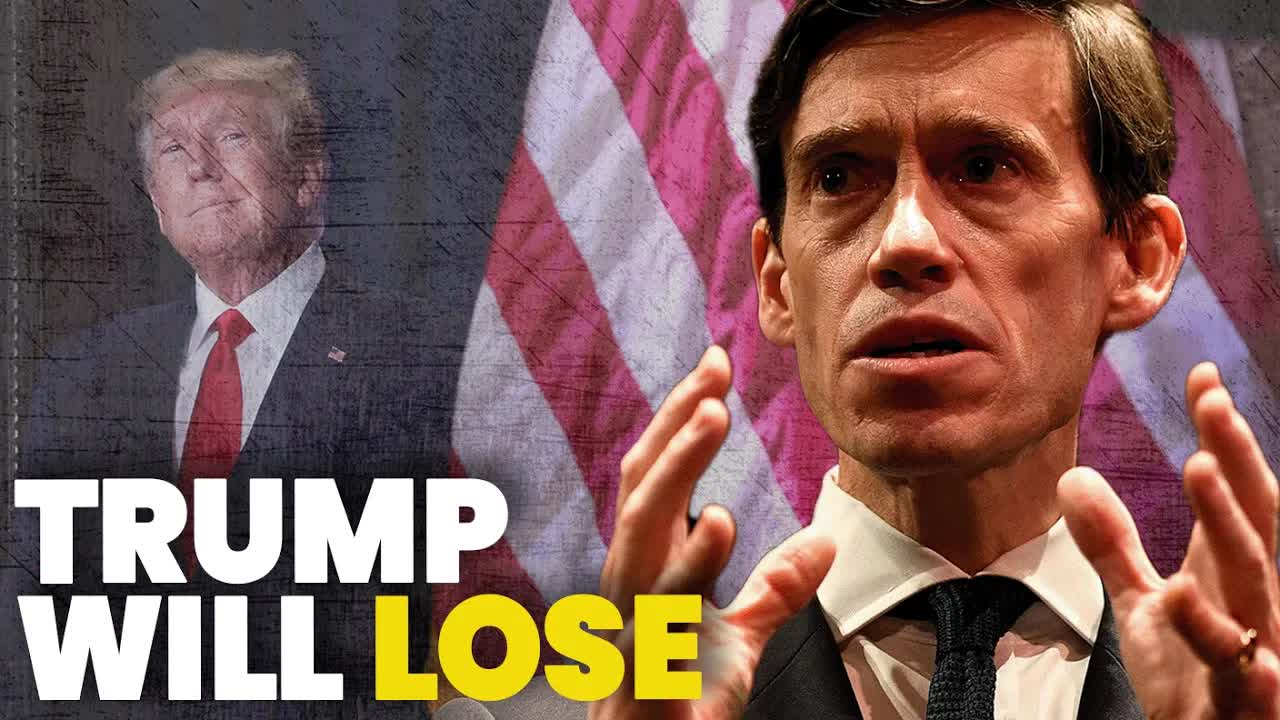
In a recent discussion, political analyst Rory Stewart expressed a bold prediction regarding the upcoming U.S. election, suggesting that Kamala Harris may emerge victorious.
His insights delve not only into the electoral landscape but also touch on the critical role of technology, particularly artificial intelligence (AI), in shaping economies and industries, such as healthcare, in the UK.
Stewart emphasized the pressing issue of productivity in the UK, noting that the country has struggled to improve its output per capita.
He believes that AI could be a game-changer in this regard.
By enhancing individual efficiency, AI has the potential to address significant challenges, including those faced by the National Health Service (NHS), where demand often surpasses available resources.
However, Stewart also highlighted a crucial aspect that cannot be overlooked: government regulation.
Many citizens harbor fears about the implications of AI, especially those working in sectors vulnerable to automation.
As such, it is vital for the government to foster an environment that encourages investment while simultaneously addressing public concerns about job security and technological disruptions.
When discussing the current government’s understanding of AI, Stewart reflected on his previous critiques of Prime Minister Rishi Sunak.
He acknowledged Sunak’s familiarity with Silicon Valley and technology, suggesting that this background positioned him well to navigate the complexities of AI.
In contrast, he expressed uncertainty about Keir Starmer’s grasp of these issues and called for greater intellectual curiosity from the opposition leader.
At the IBM Think 2024 event, Stewart elaborated on the importance of effective communication from political leaders regarding AI.
He presented a hypothetical scenario where advanced AI systems could potentially outperform medical professionals in answering basic health inquiries.
This raises legitimate fears among the public—fears that could lead to resistance against adopting such technologies.
Stewart underscored the necessity for transparency in government messaging.
If the public perceives AI as a threat rather than an ally, misinformation could spread rapidly, leading to public panic and delaying technological advancements by years.
He proposed that governments should frame AI as a supportive tool alongside human workers rather than a replacement.
On the topic of regulation, Stewart argued that adaptive regulatory frameworks are essential in an ever-evolving technological landscape.
Crafting legislation that remains relevant over time is challenging, given the rapid pace of innovation.
Instead, he advocates for regulators who can respond nimbly to changes, ensuring that society benefits from advancements without succumbing to fear-based narratives.
Addressing existential concerns surrounding AI, Stewart asserted that these worries are not merely scaremongering; they are grounded in reality.
He referenced Demis Hassabis, a Nobel Prize-winning figure in AI, who predicts the emergence of artificial general intelligence in the next decade.
Such advancements could fundamentally alter humanity’s existence, prompting philosophical questions about our purpose and place in the world.
Education plays a pivotal role in this narrative, according to Stewart.
He stressed the importance of raising public awareness about AI and related technologies.
Many individuals remain unaware of the capabilities of tools like ChatGPT, leading to apprehension rather than curiosity.
He believes that fostering understanding is crucial for people to embrace these innovations confidently.
When asked if he considers himself an AI optimist, Stewart responded with nuance.
He acknowledged the immense potential of AI while recognizing the duality of its power—both positive and negative.
Rather than adopting a strictly optimistic or pessimistic viewpoint, he emphasized the need for responsible management of this power as society moves forward.
Finally, returning to the topic of the U.S. election, Stewart reiterated his belief in Harris’s favorable position.
He critiqued the reliability of polling data, arguing that many polls are flawed due to biases and outdated methodologies.
This skepticism leads him to predict that Harris may outperform expectations, revealing the limitations of current polling practices.
With the election just weeks away, Stewart’s insights provide a thought-provoking perspective on the intertwined nature of technology, politics, and the future of work.
As the world grapples with the implications of AI, the discourse surrounding its integration into society remains more critical than ever.
Read more
