

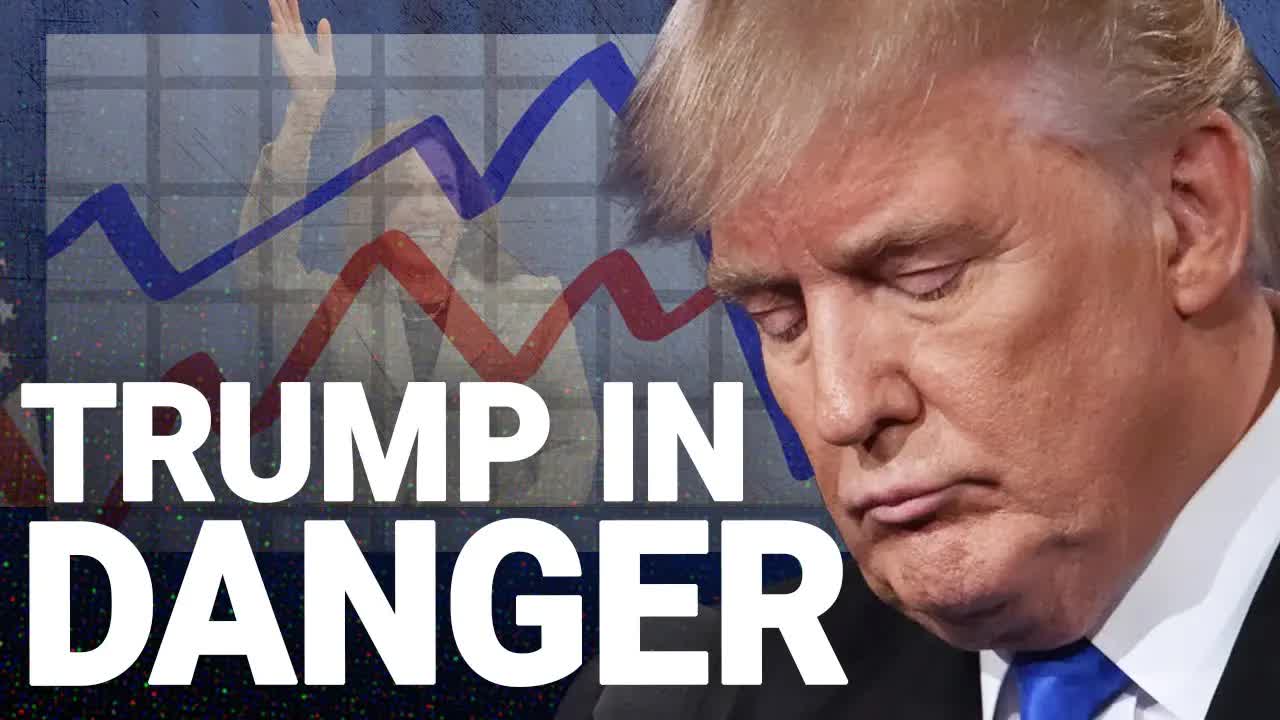
With just five weeks remaining until the U.S. presidential election, the political landscape is shifting dramatically.
Recent polling indicates that Kamala Harris holds a slight edge over Donald Trump, leading by about four and a half points nationally.
But what does this really mean for her chances of securing the presidency?
According to James Kangasuriam, a pollster and chief research officer at Focal Data, the race is still far from certain.
As the election approaches, the stakes are high, particularly in seven pivotal swing states: Arizona, Michigan, Pennsylvania, Nevada, Wisconsin, Georgia, and North Carolina.
Here, the margins between Harris and Trump are razor-thin, often fluctuating within just two or three points.
This tight competition underscores the importance of these battlegrounds, which can ultimately determine the outcome of the election.
Kangasuriam explains that while Harris has gained some momentum following a strong debate performance, the overall picture remains precarious.
Polling data has historically been unreliable, especially at the state level, making it difficult to predict the final result with confidence.
One major issue is the challenge of accurately capturing the sentiments of lower-income, white working-class voters, who tend to lean Republican but may not participate in polls.
This lack of trust in polling is another significant factor.
Many voters, particularly those with lower social trust, are hesitant to engage with surveys.
This creates a bias in polling results, often skewing them in favor of Democrats.
While some argue that recent improvements in polling methodologies might mitigate this issue, concerns about accuracy remain, especially given the discrepancies seen in previous elections.
Harris’s current national lead could be misleading.
While a four-point advantage might suggest a clear path to victory, the electoral college system complicates matters.
Experts suggest that a lead of at least four and a half points is necessary for Harris to feel secure.
Anything less could leave the door open for Trump, particularly if the vote counting process is slow or contentious.
The electoral landscape is further complicated by the Democrats’ strategic decisions over the past decade.
By shifting their focus away from traditionally competitive states like Iowa and Florida, they’ve inadvertently weakened their position in the electoral college.
This realignment has left them at a disadvantage, potentially costing them crucial electoral votes.
In terms of voter priorities, Trump continues to dominate discussions around key issues such as the economy, immigration, and law enforcement.
His ability to connect with voters on these topics could provide him with an edge, especially if he can maintain focus on the issues rather than getting sidetracked by controversies related to his past actions or claims of election fraud.
Interestingly, while Harris has made gains, Trump’s performance on critical issues raises questions about how effectively he can leverage this advantage.
A disciplined campaign, focused on the pressing concerns of everyday Americans, could significantly enhance his chances.
However, his tendency to divert attention to personal grievances has proven detrimental, leaving many to wonder if he could have done better.
The abortion issue, which played a significant role in the 2022 midterms, is also on the table.
Its impact on the upcoming election may vary by state.
In places where it is a ballot issue, it could energize Democratic voters.
However, the dynamics of midterm elections differ from those of general elections, making it uncertain how much weight this issue will carry.
Polling expert Nate Silver has suggested that Harris could sweep the swing states, but such predictions should be approached with caution.
While his models are sophisticated, the reality of voter turnout and state-by-state dynamics remains unpredictable.
The possibility of a clean sweep across all swing states seems unlikely, as each state has its unique set of challenges and voter sentiments.
Ultimately, the upcoming election is shaping up to be a nail-biter.
With polling data shifting and the electorate remaining deeply divided, both candidates face their own sets of hurdles.
As the clock ticks down, every debate, every campaign stop, and every voter interaction will play a critical role in determining who will emerge victorious in this high-stakes showdown.
Read more
