






Vance’s Disturbing Admission: Lies, Fear-Mongering, and the Fallout in Ohio
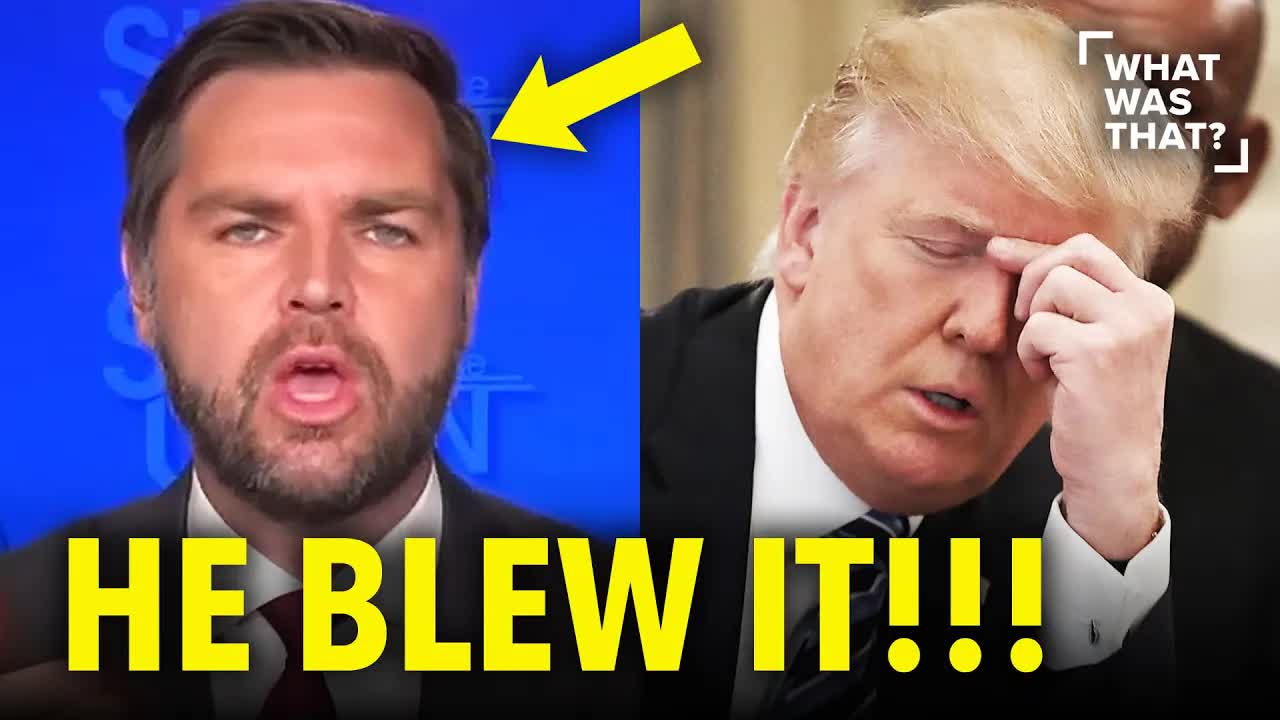
In a shocking televised moment, Ohio Senator J.D.
Vance openly acknowledged that he is fabricating stories about Haitian immigrants to provoke fear and manipulate voters.
During a discussion on immigration, Vance asserted that he would create narratives to draw media attention to what he perceives as the suffering of Americans.
This admission has sparked outrage, particularly given the dangerous implications of his rhetoric.
Vance’s comments came after a debate where both he and former President Donald Trump made inflammatory statements, including bizarre claims about pets being consumed by immigrants.
This led to a wave of panic that culminated in two hospitals going into lockdown following bomb threats in Springfield, Ohio.
Critics have pointed out that these threats are a direct consequence of the incendiary language used by politicians like Vance and Trump.
Ohio’s governor and local officials have vehemently denied Vance’s assertions, labeling them as unfounded.
In fact, the mayor of Springfield stated that there is no evidence to support the claims about immigrants harming animals.
Yet, Vance’s refusal to accept responsibility for his words has left many questioning his integrity and concern for his constituents.
The fallout from Vance’s remarks has been severe.
The Proud Boys, a far-right extremist group, have reportedly intensified their activities in the area, raising concerns about safety among local residents.
Critics argue that Vance’s careless rhetoric endangers not only the immigrant community but also the broader population of Springfield.
Vance’s approach is reminiscent of a long-standing trend within certain political circles where fear-mongering becomes a tool for garnering support.
By painting immigrants as a threat, Vance and Trump aim to rally their base, yet this tactic has real-world consequences that can lead to violence and division within communities.
In a particularly troubling twist, Trump has echoed Vance’s harmful narrative, claiming that parts of the country need “liberation” from immigrants.
This rhetoric has fueled fears of an invasion, with Trump suggesting large-scale deportations of Haitians, despite the lack of any factual basis for such claims.
The conflation of different immigrant groups further illustrates a fundamental misunderstanding and perpetuates harmful stereotypes.
Local law enforcement agencies have investigated claims against Haitian immigrants and found little to no evidence supporting the accusations.
A review of 911 calls over several months revealed only two instances where individuals alleged that Haitians were taking geese from parks, with no substantiation for any pet-eating claims.
This highlights the absurdity and danger of Vance’s statements.
Erica Lee, a Springfield resident who initially spread false information about immigrants eating pets, later expressed regret for her role in amplifying these baseless claims.
Her experience underscores how quickly misinformation can spiral out of control, leading to community unrest and fear.
Despite the economic contributions of Haitian immigrants to Springfield, which include filling jobs in various sectors, Vance’s narrative continues to demonize them.
Many local businesses have praised the work ethic of these new arrivals, which contradicts the negative portrayal pushed by Vance and his allies.
As the situation in Springfield unfolds, it raises critical questions about the responsibility of public figures in shaping narratives around immigration.
With the stakes so high, the potential for inciting violence through lies and fear cannot be ignored.
The Republican Party’s strategy, as demonstrated by Vance and Trump, seems focused on distraction through divisive rhetoric rather than addressing pressing issues facing the nation.
As the political landscape shifts, voters must consider the consequences of such tactics on their communities and the nation as a whole.
In light of these developments, it becomes increasingly important for citizens to engage in informed discussions and challenge misleading narratives.
The future of American democracy relies on unity and understanding, not fear and division.
Read more
