









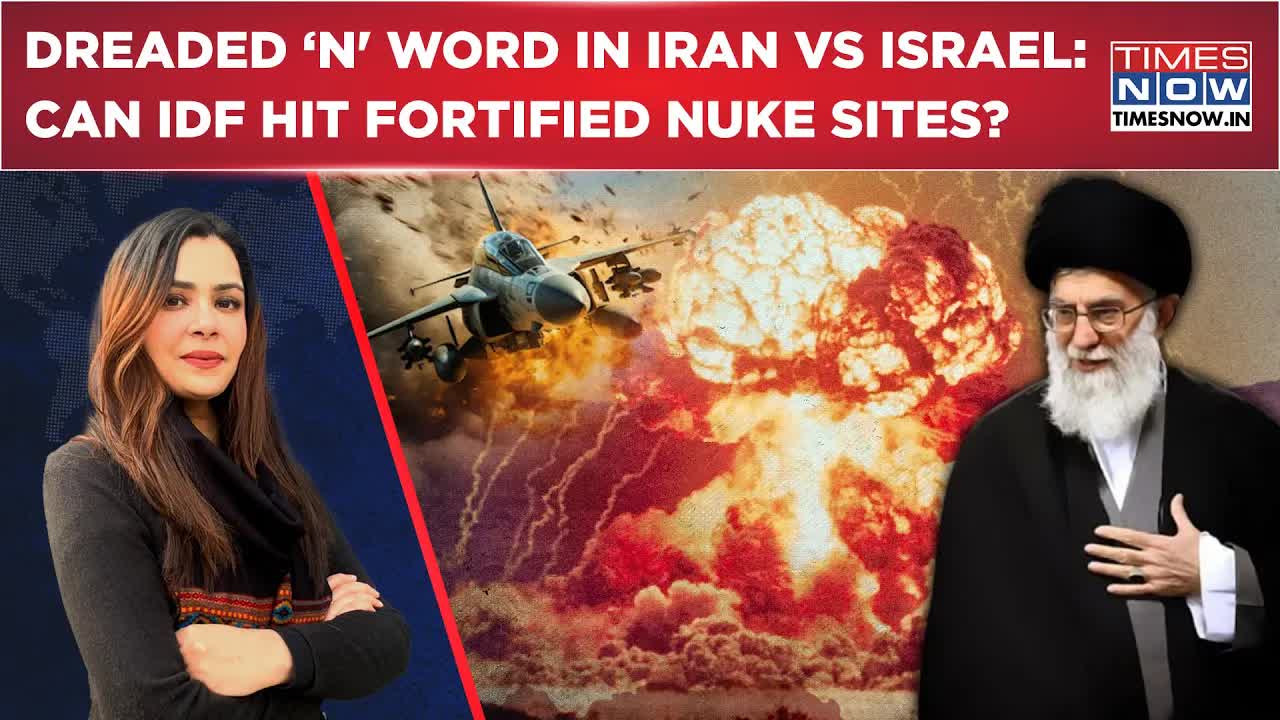
As October dawned, tensions in the Middle East reached a fever pitch when Iran launched a barrage of missiles aimed at Israel.
The attacks have ignited fears of a new phase in an already volatile conflict.
Just days later, a mysterious earthquake added fuel to the fire, leading to rampant speculation about its implications.
While both Tehran and Tel Aviv engage in a war of words, promising severe retaliation, the prospect of diplomacy seems increasingly distant, and concerns about a potential nuclear confrontation loom large.
Could Israeli forces soon set their sights on Iran’s nuclear facilities?
For more than two decades, Israel has meticulously prepared for a confrontation of this magnitude.
However, despite their extensive planning, the ever-expanding complexities of the regional conflict raise a critical question: Can Israel handle this situation on its own?
The reality is that, even with strategic foresight, Israel faces numerous formidable challenges in targeting Iran’s heavily fortified nuclear sites.
Deep beneath the Iranian deserts, these nuclear facilities are cleverly concealed from prying eyes, making them elusive targets for Israeli intelligence.
While Israeli forces have conducted drills simulating such operations, reports suggest that achieving success without U.S. backing appears unlikely.
President Biden has already issued a warning to Israel, urging that any retaliatory actions must be proportionate, adding another layer of complexity to the already tense situation.
This leads us to some pressing inquiries.
Is Israel prepared to risk an all-out war by striking Iran’s nuclear sites?
Can it rely solely on its air force to execute such a complicated mission?
If an attack does occur, will the United States feel compelled to intervene on behalf of its ally?
Moreover, could a preemptive strike trigger a broader regional conflict?
And what would happen if the U.S. were to step into this chaotic Middle Eastern quagmire?
Reports indicate that Israel’s initial response to Iran’s missile attack on October 1 will likely target military bases and intelligence centers rather than nuclear installations.
Israeli officials believe that these strikes could deliver a potent message without escalating tensions too rapidly.
However, military analysts caution that Iran’s ability to counterattack could provoke a wider conflict, forcing Israel to rethink its strategy.
Israel has consistently viewed Iran’s pursuit of nuclear capabilities as an existential threat.
Just two years ago, the Israeli Air Force executed a large-scale exercise over the Mediterranean, simulating an assault on Iranian nuclear sites.
This drill was more than just a display; it served as a warning to Iran and a signal to Washington that Israel was ready to act independently if necessary.
While the U.S. continues to engage diplomatically, aiming to de-escalate tensions, Israel’s ongoing military efforts against Hamas in Gaza have expanded to include operations in Lebanon and Syria.
The specter of war with Iran looms larger, as Israel grapples with significant challenges in executing a successful strike on Iran’s nuclear infrastructure.
The hurdles are daunting.
First, there’s the distance—Iran’s nuclear sites lie over 1,000 miles from Israel, requiring Israeli jets to traverse multiple sovereign nations, complicating the mission both diplomatically and militarily.
Then, there’s the issue of refueling; Israeli aircraft would need extensive support, stretching its air force to the limits.
Moreover, Iran’s nuclear facilities are heavily fortified, posing additional obstacles.
Experts estimate that any successful attack might necessitate deploying nearly a third of Israel’s air force just to breach the defensive perimeters surrounding these critical sites.
Notably, the Natanz and Fordow plants, buried deep underground, present formidable challenges to any potential strike.
To penetrate these fortified structures, advanced weaponry is essential.
Reports suggest that while Israel’s GBU-31 bombs may not suffice, the U.S.’s massive ordnance penetrator, typically deployed by B-2 bombers, could effectively target the Fordow facility.
As Israel deliberates its next steps, diplomatic channels remain open, albeit fraught with tension.
For years, the U.S. has employed sanctions and diplomatic measures to impede Iran’s nuclear ambitions.
Despite Israel’s calls for more aggressive tactics, Washington has been hesitant to provide the necessary armaments for a full-scale assault.
Alarmingly, recent reports indicate that Iran has ramped up its uranium enrichment to 60% purity, tantalizingly close to weapons-grade levels, heightening fears of an imminent nuclear escalation.
As tensions mount, an earthquake struck Iran’s Senan province on October 5, sending shockwaves felt as far away as Tehran.
Social media buzzed with conspiracy theories, suggesting that this seismic event might have been a covert demonstration of Iran’s nuclear prowess rather than a mere natural disaster.
The proximity of the quake’s epicenter to Iran’s nuclear facility has raised eyebrows, prompting questions about the true nature of the tremor.
With Israel weighing its options, the world watches with bated breath, acutely aware that a single misstep could spark a broader conflict in the region.
Will Israel take the plunge and launch a bold strike against Iran’s nuclear program, or will it choose the path of diplomacy and restraint?
The coming days promise to reveal the extent to which both sides are willing to go, and the stakes have never been higher.
Read more
