









In a dramatic escalation of tensions, approximately 180 missiles were launched from Iran towards Israel last night.
This aggressive act marks a significant intensification of the ongoing conflict in the Middle East.
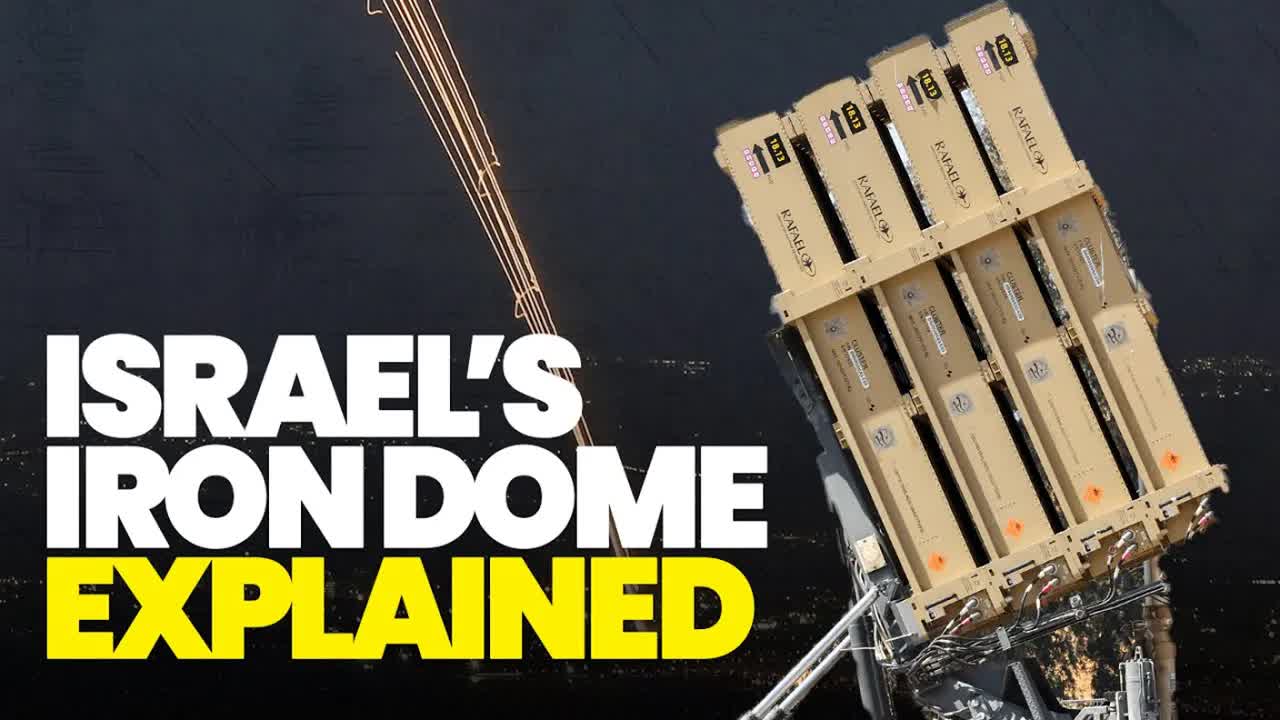
The Israeli Defense Forces (IDF) are currently evaluating the extent of the damage inflicted by this attack, but initial reports suggest that the Iron Dome, Israel’s renowned missile defense system, has once again demonstrated its effectiveness.
So, what exactly is the Iron Dome?
Former RAF Air Vice Marshal Sean Bell provided an insightful explanation.
Contrary to its name, the Iron Dome isn’t a foolproof shield against all threats.
Instead, it functions as a sophisticated radar system that rapidly detects incoming rockets, primarily those used by Hamas and Hezbollah.
The system evaluates the trajectory of these unguided missiles to determine if they pose a threat to populated areas.
If a rocket is deemed likely to land in an uninhabited region, the system ignores it.
However, if it’s headed for a densely populated area, the Iron Dome intercepts it and detonates it mid-air.
Given the Iron Dome’s capabilities, one might wonder why groups like Hamas and Hezbollah continue to launch rockets at Israel.
Bell suggests that much of the conflict in the region involves posturing.
Even if a rocket is intercepted, debris can still fall onto populated areas, causing potential harm.
Additionally, the Iron Dome has a limited capacity; if an overwhelming number of rockets are fired simultaneously, it could be overwhelmed.
While the recent missile barrage included around 180 projectiles, the real concern lies in the nature of these weapons.
Unlike previous attacks that featured drone strikes, this incident predominantly involved ballistic missiles, which are faster and more challenging to intercept.
The psychological impact of such attacks on Israeli citizens cannot be overstated.
As sirens blared, many took refuge in shelters, including families with young children.
An Israeli Air Force colonel shared his experience, noting that while they felt secure in their designated shelter, the noise outside was a constant reminder of the danger.
This fear is palpable, reminiscent of the anxiety faced by citizens in conflict zones like Ukraine, where air raid sirens can send hearts racing, even when the immediate risk seems low.
Amidst this turmoil, the United Nations Security Council convened to address the escalating crisis.
U.S.
Ambassador Linda Thomas-Greenfield called for increased sanctions against Iran, while the Lebanese representative reiterated support for a ceasefire proposal put forth by the U.S. and France.
As discussions unfold, the world watches closely for Israel’s response to the missile attack.
Orly Goldschmidt, spokesman for the Israeli embassy in London, emphasized the urgency of the situation.
He described the harrowing reality faced by millions of Israelis forced into shelters as the missiles approached their targets.
With only a 12-minute warning before impact, the intent behind these missile launches is clear: to inflict harm on innocent civilians.
Fortunately, due to Israel’s defense measures and international support, casualties have been minimized, but the threat remains dire.
Goldschmidt acknowledged that Israel must respond decisively to the attack.
However, he also pointed out that Israel is mindful of the broader implications of its actions, particularly the potential for escalating conflict with Iran and its various proxies, including Hezbollah and the Houthis.
He stressed that while retaliation is necessary, Israel aims to avoid a full-scale war that could destabilize the region further.
The spokesperson underscored the ongoing challenges Israel faces, particularly from Iranian-backed groups.
For nearly a year, Israel has endured a barrage of rockets from the north, with thousands launched in a continuous cycle of aggression.
This relentless assault is a reality that the nation cannot afford to accept, especially when the stakes involve the safety of its citizens.
Addressing the complexities of the situation, Goldschmidt articulated Israel’s desire for peace along its borders.
The goal is not perpetual conflict but rather a return to normalcy for its people, many of whom have been displaced from their homes due to ongoing violence.
He highlighted that Hezbollah poses a threat not only to Israel but also to the Lebanese people, who are often caught in the crossfire of this enduring conflict.
As discussions about military strategy and political ramifications unfold, questions arise about the long-term objectives of Israel’s actions.
Critics often point to past military engagements that inadvertently strengthened groups like Hezbollah, raising concerns about the cycle of violence.
Goldschmidt clarified that Israel’s aim is to eliminate threats and restore safety for its citizens, rather than to engage in perpetual warfare.
In the realm of politics, the current conflict has also influenced domestic perceptions of leadership in Israel.
Prime Minister Benjamin Netanyahu’s popularity appears to be on the rise amid the crisis, leading some to speculate about the political motivations behind military responses.
Goldschmidt firmly stated that the Israeli government’s actions are driven by the need for security and the protection of its citizens, not by political opportunism.
As the situation continues to unfold, the international community remains watchful, hoping for a resolution that prioritizes peace and stability in a region long plagued by conflict.
The path forward is fraught with challenges, but the desire for a safe and secure future for all remains a common hope amidst the chaos.
Read more
