









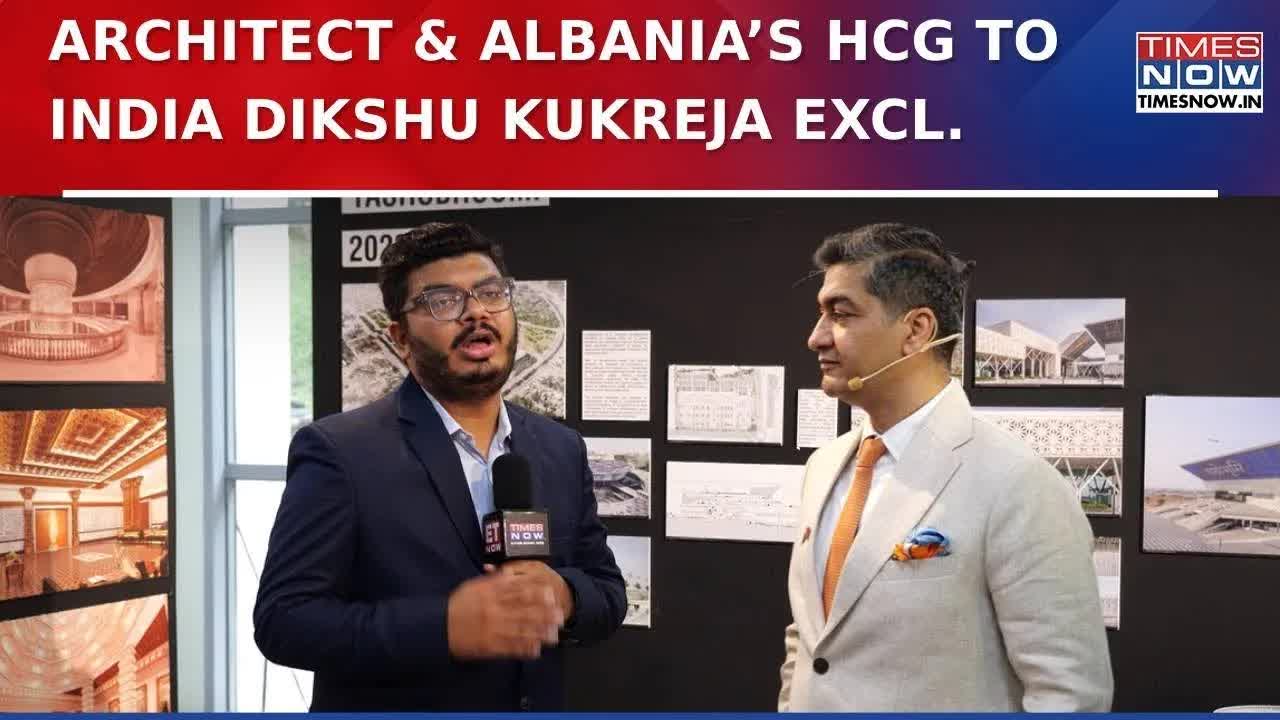
In a remarkable cultural exchange, Indian architecture is making waves in Albania, a country not typically associated with the subcontinent’s rich design heritage.
The renowned architect from the CP Pupreja Group, Mr. Diksha Pupreja, who also serves as the Honorary Consul General of Albania in India, recently shared insights about this exciting exhibition taking place in Tirana.
When asked about the significance of showcasing Indian architecture in Albania, Mr. Pupreja emphasized that architecture serves as a vital bridge between cultures.
He believes this exhibition presents a unique opportunity for Albanians to explore contemporary Indian architecture, which often gets overshadowed by the more traditional images of forts and palaces that dominate international perceptions.
Through the efforts of the CP Pupreja Foundation for Design Excellence, this exhibition aims to enlighten the Albanian audience about the innovative strides being made in India’s architectural landscape.
Highlighting the importance of modern Indian architecture, Mr. Pupreja pointed out notable projects such as Yashob Ghumi, a state-of-the-art convention center that has gained recognition as one of the best in the country.
With its cutting-edge design and multifunctional capabilities, it is a prime example of how India is evolving into a hub for global conferences while maintaining its historical essence.
The Prime Minister has even lauded Delhi’s potential to transform into a city of conferences, alongside its rich cultural heritage.
What sets contemporary Indian architecture apart?
According to Mr. Pupreja, it’s the harmonious blend of tradition and modernity.
He elaborated on the Ekatmadham project, inspired by the teachings of Adi Shankaracharya, which showcases traditional craftsmanship while incorporating modern techniques.
This project emphasizes India’s architectural roots while simultaneously embracing future technologies.
One of the standout features of Yashob Ghumi is its status as the world’s third-largest convention center, boasting the largest LED facade globally.
Such advancements exemplify how India’s architectural narrative is deeply rooted in its history while looking forward to technological innovations.
These designs not only reflect India’s cultural heritage but also serve as sustainable models for developing nations worldwide.
As the discussion shifted to infrastructure developments, Mr. Pupreja noted the recent emergence of airports like the Bengaluru and Mumbai-Shivaji airports, which are redefining air travel in India.
He specifically mentioned the Baghdokar Airport, emphasizing that it is not merely another glass-and-steel structure but rather an architectural homage to the majestic Himalayan mountain ranges.
This thoughtful integration of local geography into airport design underscores the importance of contextual architecture in India’s growth story.
Transitioning from architecture to diplomacy, the dialogue turned to the similarities between India and Albania.
Mr. Pupreja highlighted the mutual respect both nations have for their traditions, drawing parallels between the Albanian concept of “Beza,” or treating guests with reverence, and the Indian philosophy of “Atithi Devo Bhava,” which translates to “the guest is God.”
Such cultural connections lay the groundwork for future collaborations between the two countries.
Both nations are on paths of progress, having undergone significant transformations in recent decades.
While India embraced globalization in the early 1990s, Albania similarly broke free from communism, paving the way for development.
This shared journey towards advancement creates ample opportunities for knowledge exchange and cultural enrichment.
In terms of fostering connections, Mr. Pupreja acknowledged the limited Indian diaspora in Albania and the need for enhanced tourism exchanges.
He expressed his commitment to strengthening ties between the two nations, particularly through initiatives that facilitate easier travel for citizens.
His recent discussions with Albania’s Foreign Minister focused on simplifying visa processes to encourage more Indian tourists to visit Albania and vice versa.
The conversation wrapped up with optimism about the future of India-Albania relations.
Mr. Pupreja’s vision includes increasing people-to-people connections, which are vital for cultural and economic exchanges.
With figures like Mother Teresa bridging the gap between the two nations, there is a strong foundation upon which to build further interactions.
As the exhibition unfolds in Tirana, it serves as a testament to the power of architecture in transcending borders and fostering understanding.
The event not only showcases the brilliance of contemporary Indian design but also highlights the potential for collaborative growth between India and Albania in the years to come.
Read more
