






Over the weekend, I found myself preoccupied with family matters following my sister’s funeral in Houston.
It was a poignant time, filled with reflection and connection.
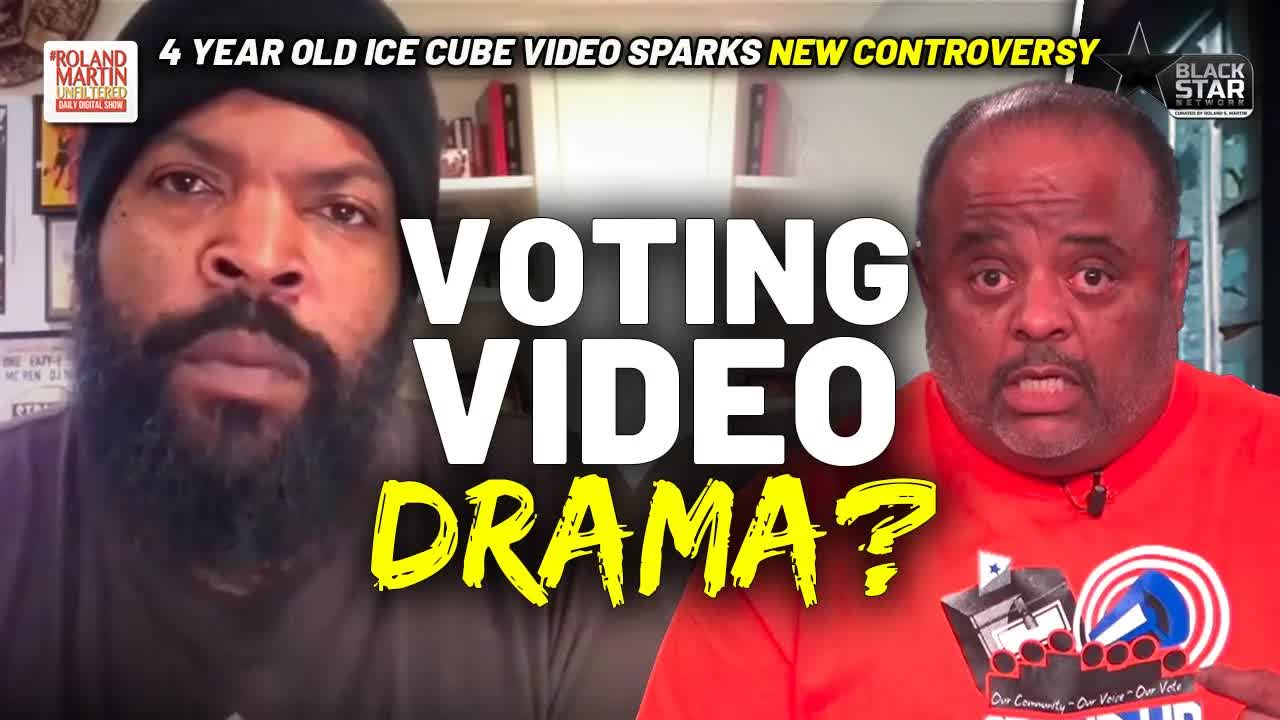
However, as I returned to social media on Monday, I was struck by the buzz surrounding a video featuring Ice Cube.
Many were claiming that the rapper was discouraging people from voting.
Intrigued, I instructed my team to dig up the video so I could grasp the context of the conversation.
It turns out this wasn’t a fresh clip; it had been circulating for four years.
Ice Cube’s son, O’Shea Jackson Jr., took to Twitter to express his disbelief over the uproar regarding a video that was, in fact, quite old.
He remarked, “Why does Ice Cube only come around during election years?” This sentiment echoed a broader frustration, highlighting how discussions about political engagement often resurface in cycles tied to elections.
In the video, Ice Cube addresses his audience directly, urging skepticism towards those who advocate for voting without accompanying demands.
He emphasized that while the sacrifices made for voting rights are real, the narrative around voting should not be one-dimensional.
“You don’t vote just to vote,” he insists, advocating for a transactional approach where the community demands something in return for their votes.
Critics quickly jumped on Ice Cube’s comments, alleging that he was outright telling people not to vote.
However, a closer examination reveals that he did not explicitly discourage voting.
Instead, he challenged the notion of voting without accountability, urging his audience to question what they were receiving in return for their participation in the electoral process.
Historical context is crucial here.
Yes, people have been murdered for exercising their right to vote, a fact that cannot be overlooked.
Activists like Harry T. Moore faced brutal consequences for their efforts, and individuals like Jim Lee Jackson were killed while advocating for voting rights.
These stories serve as stark reminders of the ongoing struggles within the Black community.
Yet, Ice Cube’s assertion about the lack of tangible benefits from long-standing politicians raises an important point.
While it’s true that many in power have failed to deliver meaningful change, the solution lies not in abandoning the voting process but in mobilizing and organizing effectively to demand more from elected officials.
I’ve had conversations with Ice Cube in the past, particularly regarding his “Contract with Black America.”
I cautioned him that merely being a celebrity wouldn’t guarantee meetings with politicians.
Building coalitions and rallying community support is essential for making demands that resonate with those in power.
The crux of the issue lies in understanding that politics is inherently about negotiation and accountability.
It’s not enough to cast a ballot; individuals must actively engage with their representatives and hold them accountable for their promises.
This means creating a robust network of supporters who can amplify their voices and demands.
As the Harris campaign recently announced a significant financial commitment to House Democrats, it underscores the importance of collective action.
If we want our issues prioritized, we must ensure that our representatives understand the stakes involved and the expectations attached to their positions.
Moreover, it’s vital to recognize that the political landscape extends beyond federal elections.
Many critical decisions affecting our communities are made at local and state levels.
Therefore, engaging with city councils, school boards, and other local entities is just as important as participating in national elections.
In light of these discussions, it’s imperative that we approach our political engagement with strategy rather than emotion.
Instead of reacting impulsively to celebrity statements, we should critically evaluate the underlying messages and strategize on how to mobilize effectively for our causes.
Ultimately, the focus should shift from mere outrage to actionable steps.
What are we doing in our communities to ensure that our voices are heard?
How are we preparing for the next election cycle, not just for the vote itself, but for the ongoing advocacy that follows?
As we reflect on Ice Cube’s remarks and the surrounding controversy, let’s remember that our power lies not just in voting but in our ability to organize, demand accountability, and push for the change we wish to see.
Read more
