









In a world rife with uncertainty, the Middle East continues to be a focal point of tension and conflict.
Recent developments have heightened these concerns, particularly following the assassination of Hassan Nasrallah, the long-standing leader of Hezbollah, during an Israeli airstrike in Beirut over the weekend.
As of now, Israeli tanks are positioned along the Lebanese border, with reports suggesting that special forces have infiltrated Hezbollah’s extensive network of tunnels.
The implications of Nasrallah’s death cannot be overstated.
For over three decades, he has been the driving force behind Hezbollah, shaping its military and political strategies.
Richard Spencer, a seasoned correspondent for The Times who has reported extensively on the region, emphasized the significance of this event, noting that Nasrallah was not just a leader but a pivotal strategist within the anti-Israel and anti-Western coalition in the Middle East.
With his departure, questions arise about who will fill the power vacuum and how this will affect the group’s future interactions with both regional and Western powers.
Spencer compared the current situation to a “1967 moment,” referencing the Six-Day War when Israel achieved a decisive victory against several Arab nations, fundamentally altering the geopolitical landscape.
This comparison underscores the potential for a significant shift in power dynamics following Nasrallah’s assassination.
Israeli Prime Minister Netanyahu appears to be seizing this opportunity to take bold steps that he may have previously hesitated to undertake.
Samer Alatrush, The Times’ Middle East correspondent, offered insights into the broader context of these attacks.
He describes the conflict as primarily between Israel and Hezbollah, which Iran has heavily supported as a strategic ally.
This relationship is complex, as Hezbollah acts as Iran’s proxy, designed to extend its influence across the region while providing a deterrent against Israeli actions.
Alatrush pointed out that the current escalation was not what either Iran or Hezbollah had anticipated.
The conflict intensified after Hamas’s attack on October 7, which Hezbollah hoped would divert Israeli attention from Gaza.
However, the situation quickly spiraled beyond their control, leading to a prolonged conflict that neither side expected.
The Israeli military’s focus on Hezbollah, rather than Hamas, has resulted in significant advancements against the former.
The unexpected rapidity of Israel’s success has stunned many observers.
Within just two weeks, Israeli forces have inflicted severe losses on Hezbollah, including the death of Nasrallah and the destruction of vast stockpiles of Iranian-supplied rockets.
This swift offensive has altered the expectations of both sides regarding the conflict’s duration and intensity.
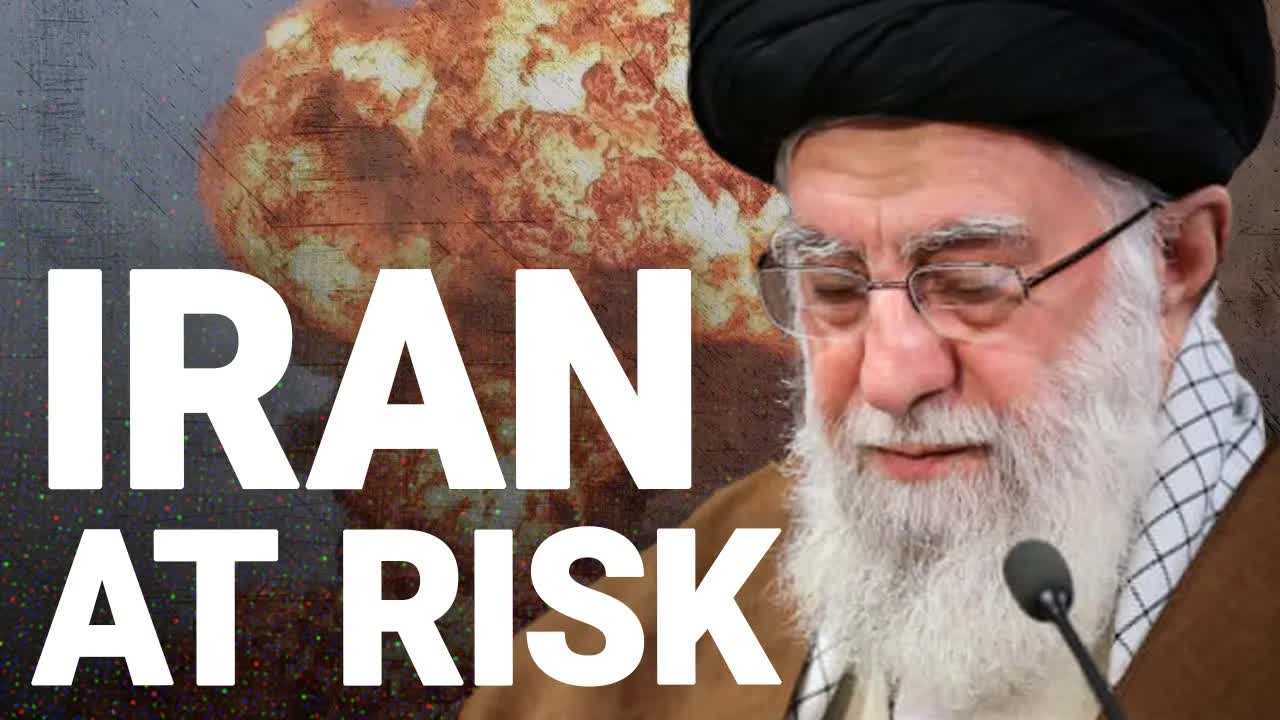
In the wake of these events, Iran has vowed to retaliate for the assassination of Nasrallah and the strikes on its allies in Yemen.
However, Alatrush cautioned that Iran may be hesitant to engage directly with Israel at this juncture.
The Iranian leadership is likely weighing the potential consequences of escalation, especially given Israel’s demonstrated capabilities and the presence of U.S. military forces in the region.
Iran’s strategy appears to be focused on using its allied militias, like Hezbollah and the Houthis, to act on its behalf rather than engaging directly.
The regime is acutely aware of its precarious position and the repercussions of provoking Israel.
Any miscalculation could lead to devastating consequences for Iran, particularly in light of its recent military setbacks.
As Israeli tanks amass on the Lebanese border, the prospect of a ground invasion seems increasingly plausible.
Alatrush noted that Israel’s objectives have shifted from merely stopping rocket fire from the north to potentially dismantling Hezbollah entirely.
This ambition, however, raises concerns among some Israeli officials about overextending their military efforts and underestimating Hezbollah’s resilience.
The situation remains fluid, with many variables at play.
Observers are left wondering how Israel will proceed and whether it will seek a negotiated settlement or continue its offensive to ensure Hezbollah cannot rebuild its capabilities.
The stakes are high, as any misstep could lead to a broader regional conflict.
This latest chapter in the Middle East saga illustrates the intricate web of alliances and enmities that define the region.
As the dust settles from Nasrallah’s assassination, the world watches closely, anticipating the next moves from all parties involved.
The outcome of this conflict may very well shape the future of Middle Eastern geopolitics for years to come.
Read more
