









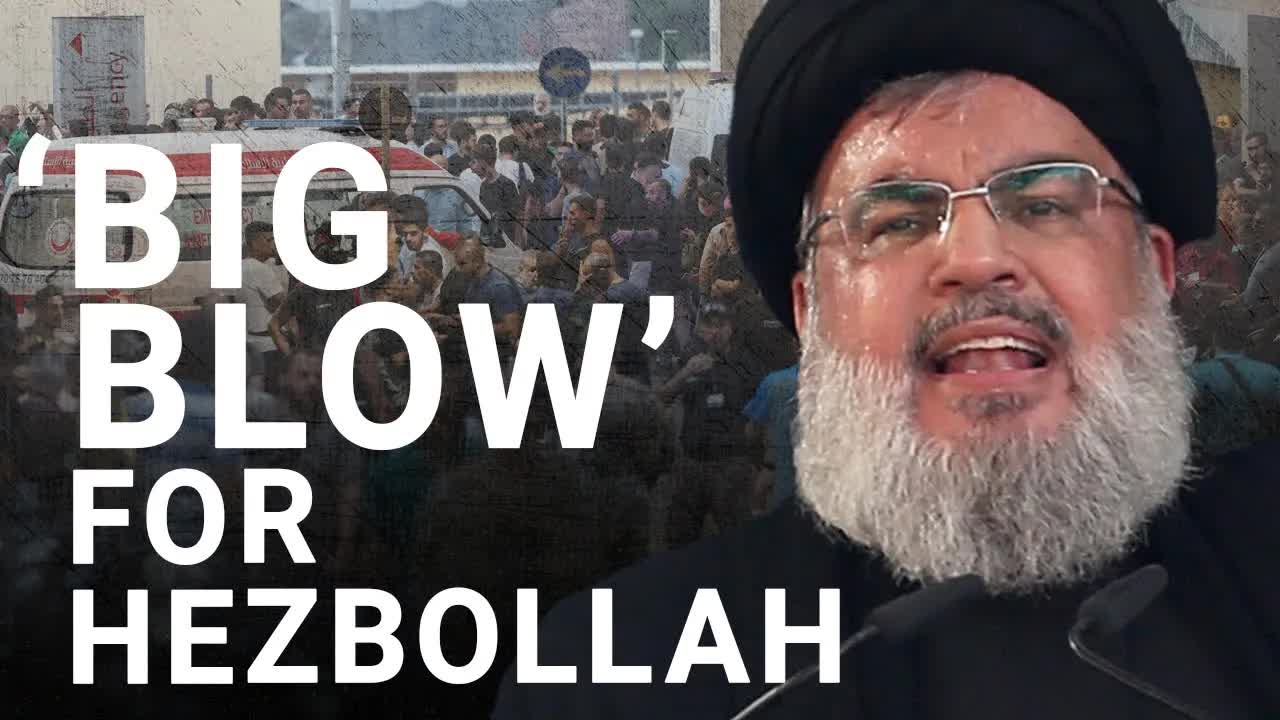
In the intricate political landscape of Lebanon, a significant portion of the population finds itself in opposition to Hezbollah.
This Shiite political faction, which claims to represent the interests of the Shiite community, has deep roots in Lebanese society.
Although the Shiite demographic accounts for roughly one-third of Lebanon’s populace, not all members are staunch supporters of Hezbollah.
Many express their allegiance out of fear or a sense of obligation, while others genuinely believe in the group’s ideology.
However, it’s essential to note that among other communities in Lebanon, the sentiment against Hezbollah is notably stronger.
Recent developments have escalated tensions between Hezbollah and Israel, with reports indicating that the Israeli Defense Forces (IDF) targeted over 100 Hezbollah positions in southern Lebanon overnight.
These strikes included missile launchers and what Israel refers to as terrorist infrastructure.
In retaliation, Hezbollah claimed to have launched multiple missiles at an Israeli airbase, asserting its military capabilities despite Israeli claims that the organization’s senior leadership has been significantly compromised.
To gain deeper insights into Hezbollah’s history and influence, we turned to Lina Khatib, an Associate Fellow at Chatham House, a prominent think tank focused on Middle Eastern affairs.
Khatib elaborated on Hezbollah’s origins, tracing back to the early 1980s during Israel’s occupation of Lebanon.
The Israeli invasion of 1982 marked a pivotal moment, leading to the formation of Hezbollah in southern Lebanon as a resistance movement aimed at liberating the country from foreign control.
Hezbollah’s rise was not merely a local phenomenon; it was significantly bolstered by Iran, which provided both financial support and military training.
This relationship remains intact, positioning Hezbollah as a key player in Iran’s broader strategy to exert influence in the region.
The group emerged as a formidable force during a tumultuous period marked by civil strife and competing militias in Lebanon, ultimately establishing itself as the predominant representative of the Shiite community.
Khatib highlighted Hezbollah’s tactical evolution, noting that it has been labeled a terrorist organization by numerous governments worldwide, including the UK.
She referenced a critical moment in the 1980s when Hezbollah executed synchronized suicide bombings in Beirut, a tactic that set a precedent for future terror groups.
This operational sophistication, coupled with Iranian backing, allowed Hezbollah to outmaneuver both Israeli forces and rival Lebanese factions.
Despite its military prowess, the perception of Hezbollah among the Lebanese populace is complex and varied.
While many within the Shiite community may feel compelled to support the group, a broader anti-Hezbollah sentiment exists among other sects.
This division underscores the challenges Hezbollah faces domestically, as it navigates a diverse socio-political landscape marked by differing opinions and allegiances.
The recent Israeli attacks have raised questions about Hezbollah’s stability and operational capacity.
Khatib pointed out that prior to these events, Hezbollah had enjoyed a reputation of invincibility, largely stemming from its historical successes against Israel.
However, the recent military strikes have shaken this image, leaving Hezbollah in a precarious position, grappling with the fallout from the loss of key leaders and compromised communication networks.
As news of these developments spreads, concerns grow within Lebanon regarding the potential ramifications for national security and regional stability.
The atmosphere is charged with uncertainty, as Hezbollah’s ability to respond effectively to Israeli aggression is now under scrutiny.
For many Lebanese citizens, the question looms large: what does the future hold for their country amid such escalating tensions?
Khatib’s insights shed light on the precarious balance Hezbollah must maintain as it confronts both internal dissent and external threats.
The group’s reliance on fear as a means of control may be tested in the face of growing discontent among the population.
As Hezbollah struggles to reclaim its narrative, the dynamics of power in Lebanon remain fluid, with the potential for significant shifts in the coming days.
The situation is further complicated by the historical context of Hezbollah’s emergence and its ongoing relationship with Iran.
The interplay of local grievances and regional politics creates a volatile environment, where any miscalculation could lead to broader conflict.
As the dust settles from recent attacks, the Lebanese people are left to ponder the implications for their own lives and the future of their nation.
In this critical juncture, the resilience of the Lebanese people will be tested.
Will they continue to tolerate a group that claims to protect them but also instills fear?
Or will the tides of change push them toward a new political reality?
As Hezbollah grapples with mounting challenges, the answer to this question may shape the destiny of Lebanon for years to come.
Read more
