









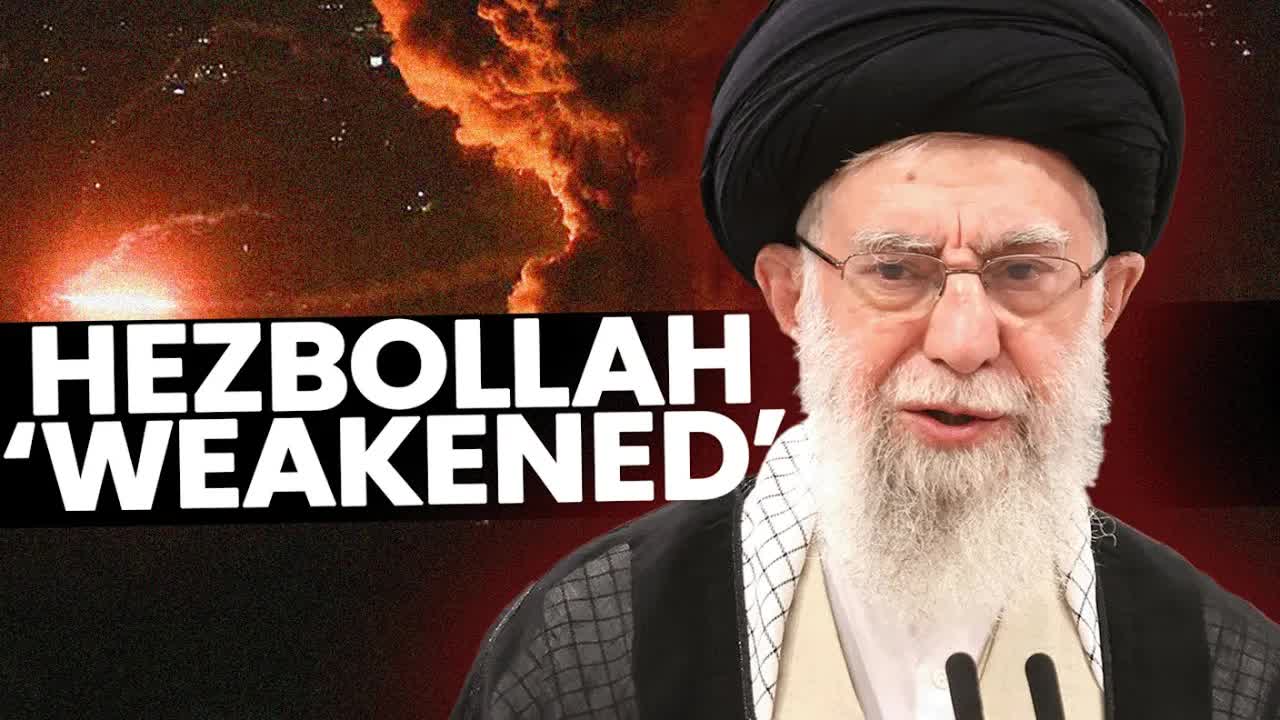
The situation in the Middle East continues to escalate, with Hezbollah issuing stern warnings to Israel following a series of deadly strikes that have targeted its leadership.
The recent killing of Hassan Nasrallah, the group’s chief, has raised questions about Hezbollah’s current state and its ability to respond effectively.
As Israel’s military operations intensify, it’s crucial to analyze Hezbollah’s strength and the implications for the region.
Omar Rahman, a fellow at the Middle East Council on Global Affairs, paints a picture of a weakened Hezbollah.
Recent months have seen the group suffer significant losses, with Israel conducting extensive bombardments across South Lebanon, particularly in areas where Hezbollah has traditionally held sway, such as Beirut and the Bekaa Valley.
Despite these setbacks, Rahman suggests that Hezbollah may be regaining some composure, managing to repel certain ground incursions by Israeli special forces and launching retaliatory rocket attacks into Israel.
Hezbollah’s operational coherence seems to be re-establishing itself after the initial shock of Israel’s aggressive military campaign.
This included high-profile assassinations and a major offensive that began with a surprise operation.
While the group has faced serious challenges, it appears to be adapting to the new battlefield conditions.
When it comes to leadership, Deputy Secretary General Naim Qasem has stepped into a more prominent role, acting as the organization’s spokesperson.
However, Rahman notes that Hezbollah operates under a council structure, which has historically allowed it to remain resilient even amidst leadership changes.
This decentralized decision-making framework means that even if key figures are eliminated, the organization can continue to function effectively.
The local sentiment towards Hezbollah is complex.
Reports from the ground indicate a growing frustration among Lebanese citizens, particularly in regions under Hezbollah’s influence.
Many locals express anger not only at Israel for its destructive bombardment but also at Hezbollah leaders who they feel have brought this conflict upon their communities.
This duality of emotions underscores the precarious position Hezbollah finds itself in.
Assessing Hezbollah’s grip on power in Lebanon is no simple task.
The current landscape is fluid, with rapid changes occurring in response to the ongoing crisis.
Although the group has undoubtedly been weakened, it remains one voice among many in a diverse political landscape.
There has never been unanimous support for Hezbollah, and criticism is expected, especially in light of the devastation wrought by Israeli airstrikes.
In recent weeks, the conflict has displaced over a million people in Lebanon, leading to widespread anger directed at Israel.
As neighborhoods are reduced to rubble, the Lebanese populace is increasingly aware of the broader geopolitical dynamics at play.
While some blame Hezbollah for escalating tensions with Israel, there remains a strong collective resentment towards Israeli military actions.
The question of whether Israel can effectively dismantle Hezbollah looms large.
Some analysts argue that targeting such a deeply rooted organization within Lebanon’s borders is a daunting task.
Unlike Hamas, which has faced relentless military pressure in Gaza, Hezbollah operates within a sovereign state, benefiting from ties to Syria and Iran that bolster its resilience.
Hezbollah is not merely a militant group; it represents a mass movement deeply embedded in the fabric of Lebanese society.
Its supporters are driven by historical grievances and a sense of identity that cannot be easily extinguished through military force.
The experience of Hamas in Gaza serves as a stark reminder that bombings alone do not eradicate ideologies or movements.
In essence, the situation with Hezbollah is far more intricate than a straightforward military confrontation.
The group’s ability to adapt and survive amid adversity reflects a broader reality: the complexities of regional politics and the deep-seated issues that fuel these conflicts.
As the war rages on, understanding the nuances of Hezbollah’s position becomes increasingly vital for any prospective resolution.
The ongoing conflict poses significant challenges not just for Hezbollah but for Lebanon as a whole.
With widespread destruction and displacement, the social fabric of the nation is under strain.
As various factions vie for power and influence, the future of Hezbollah and its role in Lebanese society hangs in the balance, making the unfolding events all the more critical to watch.
Read more
