









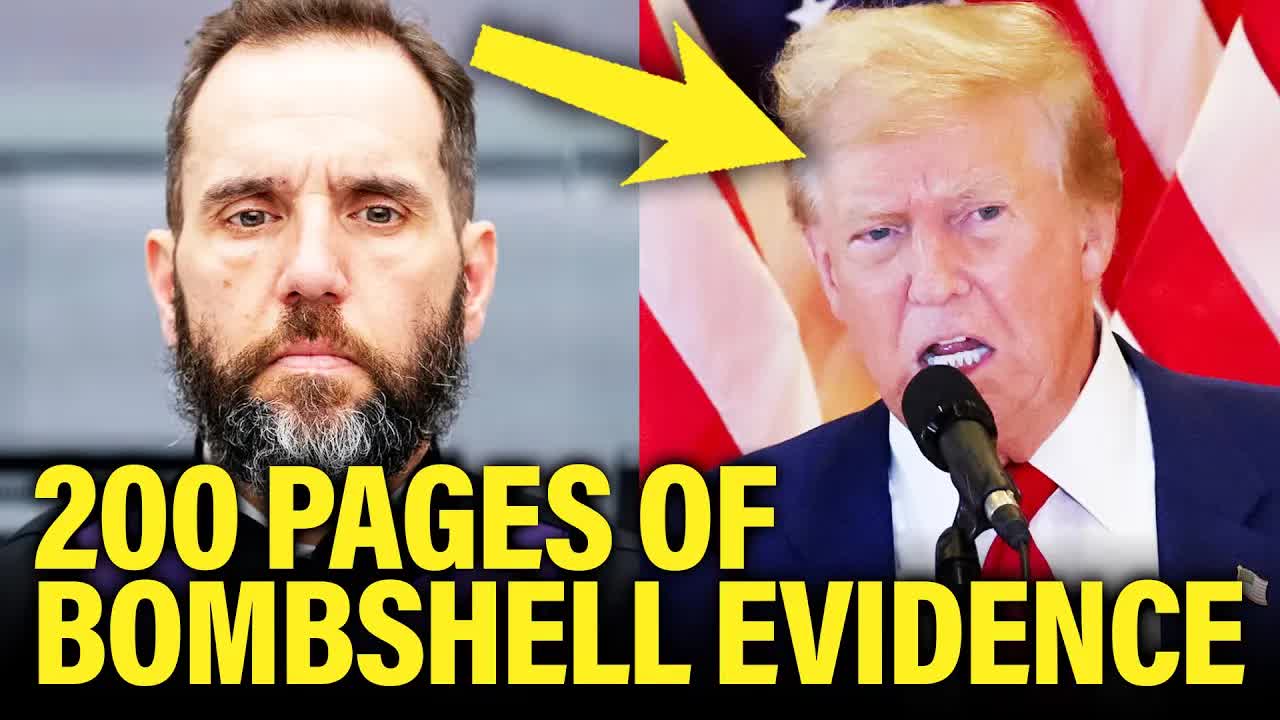
In a significant development in the ongoing election interference case involving Donald Trump, the government has filed a request with the court to submit a comprehensive 200-page brief.
This is aimed at addressing the complexities surrounding presidential immunity, particularly in light of a recent Supreme Court ruling.
The government argues that this expanded brief is essential to ensure that their superseding indictment against Trump remains valid and withstands judicial scrutiny.
The request is notably larger than the standard 45-page limit typically allowed for such filings.
This move is likely to be met with resistance from Trump, who has already voiced his opposition to the government’s plea for additional time and is pushing for a swift response from the court.
His legal team is attempting to stall the process, seeking to delay the filing until tomorrow.
From a legal standpoint, this development spells trouble for Trump.
The judge presiding over the case has yet to decide whether to grant the full request for an extended brief, but it is anticipated she will allow more than the usual page limit.
The Department of Justice has reminded the judge that the Supreme Court’s remand instructions necessitate a thorough examination of the extensive allegations laid out in the indictment.
As the case progresses, the burden remains on the government to establish its claims beyond a reasonable doubt.
Following the Supreme Court’s decision regarding presidential immunity, the government must now ensure that their superseding indictments are robust enough to survive potential appeals.
This is why they are advocating for a significantly larger briefing document.
Trump’s legal strategy appears to be centered around preventing the submission of such a lengthy brief before the upcoming election.
The prospect of unveiling new evidence against him in a 180-page document is something he is keen to avoid.
He has been contesting Judge Chutkan’s previous rulings, which have not favored his arguments regarding the order of filings.
Under typical federal court procedures, the party that files first is granted two briefs.
In this instance, the judge has sided with the Department of Justice, allowing them to proceed first in defending their indictment.
This means Trump will have to respond to a potentially overwhelming amount of information in his own filings due later this month.
The timeline is particularly unfavorable for Trump, as the Department of Justice’s initial brief is due on September 26.
His own opposition brief is scheduled for October 17, with further developments expected shortly before the election on October 29.
This sequence of events could lead to a public airing of evidence just days before voters head to the polls.
The government has indicated that approximately half of their proposed 180-page brief will consist of factual evidence that could influence public perception before the election.
This is a strategic move that aims to present a detailed account of the allegations against Trump, potentially swaying public opinion during a crucial time.
Moreover, the government plans to include sensitive materials in their filing, which will require a protective order to keep certain information sealed from public view.
This ensures that while the court and Trump’s legal team will have access to all materials, the media and the public will not see everything immediately.
The logistics of finalizing such a lengthy brief are complex, and the government has requested an expedited review from the court to facilitate this process.
With the judge managing a busy docket, including numerous other cases, it is unclear when a ruling on this matter will be reached.
Observers are cautioned that the timeline for a decision could extend into early next year.
This ongoing saga echoes past political scandals, reminding us of the protracted nature of legal battles involving high-profile figures.
Just as Richard Nixon faced years of legal repercussions following his presidency, Trump’s situation may similarly unfold over an extended period, with implications that could stretch well into 2025 or beyond.
As the case continues to develop, the legal community and the public alike are left to speculate on the potential outcomes.
The stakes are high, not only for Trump but also for the broader implications of presidential accountability and the rule of law in America.
Read more
