








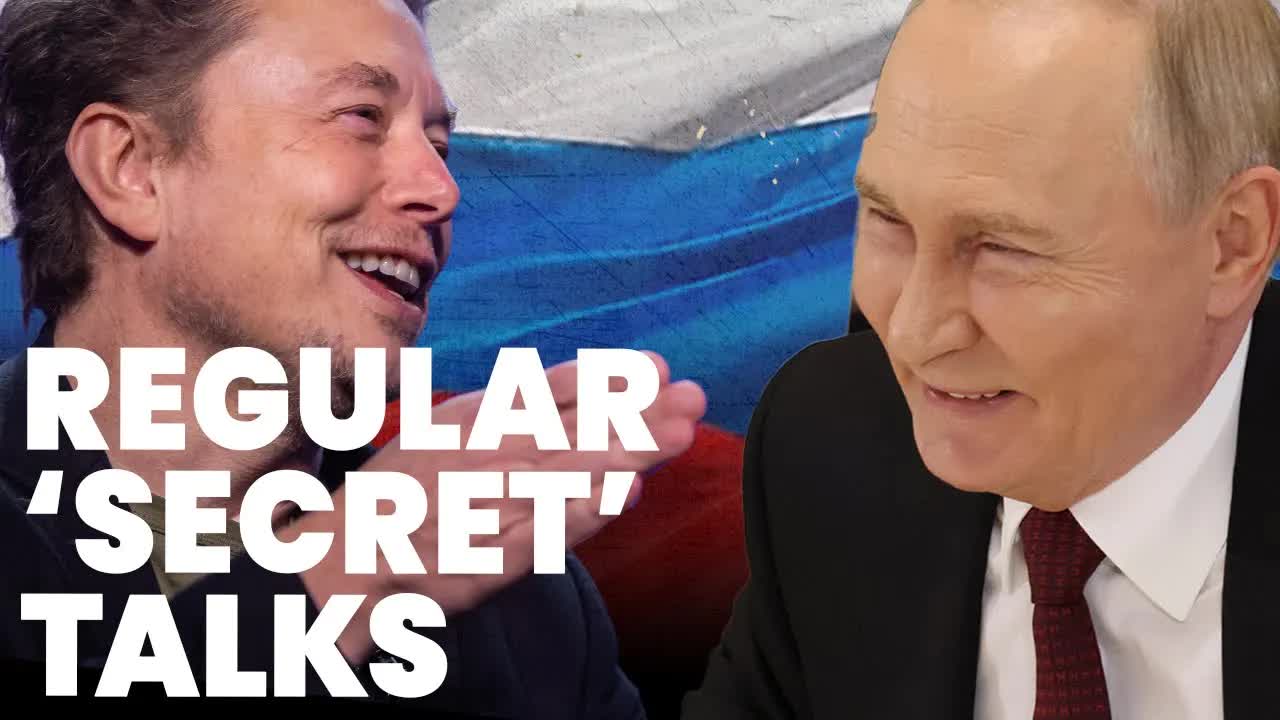
Recent revelations have stirred the pot regarding Elon Musk’s clandestine communications with Russian President Vladimir Putin.
According to a report from the Wall Street Journal, these discussions have taken place since late 2022 and cover a range of topics, including personal matters, business interests, and the ongoing geopolitical tensions surrounding Russia’s invasion of Ukraine.
This unexpected connection between one of the world’s richest individuals and a controversial political figure raises eyebrows and questions about the implications of such interactions.
During a segment on Times Radio, Patrick Maguire, alongside Robin Brandt and Timandra Hartness, delved into this intriguing development.
The mention of Musk’s secretive engagements with Putin is particularly alarming, as it’s unlikely that the Russian leader is reaching out for something as trivial as social media verification.
Yet, the nature of their discussions could hint at deeper motives, especially given the backdrop of Russian misinformation campaigns and election interference accusations.
Musk, who is not just a tech mogul but also a significant player in various industries, including space exploration and satellite communications, certainly possesses considerable influence.
His ownership of X (formerly Twitter) and Tesla, along with his involvement in Starlink, the satellite communication service, places him in a unique position.
The fact that he has been in regular contact with Putin adds another layer to his already complex public persona.
Starlink, in particular, has been a focal point of controversy.
Musk provided satellite services to Ukraine amidst the ongoing conflict, yet questions linger over the operational limits of these services, especially concerning Crimea.
This recent news sheds light on Musk’s motivations and the potential geopolitical ramifications of his business decisions, especially when considering that Putin allegedly requested Musk to prevent Starlink from functioning over Taiwan—an apparent favor to Chinese President Xi Jinping.
The dialogue between Musk and Putin suggests a back channel that could be pivotal in shaping international relations.
With Musk’s vocal support for Donald Trump and his aspirations for a second term, the intersection of business and politics becomes even more fascinating.
Musk finds himself in a unique position, acting as a bridge between these two influential figures, which raises questions about the nature of power in today’s world.
The power dynamics at play here are striking.
Musk embodies a blend of eccentricity and influence reminiscent of historical industrial titans like Rockefeller and Carnegie.
Yet, unlike those past figures, Musk’s reach extends into the digital realm, where the lines between commerce and politics blur.
His regular communication with Putin underlines the significant role he plays in shaping not just technology but also global geopolitics.
The conversation also touches on the broader implications of Silicon Valley’s elite.
Many of these tech giants, once seen as liberal champions, are now navigating a shifting political landscape.
Musk’s libertarian tendencies highlight a divergence from traditional liberal values, suggesting a new era where tech leaders may align more closely with conservative ideologies.
Moreover, the discussion reveals a growing cynicism towards traditional politicians compared to these powerful business figures.
As citizens increasingly entrust their data and privacy to private corporations, the question arises: Are we putting too much faith in these unaccountable entities?
The irony is palpable; while we resist government oversight, we willingly surrender our information to big tech companies.
The leaked information about Musk’s communications with Putin may signal rising concern within U.S. defense circles.
The timing of this revelation, coinciding with an election cycle, suggests that those opposed to Trump might have motives for bringing this to light.
It raises the question of whether this leak serves as a warning to Musk about the potential consequences of his political affiliations and business dealings.
As the political landscape continues to evolve, so too does the role of figures like Musk.
His influence stretches beyond mere business ventures; it encompasses national security, international relations, and the very fabric of democracy itself.
The intersection of technology, politics, and personal relationships is becoming increasingly complex, and Musk’s position places him at the heart of this evolving narrative.
The shift in Silicon Valley’s political allegiances reflects a broader trend of disillusionment with established norms.
As tech leaders move away from their roots in liberalism, they embrace a more capitalist-driven ethos.
This transformation signals a changing tide in how these powerful figures view their roles in society and the impact they can wield on global affairs.
Ultimately, as we continue to witness the intertwining of business and politics, the implications of Musk’s relationship with Putin will likely unfold in unexpected ways.
The world watches closely, intrigued by the potential consequences of these secret communications and what they might mean for the future of international relations and the balance of power.
Read more
