








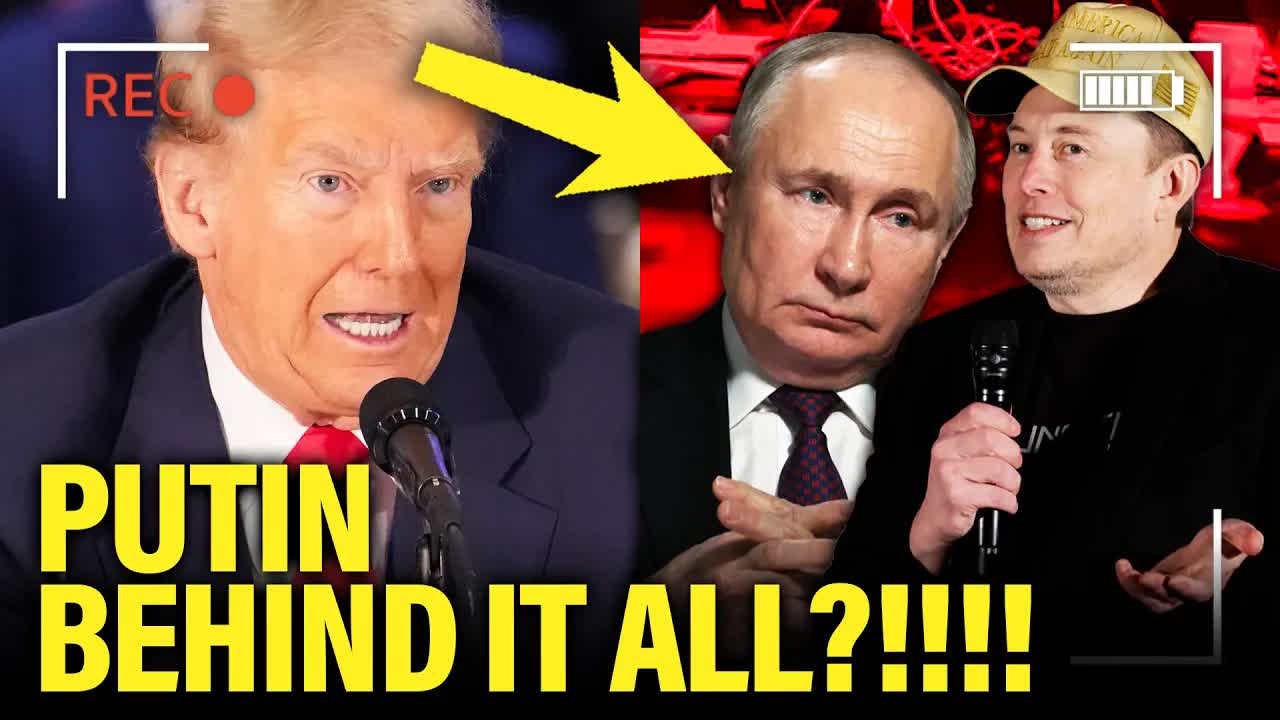
Recent revelations have sparked a firestorm of controversy surrounding tech mogul Elon Musk, raising questions about his connections to Russia and whether he is acting as an unregistered foreign agent.
This inquiry comes on the heels of investigative reporting from the Wall Street Journal, which uncovered that Musk has engaged in extensive communication with Russian President Vladimir Putin since 2022.
The implications of these interactions are profound, especially considering Musk’s significant influence and resources in the realm of technology and space.
The Wall Street Journal’s investigation suggests that Musk’s conversations with Putin go beyond casual exchanges.
Reports indicate that Putin has directly requested Musk to prevent his Starlink satellite system from being used by Taiwan, likely to avoid angering China, a key ally of Russia.
This raises eyebrows about Musk’s role in international relations, particularly as he receives substantial funding—around $3 billion—from the U.S. government for various technological projects, including those related to NASA.
Musk’s involvement in foreign policy is particularly alarming given that he appears to be operating independently of the established protocols dictated by the U.S. government.
As the sole authority responsible for conducting foreign affairs, the sitting president should be the one directing such initiatives.
Yet, Musk’s actions suggest he may be pursuing his own agenda, potentially undermining U.S. interests.
The situation becomes even more concerning when examining Musk’s statements regarding the war in Ukraine.
In October 2022, he began echoing Kremlin narratives, proposing a peace plan that aligns closely with Putin’s interests.
This plan would allow Russia to retain control over significant portions of Ukraine, effectively legitimizing its aggressive actions.
Such behavior raises serious questions about Musk’s loyalties and motivations.
Initially, Musk appeared to support Ukraine by providing Starlink technology to aid their defense against Russian aggression.
However, reports indicate a dramatic shift in his stance, as he allegedly curtailed support for Ukraine while simultaneously offering Starlink capabilities to the Russian military.
This drastic turn of events paints a troubling picture of Musk as someone who may be prioritizing personal relationships over national security.
Moreover, the implications of Musk’s actions are not merely theoretical.
They suggest a potential violation of U.S. laws regarding foreign agents and espionage.
If Musk is indeed acting contrary to American interests, he could be classified as a spy or an unregistered foreign agent—both serious allegations that warrant immediate investigation by the Department of Justice.
The recent scrutiny of Musk’s ties to Trump further complicates the narrative.
Their relationship has grown closer, with Trump reportedly relying on Musk for campaign strategies that bypass traditional grassroots efforts.
This alliance raises concerns about the intertwining of corporate power and political influence, particularly in the context of national security.
Musk’s ambitions appear to extend beyond mere business interests; he seems to be positioning himself as a pivotal figure in shaping U.S. foreign policy.
His desire to install allies in key governmental positions, such as at NASA or the Department of Defense, poses a direct challenge to the current administration’s authority and complicates the broader geopolitical landscape.
The historical context of espionage in America cannot be overlooked.
Comparisons to past cases, such as the Rosenbergs, highlight the severity of the charges Musk faces if these allegations hold any truth.
The notion that a civilian could wield such influence over foreign policy while cozying up to adversaries is alarming and demands urgent attention from federal authorities.
As the Biden administration grapples with these revelations, the call for investigations into Musk’s activities is growing louder.
Agencies like the FBI and CIA must scrutinize his actions to ensure that U.S. national security is not compromised by a private citizen acting on behalf of foreign interests.
This unfolding drama underscores the need for transparency and accountability, especially as we navigate complex global dynamics.
The implications of Musk’s actions could reverberate far beyond his companies, impacting the very fabric of American democracy and security.
The time for action is now, as the stakes have never been higher.
Read more
