









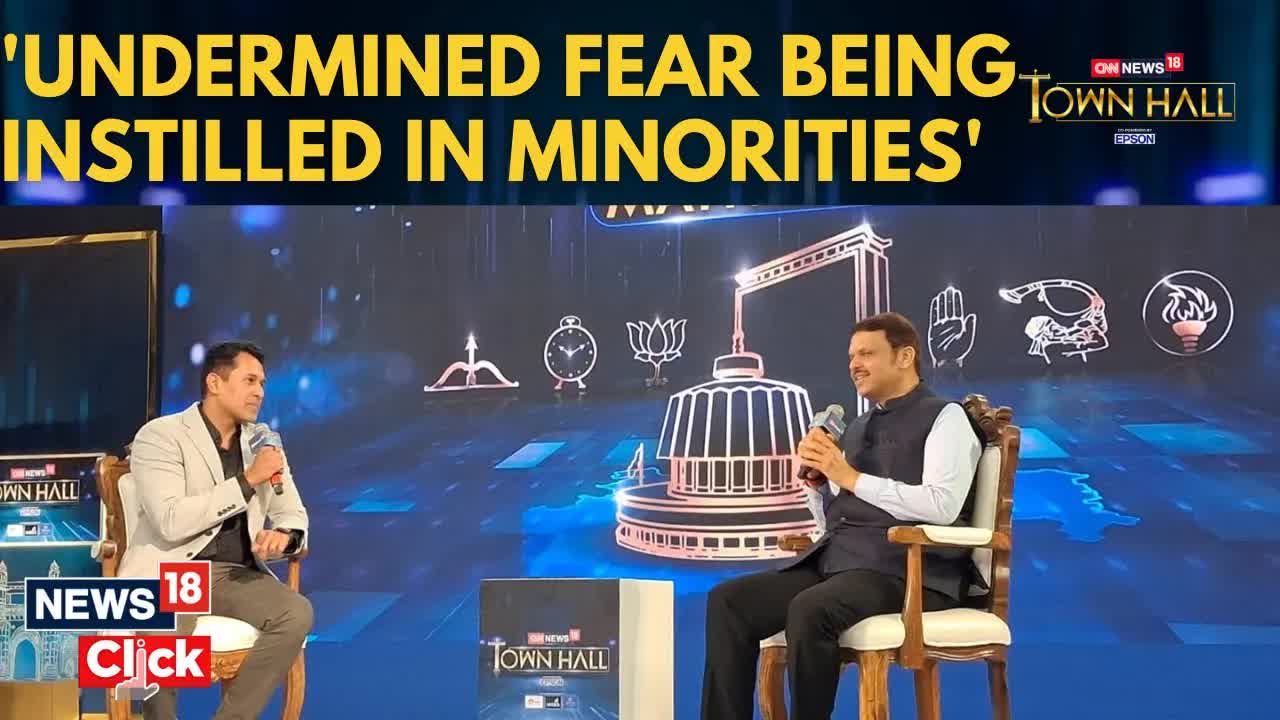
The recent Lok Sabha election results have sparked significant discussions, particularly regarding the close competition between the Mahayuti and the Mahavikas Aghadi alliances.
Analyzing the numbers reveals that Mahavikas Aghadi secured 43.9% of the votes, while Mahayuti followed closely with 43.6%.
This narrow margin of just 0.3% raises questions about the effectiveness of both parties’ strategies and voter perceptions.
It seems that the Mahayuti coalition underestimated the electorate’s sentiment.
Initially, there was a belief that voters would not resonate with certain narratives, but the results indicate otherwise.
It appears that the issues at play have percolated through to the voters, influencing their choices in unexpected ways.
One noteworthy aspect of the election was the phenomenon often referred to as “vote jihad” observed in Maharashtra.
Take, for instance, the Dhule constituency, which is pivotal in this discussion.
In this area, there are six assembly segments, and Mahayuti managed to lead in five of them, boasting a substantial lead of nearly 190,000 votes.
However, in the Malegaon seat, they faced a setback, trailing by over 104,000 votes, marking a significant deviation from their overall performance.
This situation raises an intriguing question: Could the narrative of fear cultivated among minority communities have influenced voting behavior?
It seems that the Mahayuti coalition did not fully grasp the potential impact of such fears, leading to a surprising surge in what can be termed “revenge voting” among these groups.
The repercussions of this trend were evident, resulting in a notable shift in seat allocations.
Despite the setbacks, there’s a sense of renewed determination within the Mahayuti ranks.
Preparations are underway to address the challenges faced in this election cycle.
Observers on the ground suggest that the current narrative is shifting in favor of Mahayuti.
They argue that the previously dominant narrative has been discredited and that the electorate is becoming more aware of the political machinations at play.
In Mumbai, for instance, the developments in local governance and infrastructure projects have garnered attention.
The impact of various schemes initiated by the Mahayuti alliance is becoming increasingly visible, prompting discussions among the electorate.
Whether it’s improvements in metro connectivity or local roadworks, citizens are beginning to take notice of the tangible changes.
Moreover, the political landscape is evolving as voters reassess their priorities and the effectiveness of the ruling party’s policies.
The Mahayuti coalition believes that the groundwork laid through their initiatives is gradually resonating with the public.
There’s a growing perception that the previous narratives were not only misleading but also self-serving.
As the dust settles from the election, the Mahayuti coalition is keen on harnessing the momentum generated by their efforts.
They are optimistic that the electorate’s awareness of their policies will translate into electoral support in the future.
The focus now is on rebuilding trust and reinforcing their commitment to addressing the concerns of all communities.
In essence, the political dynamics in Maharashtra are shifting, and the Mahayuti coalition is poised to adapt to these changes.
The lessons learned from this election are being taken seriously, and there’s a palpable sense of urgency to recalibrate strategies moving forward.
The coalition is determined to ensure that their message resonates with the electorate, dispelling any lingering doubts about their intentions and capabilities.
The coming months will be crucial as both alliances reassess their approaches and engage with the electorate.
With the Mahayuti coalition committed to transparency and effective governance, the stage is set for an intriguing political journey ahead.
The question remains: how will these developments shape the future of Maharashtra’s political landscape?
Only time will tell.
Read more
