





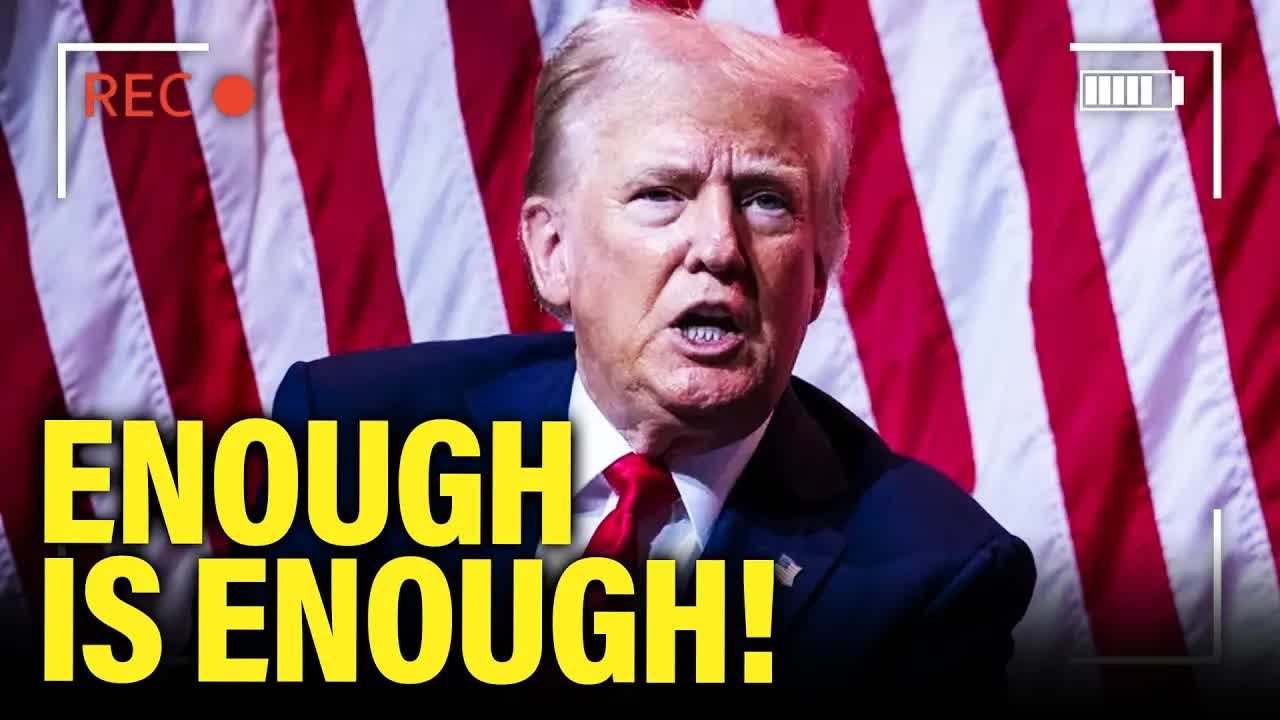
In an era where misinformation runs rampant, the recent comments made by former President Donald Trump have sparked significant controversy.
While disinformation is often attributed to foreign adversaries like Russia and China, Trump’s statements about emergency responses to hurricanes have raised eyebrows, even among his Republican supporters.
As hurricanes batter the United States—partly a consequence of climate change—Trump’s claims are being scrutinized more than ever.
Dave Aronberg, the state attorney for Palm Beach County, highlighted the absurdity of some of Trump’s assertions.
He pointed out that Trump has claimed, without evidence, that FEMA funds meant for hurricane relief are being diverted to aid undocumented immigrants.
Such statements not only mislead the public but also distract from the real issues at hand, particularly as communities grapple with the aftermath of severe weather events.
Aronberg, who has weathered his fair share of hurricanes as a Floridian, emphasized that these natural disasters are not the result of conspiracy theories but rather the direct impact of rising sea temperatures.
He noted that the latest hurricanes, including Haleen and Milton, are linked to the warming waters of the Gulf of Mexico.
Addressing climate change could be a more productive conversation, he suggested, rather than entertaining baseless conspiracy theories.
Fact-checker Daniel Dale from CNN has debunked several of Trump’s claims.
Among them are allegations that $1 billion was stolen from FEMA and that federal assistance for hurricane victims is limited to a mere $750.
Additionally, Trump falsely stated that there were no rescue helicopters in North Carolina.
These fabrications can easily be disproven, yet they spread quickly, especially when people lack access to reliable information.
As the election season approaches, the strategy of spreading misinformation appears to be gaining traction.
Many individuals affected by disasters may find themselves without power or access to mainstream media, relying instead on word-of-mouth accounts that often perpetuate falsehoods.
This is where the responsibility of leaders comes into play.
Republican Senator Tom Tillis, a staunch Trump ally, recently acknowledged the challenges posed by misinformation.
He argued that while billions are indeed spent due to Biden’s immigration policies, the resources necessary for disaster response are still intact.
Tillis’s remarks came during an interview where he sought to clarify that the current situation in Western North Carolina is not hampered by the administration’s border policies.
Interestingly, during Trump’s presidency, he himself redirected FEMA funds for immigration-related initiatives, contradicting his current criticisms of the Biden administration.
This pattern of projection—where one party accuses another of their own past actions—has become a hallmark of political discourse in recent years.
In Tennessee, Mayor Glenn Jacobs, known for his wrestling persona as Kane, took to Twitter to counter misinformation regarding FEMA’s operations.
He urged people to stop spreading harmful rumors that could hinder recovery efforts and called for unity in helping those affected by the disasters.
Jacobs, a Trump supporter, showed that even within his ranks, there is frustration over the spread of false narratives.
However, it remains uncertain whether these officials will publicly confront Trump directly.
Many seem reluctant to openly criticize him, even while acknowledging the need to combat misinformation.
Behind closed doors, they may express different sentiments, but the public facade often remains intact.
State and local leaders from both parties have condemned the proliferation of conspiracy theories.
North Carolina State Senator Kevin Corbin expressed concern over how these rumors detract from recovery efforts.
He encouraged constituents to dismiss the false claims circulating on social media, emphasizing the importance of truth during such challenging times.
The situation highlights the difficulty of holding political figures accountable for their words.
While many officials are willing to denounce misinformation, they often shy away from naming the sources of these lies.
The reluctance to directly call out Trump, who continues to wield significant influence within the Republican Party, complicates matters.
In Ohio, Republican officials have also spoken out against the harmful effects of misinformation.
Governor Mike DeWine criticized Trump’s outrageous claims about migrants, labeling them as damaging and hurtful.
Similarly, Springfield Mayor Rob Rue condemned the unfounded conspiracy theories that have been circulating, stressing their negative impact on local communities.
As the battle against misinformation continues, the challenge lies not just in debunking falsehoods but in addressing the individuals spreading them.
Political courage is required to confront these issues head-on, and until that happens, the cycle of misinformation may persist.
The call for accountability is stronger than ever, and it remains to be seen whether leaders will rise to the occasion.
Read more
