



In the current political landscape, the Democratic Party finds itself grappling with significant challenges, particularly concerning Vice President Kamala Harris’s standing among Black male voters.
Recent polling data paints a troubling picture, suggesting that Harris may be in serious trouble.
As the party navigates this precarious situation, many are looking to former President Barack Obama for guidance, believing he might be their best hope for rallying support.
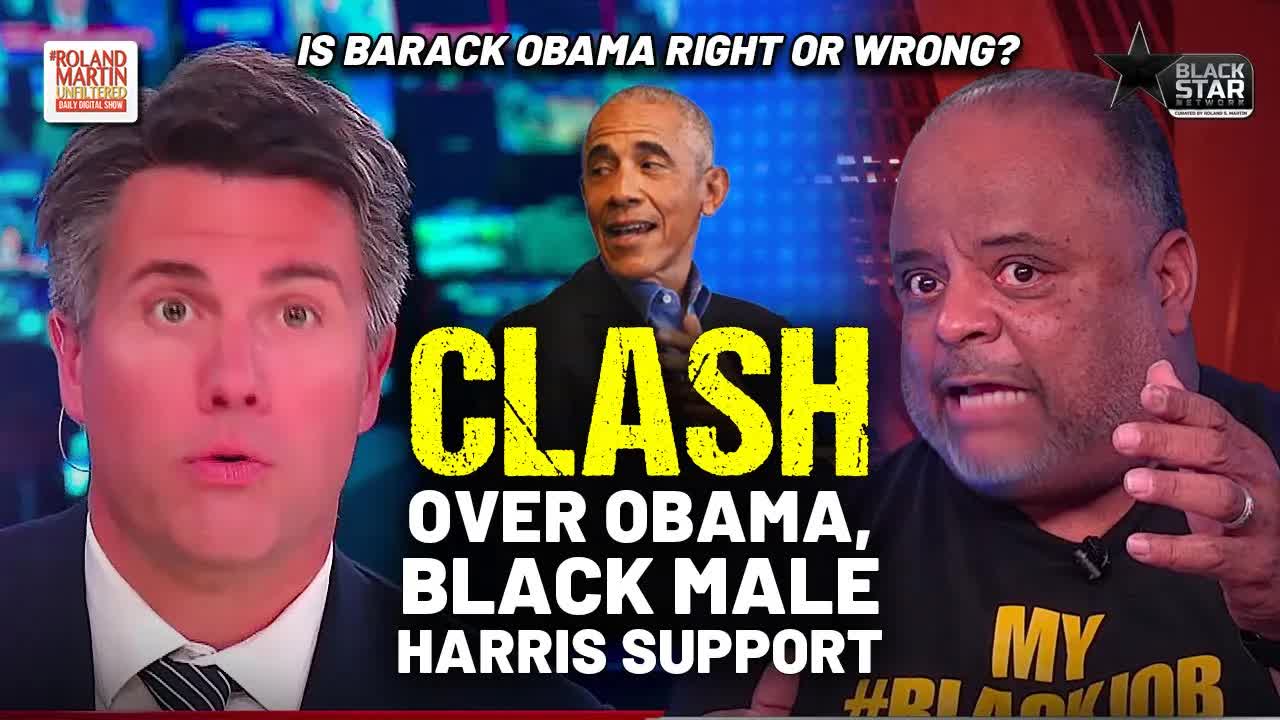
Roland Martin, host of “Roland Martin Unfiltered,” recently weighed in on this pressing issue.
He expressed his concerns regarding Obama’s team seemingly admonishing Black men for not backing Harris.
Martin firmly contended that such an approach is misguided, pointing to solid data that contradicts the narrative being pushed.
He emphasized that Black men represent the second-largest voting bloc within the Democratic Party, just behind Black women, and their political preferences are evolving.
Reflecting on historical voting patterns, Martin noted that during Obama’s 2008 campaign, he secured an impressive 95% of the Black male vote.
However, he highlighted a worrying trend: as time has passed since the civil rights movement, fewer African Americans identify strictly as Democrats.
This shift is particularly evident among younger voters, who are increasingly disenchanted with the party’s traditional platforms.
Martin pointed out that although President Biden’s approval ratings among African Americans have dipped, Harris has managed to bridge some of that gap.
He cited recent statistics showing a surge in voter turnout among young Black women, suggesting that Harris’s campaign is beginning to resonate with this demographic.
This uptick is crucial as it indicates a potential revitalization of support for the Vice President.
During the discussion, Martin underscored the importance of understanding the nuances of Black male voter sentiment.
He argued that mainstream polls often fail to accurately capture this demographic’s opinions, leading to misleading conclusions about their political affiliations.
By engaging with organizations like the Black Voter Project, he believes the Democratic Party can gain better insights into the changing dynamics at play.
Despite Martin’s optimism about Harris’s prospects, the conversation turned to the broader implications of identity politics.
When asked if the electorate should be viewed through the lens of education rather than race, Martin firmly disagreed.
He maintained that identity remains a critical factor in political engagement, as evidenced by targeted efforts from both major parties to connect with various racial and socio-economic groups.
As the political climate continues to evolve, Martin predicted that we would witness a concerted effort from Harris to address the issues that matter to Black voters.
He revealed plans for an upcoming interview with Harris in North Carolina, which he hopes will shed light on her strategies to regain lost support.
The stakes are undeniably high for Harris and the Democratic Party.
With the election cycle heating up, the need for clear communication and effective outreach to Black male voters has never been more pressing.
Martin’s insights suggest that while challenges abound, there is still room for the Vice President to make significant strides.
Looking ahead, the question remains: Can Harris successfully galvanize the support she needs to secure her position?
The answer lies in her ability to connect authentically with voters and address their concerns head-on.
As the political landscape shifts, all eyes will be on her next moves.
Ultimately, the dialogue surrounding Harris’s candidacy reflects a broader struggle within the Democratic Party to adapt to the changing preferences of its base.
With influential voices like Martin advocating for a deeper understanding of voter dynamics, there is hope that the party can recalibrate its approach and engage effectively with all constituents.
As we await the outcomes of upcoming polls and the results of Harris’s outreach efforts, one thing is clear: the fight for the hearts and minds of Black voters is far from over.
The road ahead may be fraught with challenges, but the potential for change is palpable.
Read more
