




In today’s political landscape, the clash between democracy and authoritarianism has never been more pronounced.
As we dissect the contrasting policies of figures like Donald Trump and Kamala Harris, it’s crucial to remember that this isn’t just about policy differences; it’s a deeper struggle for the soul of our nation.
The stakes are high, with many Americans yearning for a return to normalcy and common sense in governance.
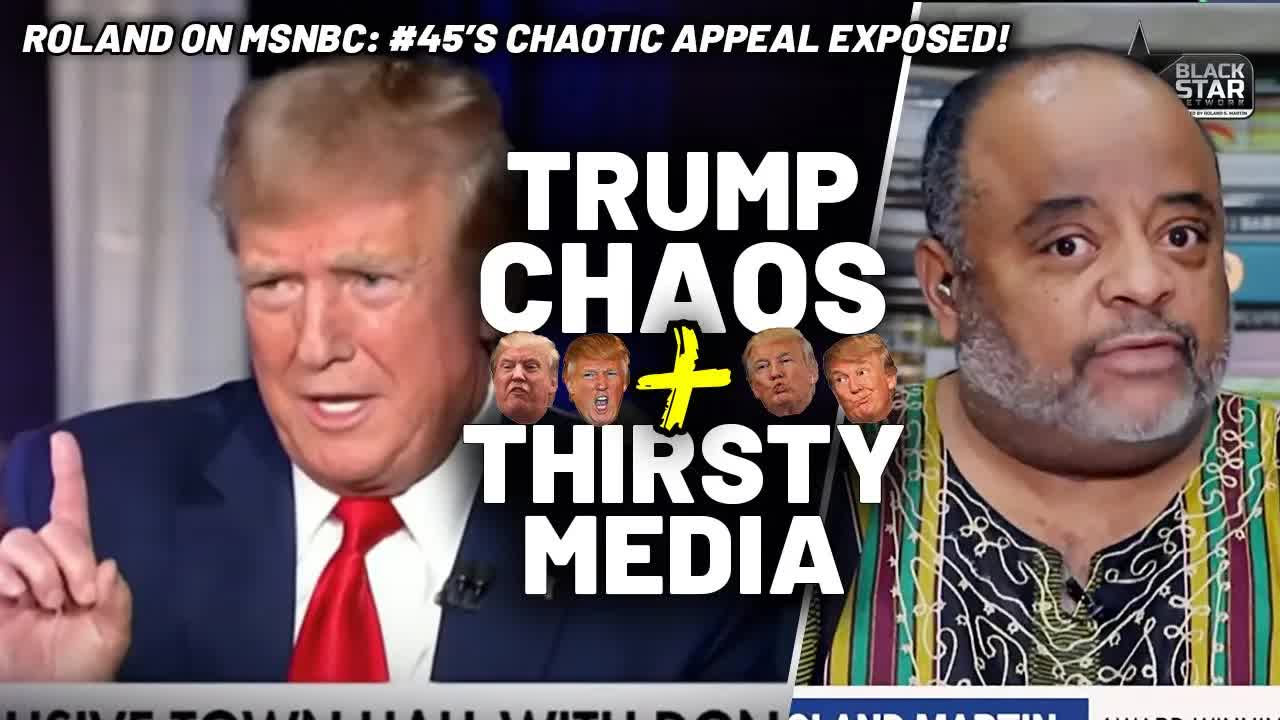
Recently, rapper Plies highlighted an intriguing point: the media seems to demand substantive policies from Vice President Kamala Harris while seeking entertainment from Donald Trump.
This disparity reflects a troubling trend where sensationalism often overshadows serious discourse.
Since 2011, Trump has leveraged this media dynamic to his advantage, playing into narratives that promote chaos and division.
His supporters see him as a wrecking ball, ready to dismantle the current system, and they cheer for his outrageous comments, believing he embodies their frustrations.
However, this mindset is fundamentally unrealistic.
Media professionals must take responsibility for their role in normalizing Trump’s behavior.
For years, many have hesitated to label his statements as falsehoods, opting instead for euphemisms.
But now, more than ever, it’s essential to speak truthfully and boldly about the implications of his rhetoric.
Unfortunately, some in the media may secretly welcome Trump’s return, driven by the allure of higher ratings and increased revenue.
A recent advertisement from the Lincoln Project has gone viral, shedding light on the potential consequences for individuals seeking abortions, even when crossing state lines.
This dramatic portrayal underscores a critical issue that could mobilize voters in the upcoming elections.
The fallout from the Supreme Court’s decision to overturn Roe v. Wade has ignited a passionate debate about women’s rights and government overreach.
Interestingly, the Republican Party has historically criticized national healthcare initiatives, arguing against government interference in the doctor-patient relationship.
Yet, in a post-Roe world, the same party is now advocating for policies that place governmental barriers between women and their healthcare providers.
This contradiction is not lost on many voters, particularly those who may oppose abortion but find the idea of criminalizing the procedure abhorrent.
As the political landscape evolves, the real battle is no longer confined to traditional ideological lines.
It’s a contest over the balance of power between individual rights and governmental authority.
Surprisingly, supporting Harris may align more closely with conservative values, as her stance advocates for personal freedoms rather than heavy-handed governmental control.
Moreover, the Lincoln Project ad serves as a powerful reminder of the implications of these policies.
It depicts a father and daughter being pulled over by law enforcement, illustrating the chilling reality of a world where reproductive rights are curtailed.
This imagery resonates deeply, emphasizing the need for voters to recognize the true nature of the government’s role in their lives.
It’s vital to acknowledge that the current political climate is not merely about calling out Trump’s lies.
It’s about understanding his strategic denial of the last election’s outcome and how he’s laying the groundwork for similar tactics in the future.
The narrative he crafts can distort public perception, making it difficult for voters to grasp the gravity of the situation.
For Kamala Harris, the challenge lies in maintaining a robust communication strategy that effectively counters Trump’s antics.
While abortion and reproductive rights are significant issues, the campaign must also address broader economic concerns facing millions of Americans.
Highlighting the struggles of the working poor and advocating for a living wage can forge connections with voters who feel neglected by the current administration.
In the face of Trump’s provocations, Harris has demonstrated an admirable restraint.
Rather than engaging in his distractions, she focuses on the issues that matter.
This approach is refreshing; it’s a stark contrast to the typical political back-and-forth that often dominates debates.
If I were advising her, I’d suggest framing her arguments as if addressing a jury, clearly outlining why Trump poses a threat to the democratic process.
The upcoming debates promise to be pivotal, especially given the intense scrutiny surrounding both candidates.
Harris’s ability to maintain composure while articulating her vision for America could prove crucial.
After all, we’re witnessing an unprecedented moment in history where one candidate is a seasoned prosecutor and the other is embroiled in controversy.
As we navigate this complex political terrain, it’s essential to stay focused on the real issues at hand.
The future of democracy hangs in the balance, and voters must be equipped with the knowledge to make informed decisions.
The Lincoln Project’s recent ad serves as a powerful reminder of the stakes involved, urging everyone to engage with the pressing matters that will shape our nation’s future.
Read more
