









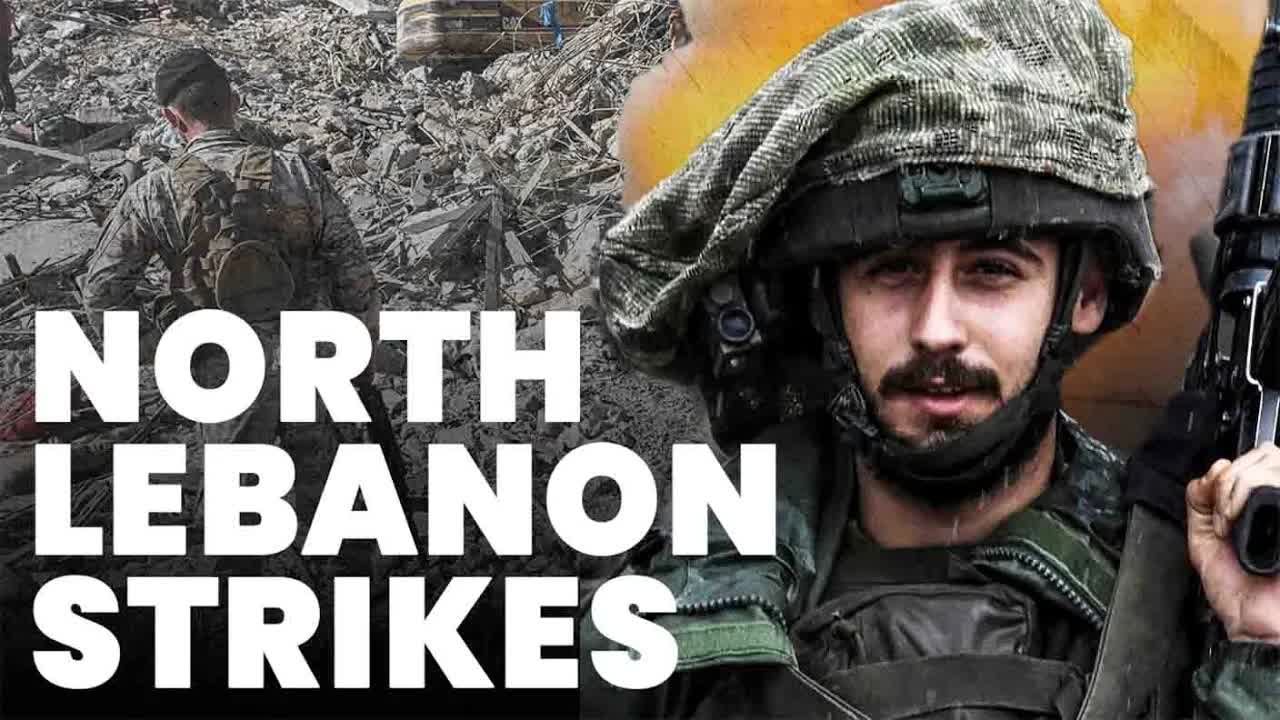
In a shocking turn of events, an airstrike in northern Lebanon has left 21 people dead, raising questions about the evolving nature of the conflict between Israel and Hezbollah.
While Israel’s focus has primarily been on dismantling Hezbollah’s presence in southern Lebanon, this recent attack targeted a predominantly Christian area that had previously been considered safe.
Edmund Bauer from The Times reports live from Beirut, shedding light on the circumstances surrounding this tragic incident.
According to initial reports, the building that was struck housed several families displaced from Shia regions.
Among them was a family allegedly linked to Hezbollah, which may explain the attack’s focus on this particular location.
The unexpected nature of this strike has left many residents in disbelief, as they believed their rural community was insulated from the violence plaguing other parts of the country.
This incident raises an important question: How could Hezbollah be present in a seemingly secure area?
The reality is that with approximately 1.2 million people displaced from southern Lebanon due to ongoing airstrikes, many have sought refuge in the north.
This influx has inevitably led to the mingling of various groups, including potential Hezbollah affiliates, making it difficult for local authorities to ensure safety.
Local officials in northern Lebanon are now grappling with the challenge of providing shelter to those fleeing violence while simultaneously tightening security measures to mitigate risks.
However, implementing thorough background checks poses a significant challenge, given the deep-rooted connections many individuals have with Hezbollah, complicating efforts to identify potential threats.
Geographically speaking, Lebanon is a small nation where the distance between the north and south can be covered in just a few hours by car.
While the focus has often been on southern Lebanon, other regions have not remained untouched.
Areas such as the Beqaa Valley have also experienced airstrikes, leading to a growing sentiment among citizens that nowhere in Lebanon can be deemed entirely safe anymore.
The ongoing conflict has also sparked discussions about the role of the United Nations Interim Force in Lebanon (UNIFIL).
Israel has recently claimed to have discovered Hezbollah tunnels alarmingly close to UNIFIL positions, prompting speculation about whether the peacekeeping force has been aware of these developments.
While UNIFIL has been in the region for years, the extent of its knowledge regarding Hezbollah’s activities remains uncertain.
As tensions mount, the international community is keeping a close watch on developments in Gaza, where airstrikes continue unabated.
Despite fading from the headlines, the situation there is dire.
Reports indicate that northern Gaza is currently under siege, with over 300 casualties resulting from relentless attacks.
Humanitarian conditions are deteriorating rapidly, with shortages of food and medical supplies exacerbating the crisis.
Israeli Prime Minister Benjamin Netanyahu has defended the nation’s actions, asserting that Israel has consistently urged UN personnel to vacate areas of conflict.
He vehemently denied accusations of deliberately targeting UNIFIL personnel, framing Israel’s military operations as necessary for national security.
Gerald Fierstein, a former U.S. diplomat, weighed in on the broader implications of these conflicts, emphasizing the complexity of the situation.
He pointed out that while UNIFIL’s mission is to maintain peace, its effectiveness is hampered by the intricate political landscape and the actions of both Hezbollah and Israel.
The prospect of a wider conflict looms large as Israel intensifies its operations in both Gaza and Lebanon.
Questions arise regarding Israel’s strategic objectives and whether they intend to escalate their military campaigns beyond current boundaries.
As the situation evolves, the potential for further casualties and regional destabilization remains a pressing concern for all involved.
With the conflict escalating on multiple fronts, the international community watches closely, hoping for a resolution that prioritizes civilian safety and addresses the humanitarian crises unfolding in both Lebanon and Gaza.
The stakes have never been higher, and the need for dialogue and diplomacy has never been more urgent.
Read more
