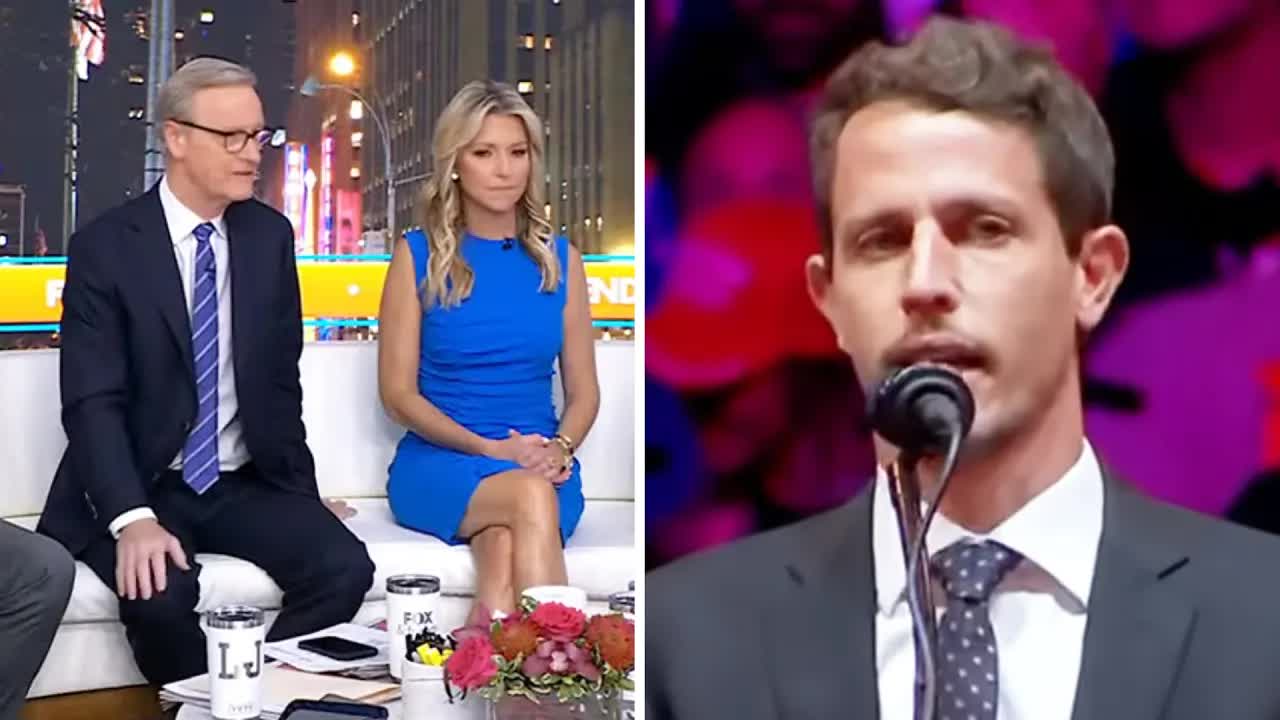
In a recent rally at Madison Square Garden, comedian Tony Hinchcliffe ignited controversy with his remarks about Puerto Rico, describing it as a “floating pile of garbage.”
His comments, which included a joke involving a watermelon and a Black audience member, fell flat even among the fervent MAGA supporters present.
The backlash was swift and widespread, leaving the Trump campaign scrambling to distance itself from the fallout.
The Trump campaign quickly issued a statement clarifying that Hinchcliffe’s views do not align with their own.
Meanwhile, Fox and Friends attempted to downplay the situation, suggesting that the offensive remarks made by the warm-up acts had been properly denounced.
However, the damage was already done.
A comic’s derogatory comments regarding Latinos, Puerto Ricans, and African Americans have drawn ire from various quarters, prompting a backlash not only from the Republican campaign but also from the Harris camp.
Kamala Harris’s team wasted no time in responding to the incident, rallying support from influential figures in the Puerto Rican and Latino communities.
Notable artists like Bad Bunny and Ricky Martin took to social media to express their disapproval.
Martin, with millions of followers, made a poignant statement urging voters to consider the implications of such remarks, effectively framing the situation as a referendum on how Puerto Ricans are viewed by certain political factions.
A Trump advisor later claimed that Hinchcliffe’s comments had not been vetted prior to the event, a defense that many found unconvincing.
The timing of the remarks—just two hours before Trump’s appearance—only added fuel to the fire.
Critics argue that it’s hard to separate the comedian’s words from the larger narrative of the rally, which has been described by some media outlets as a “carnival of grievances.”
Republican Senator Rick Scott also weighed in, tweeting that Hinchcliffe’s joke was a failure, stating, “It’s not funny and it’s not true.”
He praised Puerto Ricans as “amazing people” and emphasized the beauty of the island, likely aware of the significant Puerto Rican population in Florida—a demographic that could sway upcoming elections.
Scott’s comments, however, raised questions about whether they stemmed from genuine concern or political strategy.
The Republican Party appears to be in full damage control mode, with party members rushing to distance themselves from Hinchcliffe’s remarks.
Yet, Trump himself has remained silent on the issue, despite the campaign’s efforts to clarify their stance.
This silence raises questions about the potential repercussions for the Trump campaign as it navigates this sensitive terrain.
As the political landscape shifts, voters are left pondering the implications of such rhetoric.
Many may find themselves questioning their allegiance to a party that seems to tolerate or overlook such divisive commentary.
This incident serves as a stark reminder of the power of words and the impact they can have on public perception.
In the wake of this controversy, the question remains: how will the Trump campaign address the concerns of Latino voters who may feel alienated by these comments?
The stakes are high, especially in battleground states where every vote counts.
As the dust settles, it’s clear that Hinchcliffe’s remarks have sparked a conversation about representation and respect within the political arena.
The response from both sides of the aisle will be critical as they seek to engage with communities that feel marginalized.
This incident could prove to be a turning point, highlighting the need for political figures to be more mindful of their language and its potential consequences.
The fallout from this rally may resonate far beyond the walls of Madison Square Garden, shaping the narratives leading into future elections.
As we watch the developments unfold, one thing is certain: the intersection of comedy and politics can be a treacherous landscape, and the repercussions of careless words can echo throughout an entire campaign.
Read more
