
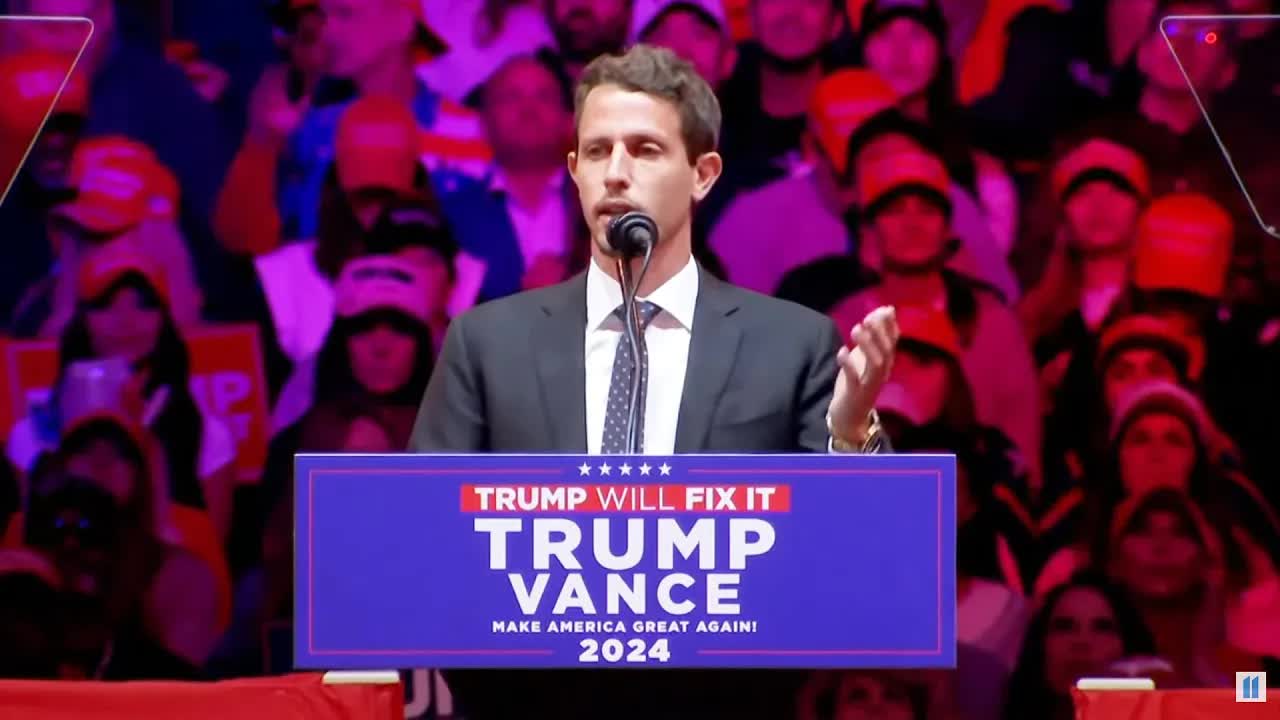
In a shocking turn of events, comedian Tony Hinchcliffe took the stage yesterday at Madison Square Garden, right before Donald Trump’s rally, and made remarks that have drawn widespread condemnation.
His comments about Puerto Rico, referring to it as a “floating island of garbage,” have not only sparked outrage among the audience but have also led to backlash from within Trump’s own campaign.
Hinchcliffe’s attempt at humor fell flat, even among some attendees of the rally, who seemed taken aback by his choice of words.
“I think it’s called Puerto Rico,” he said, while the crowd reacted with mixed responses, indicating discomfort with his comment.
It’s clear that even in a politically charged environment, there’s a line that shouldn’t be crossed, and many felt he had crossed it.
For those unfamiliar with Hinchcliffe’s work, he is known for his sharp wit and has gained popularity through his roast-style comedy.
However, his recent jab at Puerto Rico has been labeled as “punching down,” targeting a marginalized community that has historically faced challenges in the U.S.
This type of humor, which seeks to elevate oneself by belittling others, is often seen as a reflection of deeper societal issues.
While some may argue that comedy should push boundaries, Hinchcliffe’s comments seemed to resonate more with those who find solace in mocking others rather than creating an inclusive atmosphere.
This shift from roasting celebrities to targeting communities has raised eyebrows and questions about the nature of his humor.
Critics have pointed out that Hinchcliffe’s past performances, such as his roast of Tom Brady, were well-received because they targeted individuals in positions of power rather than vulnerable groups.
His latest routine, however, appears to lack the same level of thoughtfulness and respect, leaving many wondering why he chose this path.
The audience’s mixed reactions during his set highlight a growing awareness and sensitivity toward racial and cultural stereotypes.
Many spectators expressed discomfort, suggesting that Hinchcliffe’s jokes were not only inappropriate but also harmful, perpetuating negative stereotypes about people of color.
Furthermore, Hinchcliffe’s attempts at humor didn’t stop there.
He made another controversial remark about a black individual, using a stereotype about watermelons in a way that felt outdated and offensive.
While race-based humor can be clever and funny when done thoughtfully, his approach missed the mark entirely.
Adding fuel to the fire, Trump himself has made disparaging remarks about the U.S., likening it to a “garbage can.”
This connection between Hinchcliffe’s comments and Trump’s rhetoric raises concerns about the normalization of such language in political discourse.
It begs the question: are we entering a phase where derogatory remarks are becoming commonplace?
As the fallout continues, the Republican Party is facing criticism for its response to Hinchcliffe’s comments.
Many within the party are distancing themselves from his remarks, recognizing that this type of humor could alienate potential supporters and further damage the party’s image.
In a world where comedy often reflects societal attitudes, Hinchcliffe’s performance serves as a reminder of the responsibility that comes with wielding humor.
The line between funny and offensive can be razor-thin, and it’s essential for comedians to navigate it with care.
As discussions around race, identity, and humor evolve, Hinchcliffe’s remarks will likely remain a topic of debate.
This incident underscores the importance of understanding the impact of our words, particularly in a public forum where voices can easily amplify both harm and healing.
Read more
