

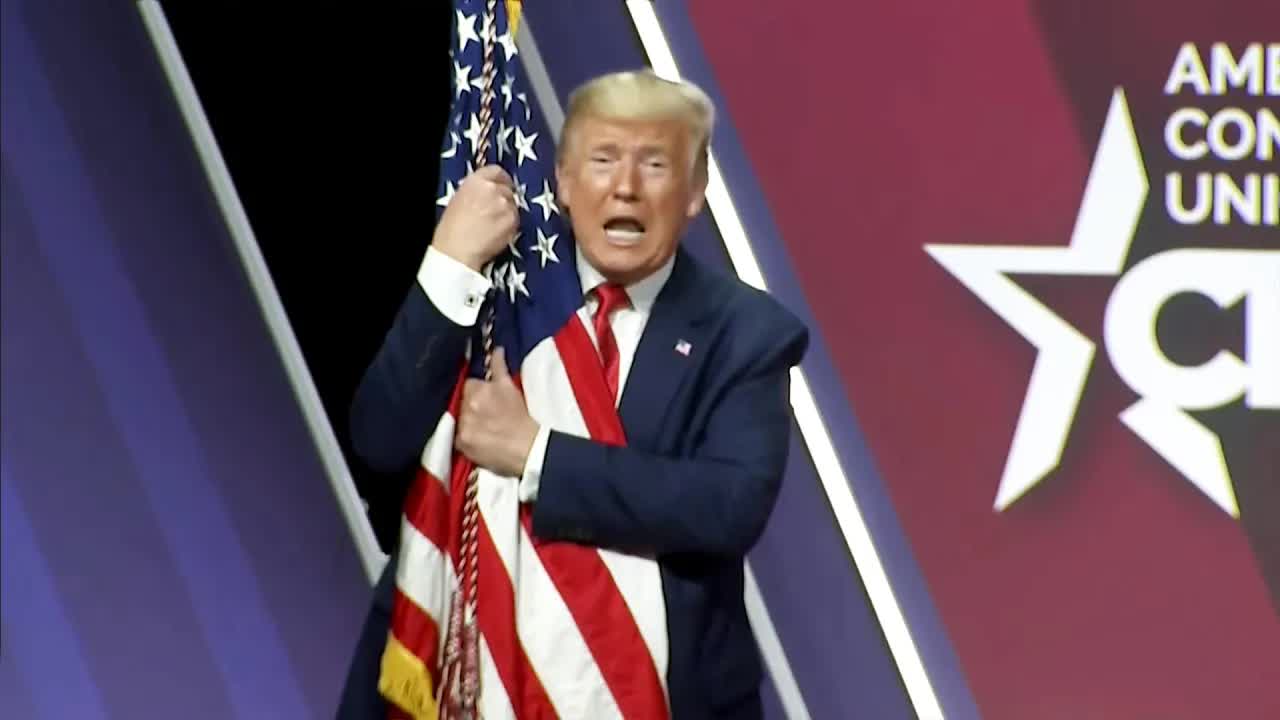
As the 2024 election looms just around the corner, a recent scientific analysis has revealed concerning insights into Donald Trump’s cognitive health.
The findings suggest that the former president is experiencing notable cognitive decline, a topic that has sparked debates about his fitness for office.
With both Trump and President Joe Biden—who is also facing scrutiny due to his age—running for the highest office in the land, the implications of this research could significantly influence voter perceptions.
The study, conducted by researchers from the University of Southern California, employed advanced linguistic analysis to assess the cognitive performance of key political figures.
This includes not only Trump but also Biden and Vice President Kamala Harris.
The analysis focused on how these candidates have communicated during debates over the past few years, highlighting the importance of language as a potential indicator of cognitive function.
Interestingly, the researchers identified seven linguistic markers that may signal cognitive decline.
These include lexical diversity, syntactic complexity, average sentence length, and the frequency of semantically vague words.
They also examined the repetition of phrases and grammatical errors, all of which can provide insight into a speaker’s cognitive state.
By analyzing transcripts from various unscripted debates, the researchers aimed to capture a more authentic representation of each candidate’s linguistic abilities.
The results of the study were striking.
Joe Biden, now 81, demonstrated a noticeable decline in his linguistic performance from 2012 to 2020, with an overall decrease of 6.5%.
More alarmingly, his rate of decline appeared to accelerate between 2020 and 2024, suggesting that concerns about his cognitive ability are not unfounded.
This raises questions about whether it was wise for the Democratic Party to replace Biden with a younger candidate.
On the other hand, Trump, at 78, has shown a steady decline since his initial run for presidency in 2016.
His linguistic performance dropped by 6% from 2016 to 2020 and then accelerated further, particularly in the last four months, where his scores plummeted by 10%.
This rapid decline has led many to wonder about the former president’s mental acuity, especially given that he has historically struggled with complex verbal communication.
Kamala Harris, the youngest of the three candidates at 60, showed the least decline in her linguistic capabilities.
Her performance remained relatively stable, with only a minor decrease that could be attributed to changing cultural expectations around political discourse.
This suggests that while both Biden and Trump are grappling with cognitive challenges, Harris appears to be maintaining her cognitive faculties more effectively.
Despite the compelling nature of these findings, it’s essential to approach the data with caution.
The scores derived from the linguistic analysis are estimates based on a large language model, which has its limitations.
Additionally, cognitive decline can manifest in ways beyond verbal communication, including memory issues and executive function.
Thus, while these linguistic markers provide valuable insights, they are not the sole indicators of cognitive health.
Critics of Biden often cite his debate performances as evidence of cognitive decline, pointing to his energy levels and overall demeanor.
However, the same scrutiny should be applied to Trump, especially given the new analysis that highlights his significant cognitive challenges.
For voters concerned about age and mental fitness, this research raises important questions about both candidates’ abilities to lead effectively.
As the election approaches, the cognitive differences between Trump and Harris are becoming increasingly clear.
Harris stands out as the only candidate who appears to be cognitively equipped for the demands of the presidency.
This reality could sway undecided voters who prioritize mental acuity in their choice of leader.
In the broader context of the election, the implications of these findings could be profound.
Voter perceptions regarding cognitive health may play a pivotal role in shaping the outcome of the race.
As the public becomes more aware of the candidates’ cognitive states, it may influence their decisions at the ballot box.
With the political landscape constantly evolving, the focus on cognitive health is likely to intensify.
As we dissect the implications of this study, it becomes increasingly crucial for voters to consider not only the candidates’ policies but also their mental fitness for the presidency.
The stakes have never been higher, and as the election draws near, every detail counts.
Read more
