







In recent years, China has found itself grappling with a multitude of economic hurdles, largely stemming from the prolonged COVID-19 restrictions.
The combination of these challenges has created a perfect storm, leading to a troubling international landscape and an even more concerning domestic situation.
As the nation positions itself as a global superpower, the realities on the ground paint a different picture.
Dr. Yu Jie, a Senior Research Fellow at Chatham House, recently shared insights on how the current political climate in the United States is influencing China’s foreign policy.
While Chinese officials often downplay the significance of American elections, asserting that they are purely domestic affairs, there’s a palpable concern within Beijing regarding the potential outcomes of these elections.
The uncertainty surrounding the future direction of U.S. politics, particularly in relation to China, is a source of anxiety for Chinese policymakers.
The bipartisan consensus in Washington identifies China as a primary rival, which complicates Beijing’s diplomatic efforts.
Both major political parties in the U.S. appear aligned in their goal to curb China’s technological advancements and maintain American supremacy on the global stage.
However, subtle differences exist between the approaches of the Democratic candidate Kamala Harris and former President Donald Trump.
Harris has not emphasized the China issue as much as Trump, who has been vocal about his stance.
If Harris retains her position, it is likely that the Biden administration’s strategy—focused on strengthening alliances in the Asia-Pacific and Europe—will continue.
In contrast, Trump’s erratic approach could reignite trade wars and challenge established agreements regarding Taiwan.
Interestingly, discussions surrounding Harris’s vice presidential pick, Tim Walz, reveal a different dynamic.
Although he has a long history of engagement with China, his relevance may be limited given the evolving geopolitical landscape.
Many Chinese strategists view his experience as outdated, focusing instead on the broader diplomatic teams that will shape U.S.-China relations.
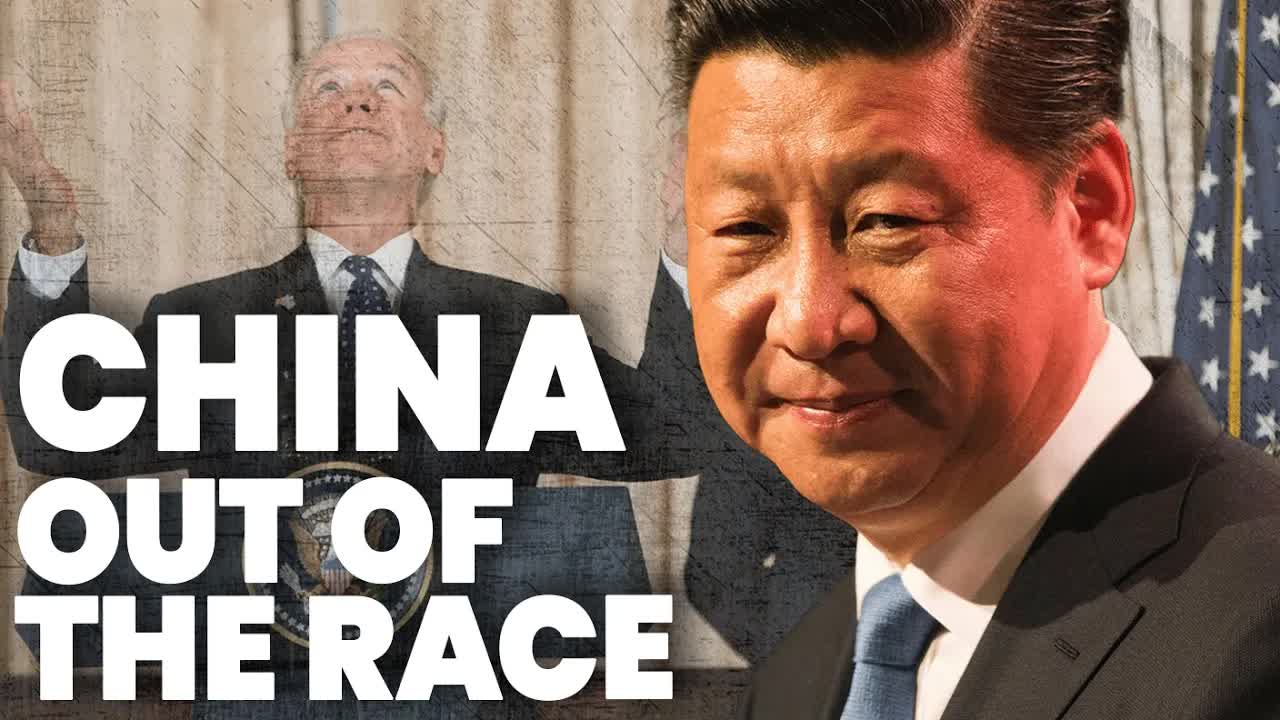
A significant shift in China’s foreign policy has occurred under President Xi Jinping, moving towards a more centralized approach.
This centralization means that policy decisions are increasingly made by the Communist Party rather than provincial governments, impacting how China prepares for potential U.S. election outcomes.
The last decade has seen this trend solidify, affecting all areas of governance, including foreign and economic policies.
As the U.S. continues its hawkish stance on trade, especially regarding tariffs, China has adopted a dual strategy to mitigate risks to its economy.
The first aspect involves a push for self-reliance in technology, particularly in response to U.S. restrictions on high-end technologies like semiconductors.
The second focuses on a broader interpretation of national security, encompassing financial stability, food security, and energy security.
Despite China’s efforts to navigate these challenges, there’s a prevailing sentiment among diplomats that U.S. restrictions on technology will persist.
The recognition that competition with the U.S. is a long-term reality has led Chinese leaders to recalibrate their expectations and strategies.
This includes accepting that the U.S. will not easily roll back its containment measures.
The issue of Taiwan remains a contentious point in U.S.-China relations.
While China advocates for peaceful reunification, the possibility of military escalation increases under a Trump presidency, which may disregard previous agreements aimed at maintaining the status quo.
Conversely, a Harris administration might adopt a more measured approach, yet the lack of clear crisis management mechanisms raises concerns on both sides.
As tensions extend beyond Taiwan to the South China Sea, the interplay between U.S. allies and China complicates the geopolitical landscape further.
The absence of effective communication channels between Beijing and Washington exacerbates fears of miscalculations that could lead to conflict.
Establishing a minimum trust-based mechanism is crucial for preventing such scenarios.
The rivalry between the U.S. and China is not just about power dynamics; it also reflects deeper issues regarding governance models and economic management.
As China strives for greater influence on the global stage, it faces significant internal challenges, including the lingering effects of COVID-19 restrictions on its economy.
This dual pressure creates an environment where aspirations of becoming a superpower seem increasingly distant.
While there may be a glimmer of hope for improved relations, the path forward is fraught with uncertainty.
The willingness of both nations to engage in constructive dialogue and crisis management will be pivotal in shaping future interactions.
As the U.S. heads into a consequential election, the outcomes may very well dictate the trajectory of U.S.-China relations for years to come.
Read more
