







A Potential Shift in Military Support
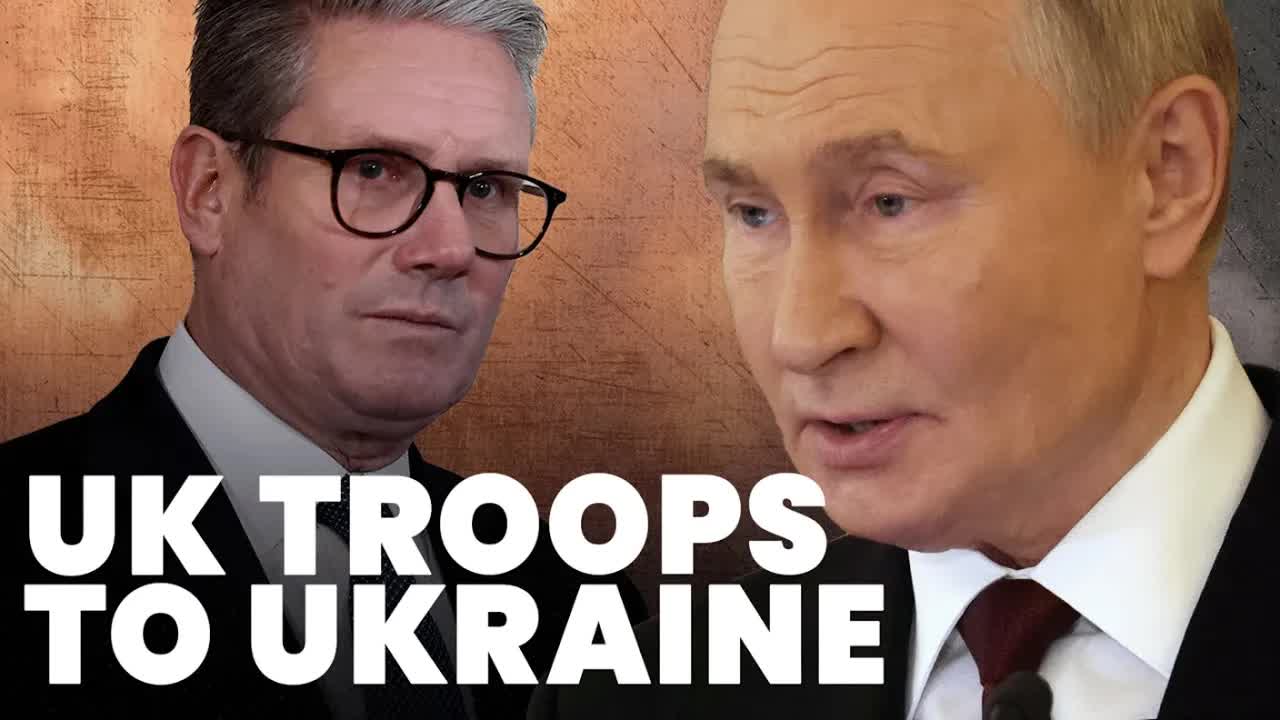
British senior military officials are reportedly contemplating the deployment of troops to Ukraine for training purposes.
This move, as indicated by a Ukrainian military source, could serve as a strong signal of solidarity against Russian aggression.
To gain insights into this significant development, we turned to Keir Gyles, a Senior Consulting Fellow at Chatham House, who has previously explored similar topics.
When asked about the implications of this potential mission, Gyles expressed cautious optimism.
While he acknowledged that any consideration of troop deployment is encouraging, he also noted the risk of disappointment if such plans fail to materialize.
He recalled a previous instance earlier this summer when French President Emmanuel Macron proposed a comparable initiative, which faced immediate backlash from NATO allies.
Therefore, while the current discussions may not be groundbreaking, they do raise questions about why action has not been taken sooner.
The idea of British troops training Ukrainian forces isn’t entirely new; it was briefly introduced by former Defence Secretary Grant Shapps a few months back but quickly met with skepticism.
Despite the initial hesitance, high-ranking officers are now revisiting the concept, indicating it remains a viable option on the table.
Gyles pointed out that while the UK has been more proactive than the United States in providing military support to Ukraine, the discussions around troop training reflect a significant shift in strategy.
Currently, British forces are already engaged in medical training within Ukraine, illustrating a commitment to support without direct involvement in combat.
However, should troops be deployed for basic training, this would escalate their presence and potentially make them targets for Russian attacks.
The prospect of British soldiers becoming direct targets raises critical concerns, particularly regarding their safety and the broader implications for UK-Russia relations.
Gyles emphasized that framing British troops merely as targets undermines their potential positive role in supporting Ukraine.
He argued that if British forces are sent, they should be equipped to defend themselves, potentially requiring air defense systems to protect against Russian strikes.
This notion of having British troops on the ground, coupled with defensive measures, introduces the possibility of direct confrontations between British and Russian forces.
Such a scenario would likely cause unease among European allies, especially given the historical context of Russia’s aggressive posturing.
The United States, traditionally cautious about escalating tensions with Russia, may also express reservations regarding this plan.
With these dynamics at play, Gyles expressed skepticism about whether the proposal would progress beyond discussion.
He predicted that the idea might face significant opposition, leading to its eventual dismissal.
However, he remained hopeful that his instincts would be proven wrong.
To further explore the situation, political editor Kate McCann shared insights from her conversations with sources in Number 10 and the Ministry of Defence.
She confirmed that while the idea of deploying troops has been discussed, there is no immediate plan to proceed.
This cautious approach reflects the complexities surrounding operational deployments, especially in a volatile region like Ukraine.
McCann highlighted that while the discussions are serious, they are also being approached with a sense of caution due to the potential ramifications for personnel and international relations.
The government appears to be managing expectations while weighing the operational implications of such a move.
Former British Army Chief Lord Dannett added another layer of context, emphasizing that any deployment must be framed as part of the UK’s bilateral relationship with Ukraine, rather than a NATO operation.
He warned that if perceived as a NATO initiative, it could play into Russian narratives of Western aggression.
As the conversation unfolded, it became clear that the implications of deploying British troops extend far beyond military strategy.
The discussions reflect a broader geopolitical landscape where perceptions and narratives are just as crucial as actual military actions.
With Ukraine facing ongoing challenges, the question remains: will this proposed support help shift the balance or merely complicate an already tense situation?
This ongoing dialogue about military support in Ukraine is pivotal, not just for the Ukrainian forces but for the international community’s stance against Russian aggression.
As the situation evolves, the world watches closely, awaiting decisive actions that could reshape the conflict’s trajectory.
Read more
