








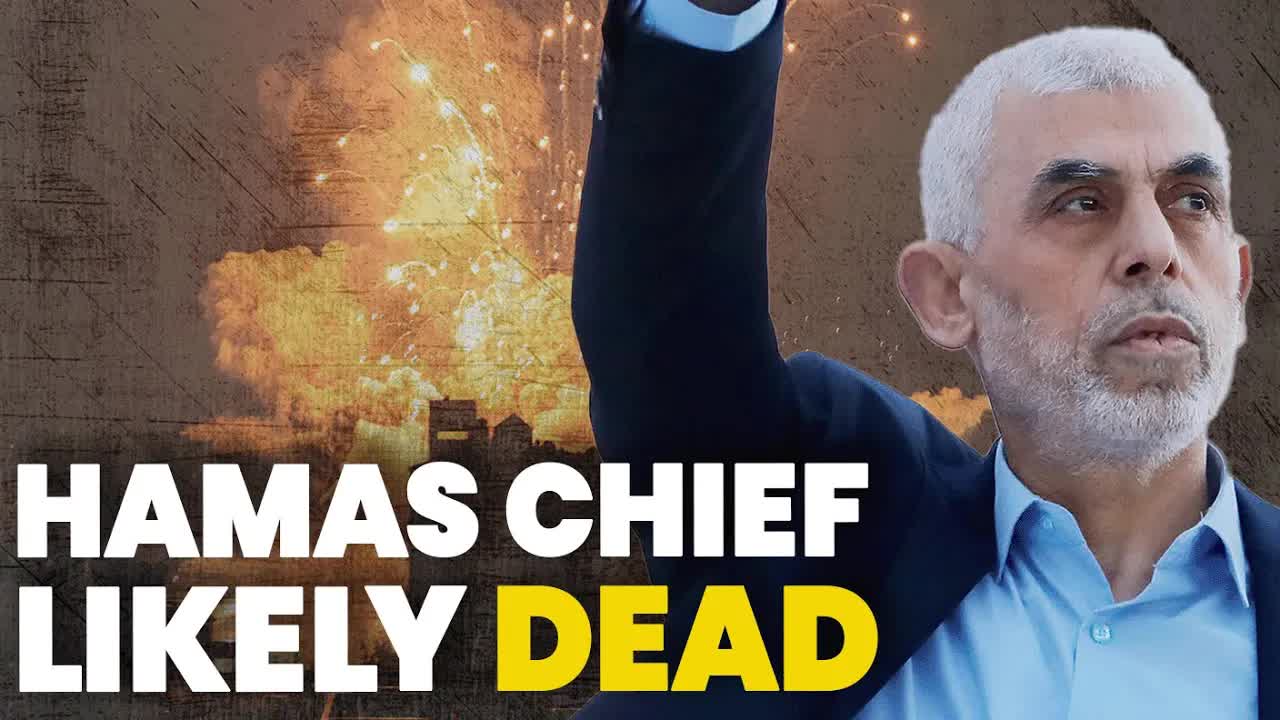
In a dramatic turn of events, the Israeli Defense Forces (IDF) have announced that Yahya Sinwar, the leader of Hamas, may have been killed in an airstrike in Gaza.
Sinwar is notorious for orchestrating the horrific attacks on October 7th and has been evading capture by hiding in the extensive tunnel networks beneath Gaza for the past year.
This news has sparked intense speculation about the implications of his potential death.
Tal Schneider, a political correspondent for the Times of Israel, weighed in on the situation, stating that this is more than just a rumor.
Reports circulating on social media platforms, including WhatsApp and Telegram, purportedly display images of Sinwar’s body, which Schneider claims appear to be unmistakably his.
However, the IDF has indicated that they will need to conduct a DNA test to confirm the identity definitively.
Sinwar’s history is steeped in violence; he was previously imprisoned in Israel for 20 years after being convicted of murdering Palestinians.
During his incarceration, he underwent life-saving head surgery, which means that Israeli medical authorities possess his DNA, making the confirmation process potentially straightforward.
Schneider expressed a high level of confidence, estimating the likelihood of Sinwar’s death at around 99%.
The question looming over this development is whether Sinwar truly masterminded the October 7th attacks.
Schneider asserts that his involvement extended well beyond that singular event.
He has been linked to numerous assaults on Israel over the years, including the 2014 conflict and various rocket attacks.
Sinwar was also directly involved in the kidnappings of Israeli soldiers, making him a key figure in Hamas operations.
If confirmed, the ramifications of Sinwar’s death could be monumental.
Schneider emphasized that his absence might pave the way for negotiations regarding the release of hostages still held in Gaza.
Sinwar had been a significant roadblock to any potential ceasefire agreements, as factions within Hamas sought to establish terms for peace while he consistently stalled discussions.
The ongoing conflict has left many in the international community horrified, not only by the events of October 7th but also by the devastating humanitarian crisis unfolding in Gaza.
The prospect of a ceasefire, especially with the possible removal of IDF forces from the area, raises hopes for a better future for those affected by the violence.
Schneider speculated that negotiations for a ceasefire could already be in the works, contingent upon the confirmation of Sinwar’s death.
He suggested that Israel might release images of Sinwar’s remains to assure the people of Gaza that the reports are accurate, potentially influencing those holding hostages to consider negotiations for their release.
However, the release of such images could also have unintended consequences.
While some might celebrate the death of a man they view as a terrorist, others could react with anger and grief, potentially fueling further recruitment efforts for Hamas.
Schneider pointed out that the civilian population in Gaza has been subjected to Hamas’s oppressive tactics, often caught in the crossfire of the ongoing conflict.
As for the United States, there has been no immediate reaction from the Biden administration regarding this breaking news.
Given the timing of the announcement, it is likely that officials are still processing the information.
Schneider noted that if the IDF has indeed accomplished one of its primary objectives, it might shift discussions from merely seeking a ceasefire to exploring pathways toward lasting peace in the region.
However, the situation remains fluid, and it’s too early to draw definitive conclusions about the future.
The Israeli government, particularly Prime Minister Netanyahu, has faced criticism for its handling of the conflict and has yet to outline a comprehensive post-Sinwar plan.
Many citizens are left wondering what the next steps will be.
In Israel, public sentiment reflects a mix of hope and frustration.
There is a palpable desire for clarity regarding the government’s strategy moving forward.
As the world watches closely, the potential fallout from Sinwar’s reported death continues to unfold, leaving many questions unanswered about the future of peace and stability in the region.
Read more
