









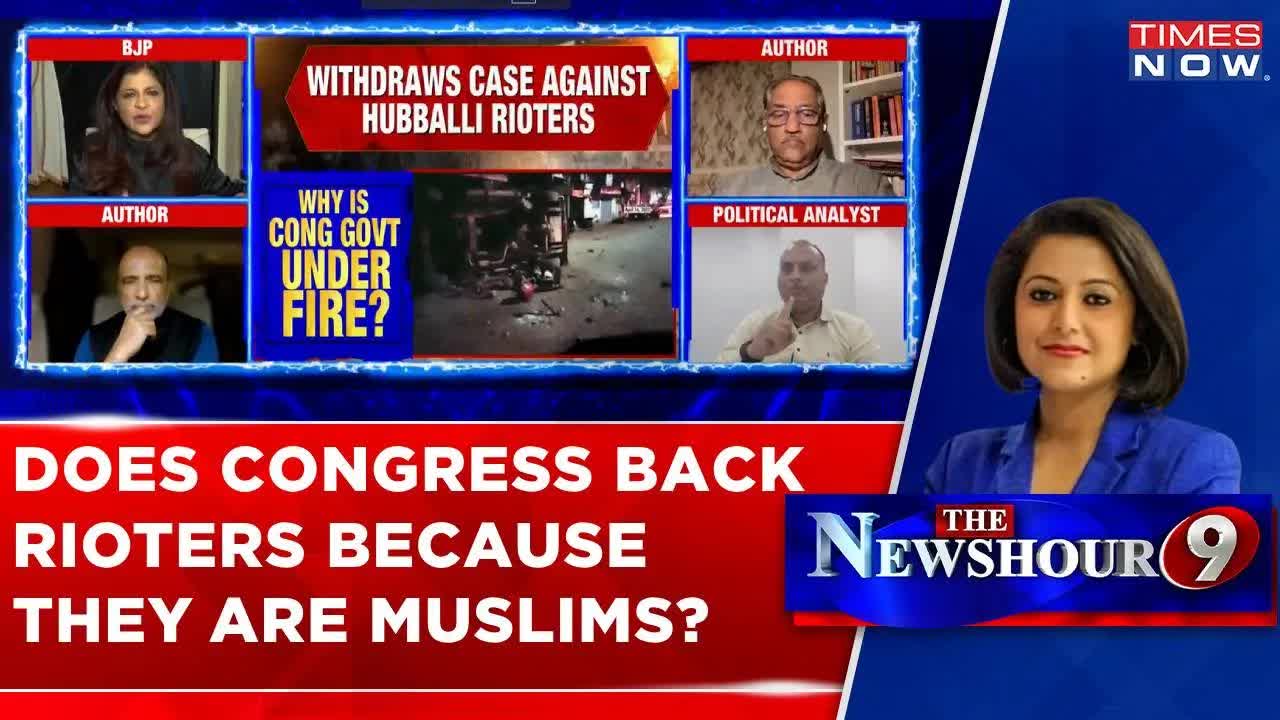
In a heated discussion on political accountability, a diverse panel of authors and analysts gathered to dissect the recent actions taken by the Congress government in Karnataka regarding legal cases against individuals involved in violence.
The conversation was sparked by comments from Deputy Chief Minister DK Shivkumar, who announced that several cases, including those linked to anti-social activities, have been withdrawn.
This has raised eyebrows and ignited debates about the implications of such moves.
Sanjay Jha, a prominent voice on the panel, questioned the legitimacy of these withdrawals, likening them to a “mohabbat ki dukaan” run by Rahul Gandhi.
He pointed out that while the government claims to be addressing grievances, it must also grapple with the optics of its decisions.
Jha emphasized that these actions may not sit well with the public, especially given the backdrop of past Supreme Court criticisms directed at the BJP for its handling of violence and hate speech.
The discussion turned to the BJP’s own track record, with Jha reminding viewers of the instances where the party faced backlash for endorsing violent tactics in various states.
He argued that the BJP should also be held accountable for its history of hate speeches and violent encounters.
This prompted a broader reflection on political ecosystems and their responsibilities towards the electorate.
As the dialogue progressed, the focus shifted to the intent behind the Congress’s recent decisions.
Panelists debated whether the government’s actions reflect an earnest attempt to foster peace or if they merely serve as a means of appeasement.
Jha contended that withdrawing cases doesn’t erase the legal processes at play, suggesting that there is still a pathway for justice to unfold, albeit a complicated one.
Shazia Ilmi, another panelist, interjected with criticism of the Congress’s approach, questioning whether the party is truly committed to upholding the rule of law.
She highlighted a perceived hypocrisy within the Congress, accusing it of enabling rioters while failing to address broader societal issues, such as poverty and education for marginalized communities.
Ilmi’s remarks underscored a central theme in the discussion: the delicate balance between justice and political maneuvering.
She argued that the Congress’s decision to withdraw cases against certain individuals sends a troubling message about the state’s priorities.
Is the government prioritizing community appeasement over justice?
The conversation took a more intense turn as panelists examined the ramifications of selectively withdrawing cases.
They pondered the potential consequences for the legal system and the message it sends to citizens about accountability.
If the government can simply retract charges, what does that mean for the integrity of law enforcement and the judiciary?
Jha defended the Congress’s position, asserting that the government must navigate complex social dynamics and consider the broader implications of its decisions.
He suggested that the Karnataka government likely conducted thorough investigations before making such announcements, indicating a level of responsibility in their actions.
However, Ilmi remained unconvinced, pressing for clarity on how these decisions align with constitutional values.
She challenged the notion that any political party should have the authority to decide guilt or innocence, especially in cases involving communal strife.
The essence of justice, she argued, lies in impartiality.
As the discussion drew to a close, the panelists reflected on the critical need for transparency and accountability in governance.
They agreed that regardless of political affiliations, the focus must remain on upholding the rule of law and ensuring that justice prevails for all citizens, regardless of their background.
The clash between the BJP and Congress highlights the ongoing struggle within Indian politics to address violence and communal tensions while maintaining a commitment to justice and equality.
As the political landscape evolves, the implications of these discussions will undoubtedly shape public perception and future policies.
Read more
