









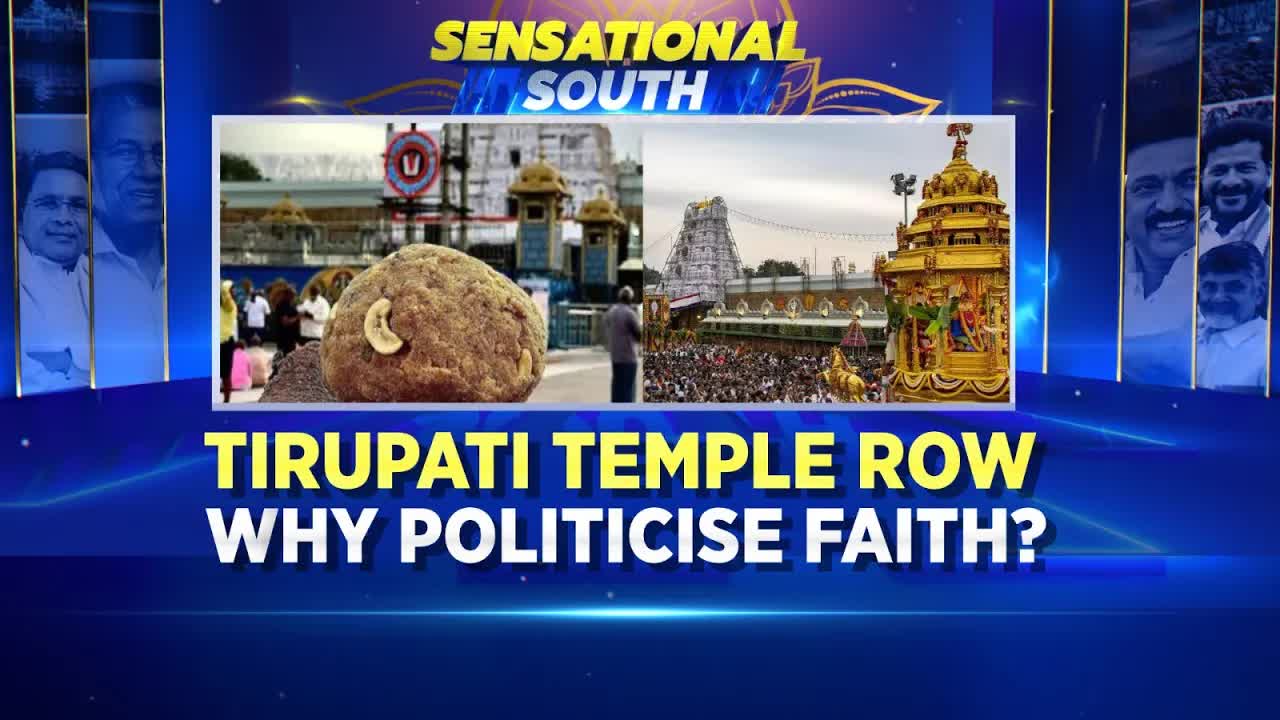
In a gripping saga unfolding in Andhra Pradesh, the beloved Tirupati laddus have become the center of a heated controversy that has left devotees anxious and politicians scrambling.
The issue of adulteration in the sacred prasad offered at the Sri Venkateswara temple has not only stirred public sentiment but also ignited a fierce political battle between current Chief Minister Jagan Mohan Reddy and his predecessor Chandrababu Naidu.
The situation escalated when reports emerged about the quality of the famed laddus, leading to widespread concern among devotees who regard these sweets as a divine offering.
The state government’s response has been multifaceted, involving traditional purification rituals and a commitment to conduct thorough investigations into the matter.
Deputy Chief Minister Pawan Kalyan has taken personal initiative by engaging in an 11-day ritual of atonement, expressing his deep sorrow over the perceived desecration of the sacred prasad.
As part of the government’s efforts to address the crisis, measures have been implemented to cleanse temples across the state, including the prominent Kanak Durga temple in Vijayawada.
Kalyan’s call for the establishment of a Sanatana Rakshana Board reflects a growing sentiment among many that the sanctity of religious practices must be upheld, free from governmental interference.
However, Jagan Mohan Reddy has remained defiant amidst the turmoil, accusing Naidu of orchestrating a conspiracy to overshadow his administration’s shortcomings.
The Chief Minister, who identifies as a practicing Christian, faces scrutiny over his adherence to temple norms, which require non-Hindus to declare their faith before entering the sacred site.
This has fueled accusations from the opposition parties, including the TDP and BJP, regarding his commitment to Hindu traditions.
Devotees have expressed feelings of betrayal, voicing their disappointment over the situation at one of Hinduism’s holiest sites.
Many feel that the government has a responsibility to protect the sanctity of the temple and its offerings.
The larger question looms: should temples be liberated from governmental oversight to ensure transparency and safeguard religious sentiments?
As discussions unfold, a panel of experts and political analysts gathered to debate the implications of this scandal.
Professor Jyotsna Thirunagiri from the TDP raised concerns about the quality of the laddus, revealing that four out of eight tankers used in their preparation were found to be adulterated.
She emphasized the need for sensitive handling of the situation, given its impact on millions of devotees.
Yet, the YSRCP representatives countered these claims, asserting that the Executive Officer of the temple categorically denied any use of contaminated ingredients.
They argued that the tendering process for suppliers has been consistent across administrations, and any allegations of negligence are politically motivated rather than based on factual evidence.
The timeline of events, beginning with the arrival of the first tanker in June and culminating in public awareness of the issue in September, raises questions about the government’s communication strategy.
Critics argue that the delayed disclosure has further eroded trust among devotees.
Political analysts have pointed out that the ongoing feud between the ruling party and the opposition is diverting attention from the core issue: the quality and safety of the prasad itself.
The need for a transparent and accountable system within the temple administration has never been more critical.
As the debate rages on, many wonder whether this controversy will lead to lasting changes in how temples operate and are managed in the state.
The intersection of faith, politics, and governance remains a contentious battleground, and the outcome could redefine the relationship between devotees and the state.
In the midst of this turmoil, the reverberations of the scandal extend beyond mere politics; they touch the very essence of faith for millions.
The question remains: can the sanctity of such revered places be preserved amid the clamor of political rivalry?
The answer may shape the future of religious governance in Andhra Pradesh for years to come.
Read more
