








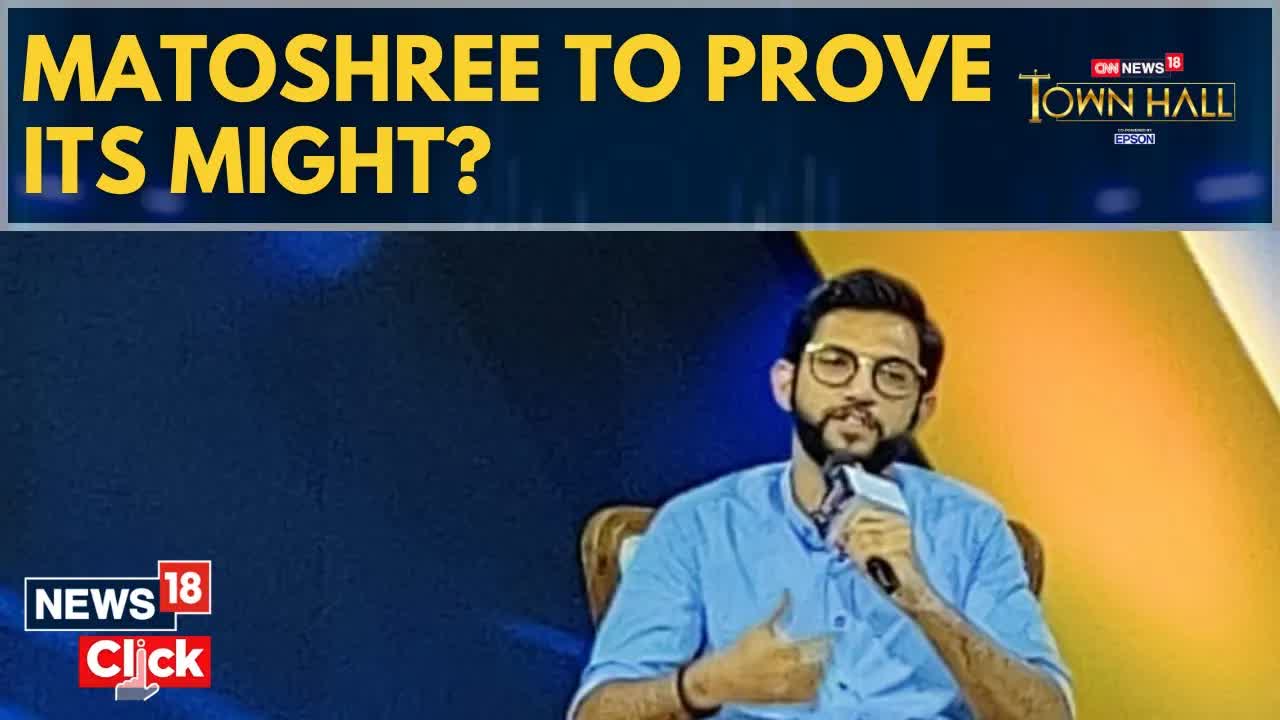
In a recent town hall discussion on CNN News18, Aditya Thackeray, the prominent leader of the Shiv Sena UBT, reflected on the turbulent political journey of Maharashtra over the past two years.
Recalling his previous appearance just after his government was ousted in 2022, Thackeray expressed a blend of optimism and concern regarding the political climate as the state approaches the Vedanta Sabha elections.
He questioned whether the electorate would hold accountable those whom he termed “betrayers.”
Thackeray emphasized that this struggle transcends personal grievances, framing it instead as a fight for the spirit and pride of Maharashtra.
He lamented the current government’s performance, which he attributed to the influence of the BJP.
According to him, the past two years have seen a decline in industries, an increase in farmer suicides, and a general decay in urban infrastructure.
He pointed to recent flooding on the Western Express Highway as evidence of mismanagement and neglect under the current regime.
The conversation took a turn when Thackeray addressed comments made by Deputy Chief Minister Devendra Fadnavis regarding the fragmentation of political parties.
Thackeray countered that the real issue lies in the BJP’s internal dynamics and questioned Fadnavis’s effectiveness within his own party.
He highlighted that many key BJP leaders in Maharashtra are not original members but rather imports from other parties, suggesting a lack of genuine local representation.
When discussing the electoral performance of various parties in the Lok Sabha elections, Thackeray noted that while the NCP and Congress had higher strike rates, his party faced challenges, winning only nine out of twenty-one contested seats.
He reiterated that his primary battle is against the BJP, which he accused of compromising democratic principles and leveraging state institutions for political gain.
Thackeray maintained that despite losing many MLAs and MPs to the BJP, his party still managed to secure nine seats, showcasing resilience in the face of adversity.
He stressed that their fight is rooted in defending democracy and the constitution, rather than merely achieving electoral success.
He expressed a willingness to support allies like the Congress and NCP, emphasizing a collective goal of protecting Maharashtra from perceived exploitation.
As the discussion shifted to national issues, Thackeray tackled the BJP’s handling of various controversies, including the allegations surrounding the quality of prasadam in Tirupati.
He called for accountability and transparency, urging the BJP to take action against any wrongdoing among its allies.
This led to a broader critique of the BJP’s approach to governance, particularly its focus on divisive politics rather than addressing pressing societal needs such as employment.
Thackeray’s remarks also touched on infrastructure development in Mumbai, where he argued that many projects initiated during his party’s tenure have faced delays under the current administration.
He claimed that the BJP has rebranded projects started by the MVA government while failing to deliver on promised timelines.
The ongoing struggles with urban infrastructure, he argued, reflect a deeper issue of governance and accountability.
Throughout the conversation, Thackeray remained firm in his stance against what he described as the BJP’s manipulative tactics.
He contended that the party’s leadership has strayed from its foundational principles and is more focused on consolidating power than serving the public.
He challenged the BJP’s claims of being the largest party, pointing to the apparent discontent among its traditional base.
Thackeray’s vision for Maharashtra centers on a united front against the BJP’s policies.
He underscored the importance of local governance and the need for a cohesive approach to managing the state’s resources and infrastructure.
By advocating for a strong municipal authority, he believes that Mumbai can reclaim its status as a world-class city.
As the town hall session concluded, Thackeray’s responses highlighted a complex interplay of political narratives in Maharashtra.
His commitment to maintaining the integrity of his party and its values was evident throughout the discussion.
The upcoming elections will serve as a crucial test for Thackeray and his allies as they seek to redefine the political landscape of the state.
In a state rich with history and diverse political ideologies, Thackeray’s vision reflects a desire for unity and progress amid the challenges posed by shifting alliances and power dynamics.
With the electorate poised to make significant decisions in the near future, the stakes remain high for all parties involved.
Read more
