








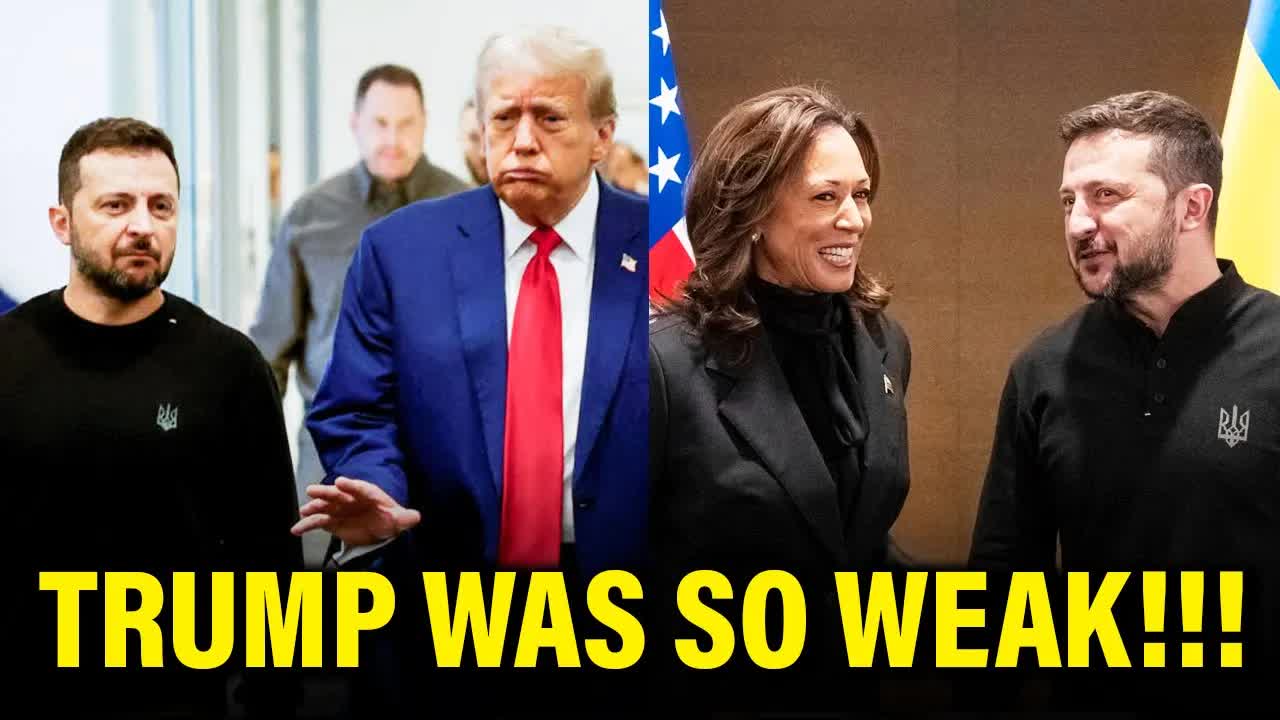
This week, the spotlight was on a significant meeting between President Zelensky of Ukraine and two prominent U.S. political figures: Vice President Kamala Harris and former President Donald Trump.
The juxtaposition of their approaches during these interactions painted a vivid picture of contrasting leadership styles and foreign policy philosophies.
Vice President Harris met with Zelensky in what many observers deemed a productive dialogue.
She reaffirmed her steadfast support for Ukraine amidst the ongoing conflict with Russia, emphasizing that President Putin initiated the war and has the power to end it by withdrawing his troops.
Harris pointed out the stark reality that, instead of seeking peace, Putin continues to target civilian infrastructure, perpetuating fear among the Ukrainian populace.
Her message was clear: proposals demanding Ukrainian concessions to Russia are not peace offerings; they are calls for surrender.
In sharp contrast, Donald Trump’s interaction with Zelensky seemed more focused on self-justification than on the pressing issues at hand.
During their meeting, Trump appeared to deflect attention onto his own impeachment saga, labeling it a “hoax.”
His comments raised eyebrows, as they seemed to undermine the gravity of the situation in Ukraine.
Instead of addressing the ongoing crisis, Trump reminisced about his relationship with Putin, suggesting that a win for him would lead to a swift resolution of the conflict—a claim that many found naive.
The differences in tone and substance were striking.
Harris’s unwavering support for Ukraine stood in stark contrast to Trump’s seemingly casual dismissal of the ongoing war.
While she expressed a commitment to helping Ukraine prevail, Trump’s remarks hinted at a desire for improved relations with Putin, leaving many questioning his priorities.
The question remains: how can one effectively negotiate peace while simultaneously cozying up to the aggressor?
As the week unfolded, the political landscape became even murkier.
Trump had previously expressed reluctance to meet with Zelensky, a sentiment echoed by Republican leaders in the House.
This refusal to engage with Ukraine’s president raised eyebrows, especially given the backdrop of the ongoing war and its implications for global security.
However, after Zelensky’s visit to a Pennsylvania factory producing ammunition for Ukraine, the political tides began to shift.
MAGA Mike Johnson, a key figure in the House, took a controversial step by demanding the removal of Ukraine’s ambassador to the United States.
He claimed that the ambassador’s actions constituted election interference, arguing that her presence at Zelensky’s factory visit was a partisan move aimed at supporting Democrats.
This assertion sparked outrage, as it seemed to deflect attention from the real issues at play—the war and its devastating consequences for Ukraine.
Johnson’s letter to Zelensky highlighted a growing rift between U.S. political factions regarding support for Ukraine.
His demands for the ambassador’s resignation seemed to stem from a desire to control the narrative surrounding Ukraine’s relationship with the U.S. rather than a genuine concern for the ongoing conflict.
Critics argued that such political maneuvering only served to undermine bipartisan support for Ukraine in its fight against Russian aggression.
Meanwhile, Harris continued to assert her commitment to standing with Ukraine.
Her recent campaign ads underscore her dedication to defending democracy and freedom against authoritarian threats.
In stark contrast to Trump’s past comments about Putin, Harris positioned herself as a leader who understands the importance of standing firm against aggression, reinforcing the idea that the U.S. must support its allies in times of crisis.
As the political drama unfolds, the implications for U.S.-Ukraine relations remain significant.
The contrasting approaches of Harris and Trump reveal deeper ideological divides within American politics.
While Harris advocates for solidarity and support for Ukraine, Trump’s rhetoric raises concerns about a potential retreat from international commitments.
In the backdrop of these political dynamics, the people of Ukraine continue to endure the harsh realities of war.
Their resilience in the face of adversity serves as a reminder that leadership matters, and the choices made by influential figures can have far-reaching consequences.
As the world watches, the question lingers: which approach will ultimately prevail in shaping the future of Ukraine and its fight for sovereignty?
Read more
