


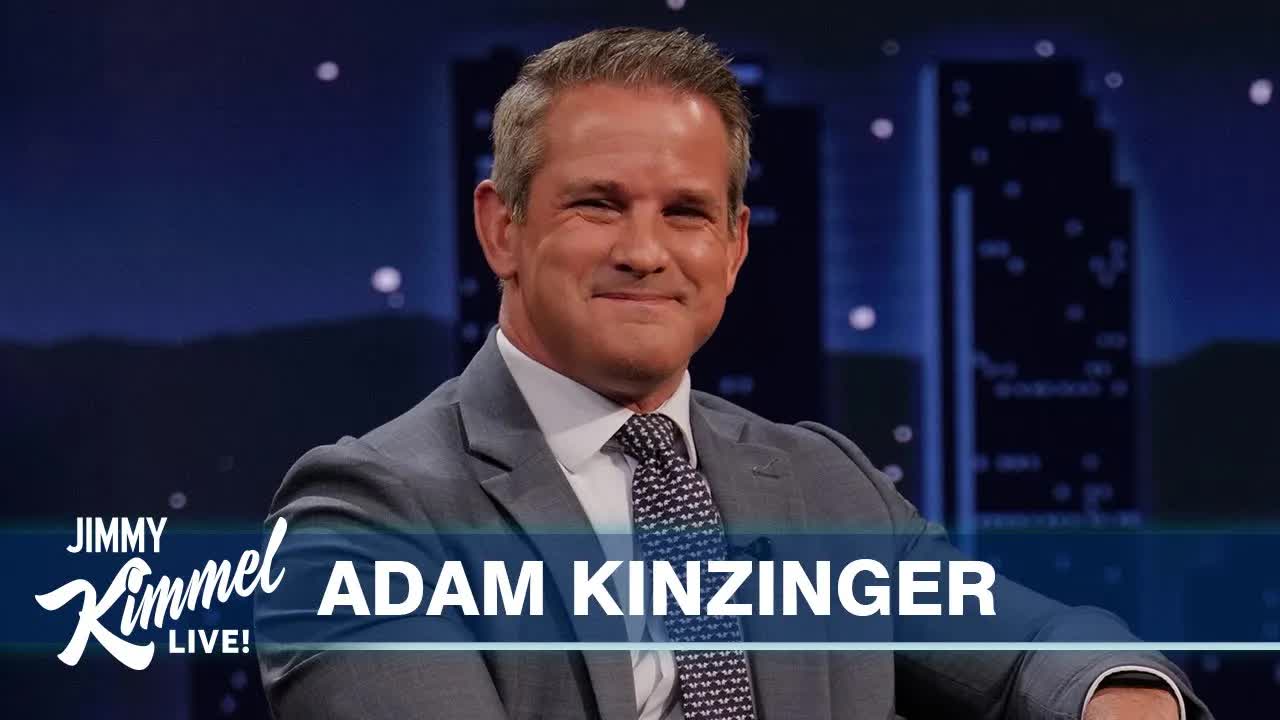
In a remarkable turn of events, former Air Force pilot and ex-Republican congressman Adam Kinzinger took the stage at the Democratic National Convention, a move few would have predicted.
His words were sharp and unyielding as he criticized Donald Trump, labeling him as a “weak man” masquerading as a strong leader.
Kinzinger’s candid remarks painted Trump as a “small man pretending to be big,” revealing the deep disillusionment that has driven him to speak out against his own party.
Kinzinger’s experience at the convention was surreal.
“I never imagined I would be embraced by the Democrats,” he admitted, reflecting on how the political landscape has shifted dramatically in recent years.
He expressed a sense of duty in defending democracy, noting that his party had strayed far from its roots.
“It feels like my calling now,” he said, emphasizing the urgency of the situation.
When Kinzinger first began voicing his concerns about Trump’s leadership, he anticipated backlash but was taken aback by the intensity of the hostility directed toward him.
“He’s built a cult of personality,” Kinzinger explained, likening it to challenging a deeply held belief.
The fallout was personal; he received messages from old friends and family members expressing shame and disowning him.
This, he noted, is a reality many families face today, torn apart by loyalty to a flawed figure.
The conversation turned to accountability.
Is Trump solely to blame for this division, or do media organizations share some responsibility?
Kinzinger pointed out that the seeds of Trumpism were sown long before he entered the political arena.
In his book, he reflects on how fear and division were weaponized for fundraising within the party, creating a fertile ground for Trump’s rise.
“Trump has no commitment to truth,” Kinzinger asserted, contrasting him with past presidents who at least attempted to uphold some standards of honesty.
He believes that Trump’s self-centered approach prioritizes his ego over the nation’s well-being.
While acknowledging Trump’s significant culpability, Kinzinger also highlighted the complicity of other Republican leaders, such as Kevin McCarthy, who quickly resurrected Trump’s political career after the January 6th insurrection.
Kinzinger revealed that many Republicans share his concerns but remain silent out of fear.
“I’m surrounded by cowards,” he lamented, noting that many colleagues feel they cannot speak out without risking their positions.
He mentioned Liz Cheney as someone who is likely to make her voice heard soon, indicating that there are still those willing to stand up for their principles.
Humor emerged in Kinzinger’s reflections on Trump, particularly when he tweeted about the former president’s distinct odor.
He described it as a bizarre mix that one wouldn’t want to bottle up as a fragrance.
This lighthearted moment underscored the absurdity of the situation, where even personal attributes become fodder for commentary in the political arena.
Kinzinger also addressed a controversial photo op Trump staged at Arlington National Cemetery.
He condemned the act as a politicization of a sacred space, meant to honor fallen soldiers.
“You cannot politicize fallen American soldiers come hell or high water,” he insisted, stressing that such actions cross a line that should never be breached.
The former congressman didn’t shy away from critiquing Trump’s self-proclaimed support for the military, reminding viewers of Trump’s history as a draft dodger.
Kinzinger pointed out the hypocrisy of a leader who has consistently belittled military service while claiming to champion veterans’ causes.
“He cannot fathom what it means to sacrifice for something greater than oneself,” he stated, revealing a profound disconnect between Trump and the values of service and honor.
As the discussion wrapped up, Kinzinger’s insights painted a vivid picture of the current political climate.
His willingness to confront uncomfortable truths marks a significant departure from the silence that often pervades political discourse.
His journey serves as a reminder that integrity sometimes requires standing alone, even when it means stepping outside the party line.
With Adam Kinzinger’s voice resonating through the media, the question remains: will more Republicans find the courage to speak out against the divisive politics that have come to define their party?
Only time will tell if this shift will inspire others to reclaim the values of democracy and integrity that seem to have faded into the background.
Read more
