







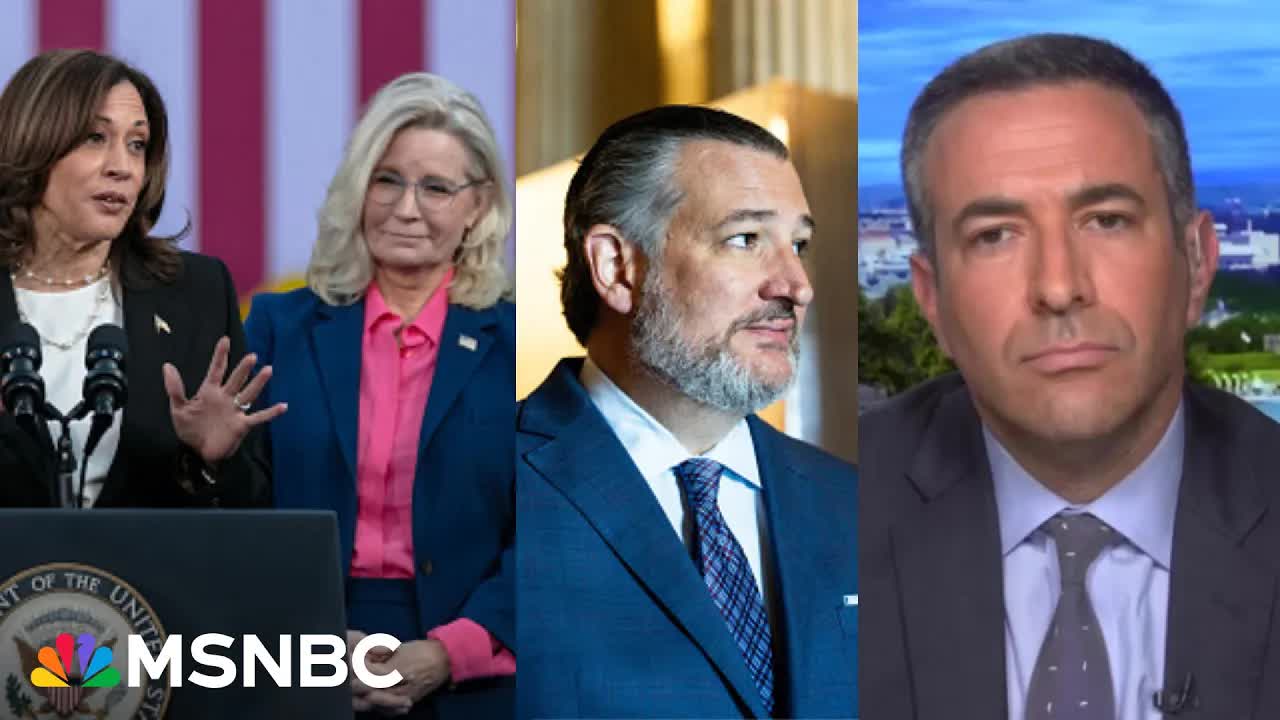
In a striking turn of events, political veterans Chay Comanduri and Amanda Carpenter recently discussed the evolving dynamics within the Republican Party, particularly regarding their stance on Kamala Harris.
This conversation unfolded against the backdrop of a political climate that has undergone significant transformation since the last election cycle.
Both guests, with their distinct backgrounds—Comanduri as an Obama alum and Carpenter as a former aide to Ted Cruz—shed light on the unusual Republican enthusiasm for the Vice President.
Amanda Carpenter kicked off the discussion by highlighting a crucial shift among Republicans.
Unlike previous election cycles, many have come to realize the depths of Trump’s influence on the party.
The insurrection on January 6 served as a pivotal moment, forcing party members to confront the reality of Trump’s divisive impact.
This recognition is prompting them to engage more actively in the political process rather than merely grumbling about Trump’s erratic behavior among friends or opting for nostalgic write-in votes.
Comanduri chimed in with a touch of humor, referencing his own experiences with Ted Cruz.
He remarked on how Trump’s rise has dramatically altered his career trajectory, leaving him with fewer ties to Cruz’s camp.
This evolution reflects a broader trend within the Republican Party, where figures who once supported Trump are now reassessing their loyalties and the implications of their past endorsements.
The conversation took an intriguing turn when they examined the perspectives of other political figures who have similarly shifted their views.
One notable highlight was the mixed feelings expressed by individuals who had previously supported Trump but are now questioning the consequences of his leadership.
As one former White House staffer noted, serving under Trump was a complex experience, marked by both pride and the challenges of navigating a tumultuous political landscape.
Carpenter expressed admiration for Sarah Matthews, who bravely articulated her thoughts on live television, addressing the uncomfortable truths about working alongside Trump.
This discussion sparked a deeper exploration of whether democracy should be viewed as a policy issue.
Carpenter argued that without a robust democratic framework, discussions about policies like immigration or taxation become moot.
If citizens’ voices can be silenced, the foundation of democracy itself is at risk.
The aftermath of January 6 still looms large over the Republican Party, with many members seemingly in denial about its significance.
Carpenter emphasized that the repercussions of that day are far from over, as misinformation continues to fuel lawsuits and disrupt electoral processes across the nation.
This ongoing struggle highlights the urgent need for party members to confront the chaos and work towards restoring integrity within their ranks.
Both Comanduri and Carpenter agreed that this political moment transcends traditional partisan lines.
It’s not simply a matter of liberal versus conservative ideologies; it’s about upholding the Constitution and protecting democratic values.
Carpenter likened Liz Cheney’s endorsement of Kamala Harris to a plot twist in a blockbuster movie, underscoring the extraordinary circumstances that have led to unexpected alliances.
The conversation also touched on the strategic elements of Harris’s campaign, particularly her outreach to white working-class voters in the Midwest.
By aligning herself with figures like Cheney, Harris is signaling a shared commitment to constitutional values and national unity.
This approach aims to resonate emotionally with voters, contrasting sharply with Trump’s self-centered narrative.
As the political landscape continues to shift, the importance of coalition-building among diverse groups becomes increasingly clear.
The Harris campaign’s strategy reflects a desire to forge connections based on shared values rather than strict party loyalty.
This could reshape the future of American politics, encouraging dialogue across divides that have long separated Democrats and Republicans.
Ultimately, the discussion between Comanduri and Carpenter serves as a reminder that the current political climate is anything but static.
With the stakes higher than ever, it’s essential for all Americans to engage in conversations about democracy and the responsibilities that come with it.
The evolving relationships within the Republican Party and the unexpected support for Kamala Harris may signal a new chapter in political discourse, one that prioritizes unity and the common good over partisan squabbles.
Read more
