




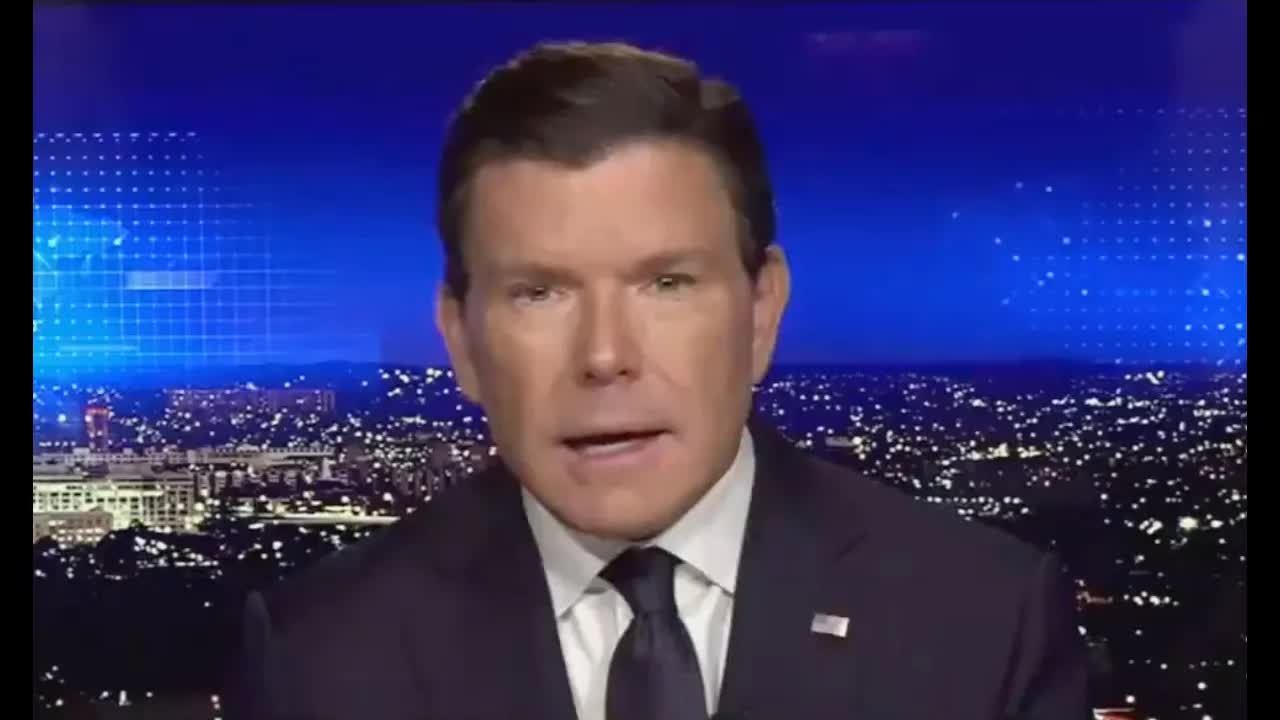
In a recent Fox News interview, Vice President Kamala Harris faced off against host Bret Baier in what many are calling a pivotal moment in political discourse.
This exchange seemed to be more than just a typical interview; it felt like a calculated move on Harris’s part, perhaps aimed at creating a viral moment that would resonate across various media platforms.
Was this her way of pushing back against critics, particularly Donald Trump?
It certainly looks that way.
While some might expect Harris to use the platform to defend her administration’s policies, it was Baier who appeared to come in with his own agenda.
Just days before the interview, Trump had taken to Truth Social, labeling Harris as “Lying Kamala” and suggesting that she had chosen Baier for his reputation as a fair but soft interviewer.
However, the dynamics of the conversation quickly shifted, with Baier seemingly eager to prove he could be tough on the Vice President.
From the outset, Baier’s approach suggested he was under pressure to show allegiance to Trump.
His questions were pointed, and it often felt like he was trying to outmaneuver Harris rather than engage in a balanced discussion.
The interview quickly turned into a battleground over immigration policy, an issue that has been at the forefront of political debates for years.
Harris attempted to highlight the administration’s efforts, including the U.S.
Citizenship Act of 2021, which aimed to overhaul the immigration system.
Despite her efforts to explain the complexities behind the bill, Baier interrupted frequently, insisting on clarity.
Harris countered by emphasizing that the administration had prioritized immigration reform from day one, presenting a narrative that painted the previous Trump administration as neglectful.
She argued that Trump’s team had chosen to exploit immigration issues for political gain rather than seek real solutions.
As the conversation shifted to other hot-button topics, Baier’s focus remained sharp on immigration, ignoring the fact that during Trump’s presidency, Republicans had full control yet failed to enact significant reforms.
Harris pointed out that the GOP often capitalizes on public fears about immigrants while simultaneously avoiding meaningful legislative changes.
It’s a classic case of political maneuvering, where the issue is kept alive for electoral advantage rather than resolved.
Then came the pivot to another contentious topic: taxpayer-funded gender transition surgeries for inmates.
Baier’s questions seemed to echo a campaign ad from Trump, which had stirred significant controversy.
Harris deftly navigated this minefield, reminding viewers that the policies in question were not unique to the current administration.
She pointed out that under Trump, similar surgeries were allowed based on medical necessity, essentially flipping the script on the narrative being pushed by the Trump campaign.
The interview showcased Harris’s ability to handle tough questions while also exposing the contradictions in Trump’s rhetoric.
She argued that the focus on such niche issues was merely a distraction from the broader challenges facing American families.
Instead, she highlighted her administration’s plans aimed at affordable housing and supporting small businesses, asserting that these initiatives were more relevant to voters’ everyday lives.
Meanwhile, Trump’s own media engagements have raised eyebrows.
His recent town hall in Georgia appeared more like a rally for his supporters than an impartial forum for discussion.
Critics noted that the audience was predominantly filled with Republican loyalists, casting doubt on the authenticity of the event.
While Harris faced scrutiny from a seasoned journalist, Trump opted for a cushy setup that shielded him from tough questions.
The contrast between Harris’s interview and Trump’s engagements could not be starker.
While she demonstrated a command of the facts and a willingness to engage, Trump seemed to retreat into a safer environment, avoiding challenging dialogues.
This dynamic raises questions about leadership and accountability, particularly as voters seek candidates who are willing to confront issues head-on.
Baier’s performance in the interview also sparked discussions about journalistic integrity.
Many observers noted that he sacrificed any remaining credibility he had as an unbiased reporter.
Despite his efforts to challenge Harris, she managed to maintain composure and articulate her points effectively, leaving some to wonder if he inadvertently bolstered her position instead.
As the political landscape continues to evolve, moments like this interview serve as reminders of the importance of direct engagement with the public.
Harris’s ability to face tough questions and articulate her administration’s vision stands in stark contrast to Trump’s avoidance tactics.
This could signal a shift in how political figures interact with media and the electorate moving forward, highlighting the need for transparency and accountability in leadership roles.
In the end, the interview not only illuminated the contrasting styles of two prominent political figures but also underscored the ongoing battle for public perception in a highly polarized environment.
As voters gear up for the next election cycle, they will be watching closely to see who can rise above the noise and truly address the pressing issues facing the nation.
Read more
