

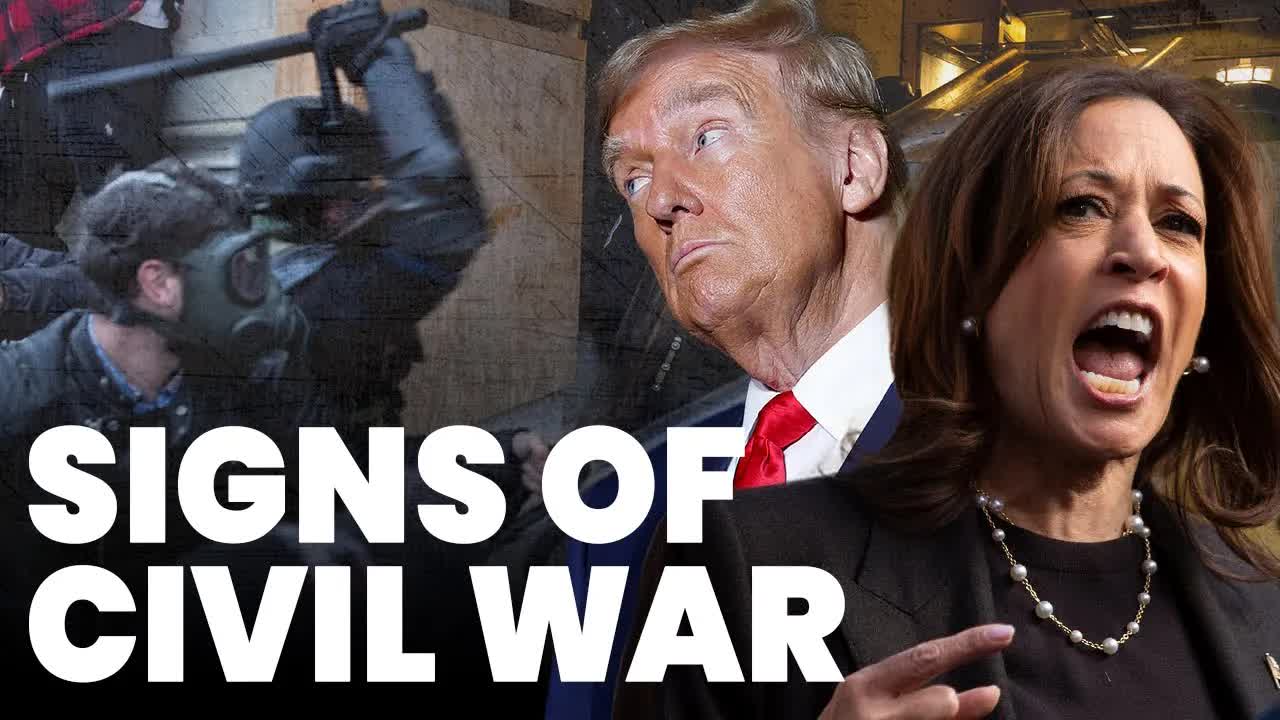
As the United States navigates its political landscape, a chilling sentiment is emerging: many Americans believe that the country may be inching closer to a civil war.
A recent poll conducted by the Times revealed that nearly one in four citizens fears an outbreak of violence that could eclipse the events of January 6, 2021.
This alarming trend raises questions about the stability of the nation and the potential for widespread unrest.
David Charter, the U.S. assistant editor at the Times, recently addressed these concerns, highlighting that a staggering one-third of Americans anticipate the possibility of civil conflict following the upcoming election.
Such widespread apprehension is startling, especially in a country that prides itself on its democratic values.
What has led to this pervasive fear?
The roots of this anxiety can be traced back to the aftermath of the last presidential election.
Since January 6, discussions around the potential for civil war have intensified.
Cultural phenomena, including Barbara Walter’s bestselling book, “How Civil Wars Start and How to Stop Them,” have contributed to this narrative.
Walter’s work examines various civil wars globally, but her focus on the current American climate paints a grim picture of a nation in peril.
Academics are weighing in on the issue as well.
Caroline Janney, a historian who specializes in the American Civil War, expresses skepticism about the likelihood of a traditional civil war, where states would form opposing armies.
However, she warns that the current political rhetoric and divisive atmosphere echo the prelude to the 1860s conflict.
The media landscape has become increasingly polarized, with partisan platforms dominating the discourse.
Janney’s insights reveal a concerning reality: approximately 40% of American households own firearms, creating an environment where violence could easily erupt.
She suggests that instead of state secessions, we might witness internal strife, where citizens turn against one another within their own communities.
This scenario presents a grim outlook for social cohesion in an already fractured society.
The polling data underscores the gravity of the situation.
With 27% of Americans expressing concern over the potential for civil war, it is clear that this sentiment is not limited to fringe groups.
Both Democrats and Republicans share similar fears, indicating a bipartisan recognition of the escalating tensions.
Yet, the implications of such unrest could be catastrophic, with violence likely occurring within states rather than between them.
The specter of civil unrest looms large, fueled by the presence of right-wing militias that continue to operate in the shadows.
As political demonstrations become more frequent, the potential for disorder escalates.
The prospect of uncontrollable violence raises urgent questions: how far will individuals go to defend their beliefs?
Will protests devolve into chaos?
In light of these developments, it is essential to consider the broader implications of this climate of fear.
The American identity, built on principles of democracy and unity, is being tested.
What does it mean to be an American in a time when divisions seem insurmountable?
The echoes of past conflicts resonate loudly, reminding us of the fragility of peace.
As the nation braces for the upcoming election, the stakes have never been higher.
The potential for violence is not just a hypothetical scenario; it is a reality that many Americans are grappling with daily.
The question remains: can the fabric of American society withstand the pressures of polarization, or are we on the brink of a new chapter in our tumultuous history?
In the midst of this uncertainty, voices on both sides of the aisle must engage in meaningful dialogue.
Understanding each other’s perspectives may be the key to preventing a descent into chaos.
As the nation stands at a crossroads, the choices made now will shape the future of democracy in America.
The conversations surrounding civil unrest are crucial, and they extend beyond mere speculation.
As citizens, it is our responsibility to navigate these turbulent waters thoughtfully.
The path forward requires collective action, empathy, and a commitment to preserving the ideals that define our nation.
Will we rise to the occasion, or will we allow fear to dictate our fate?
Only time will tell.
Read more
