



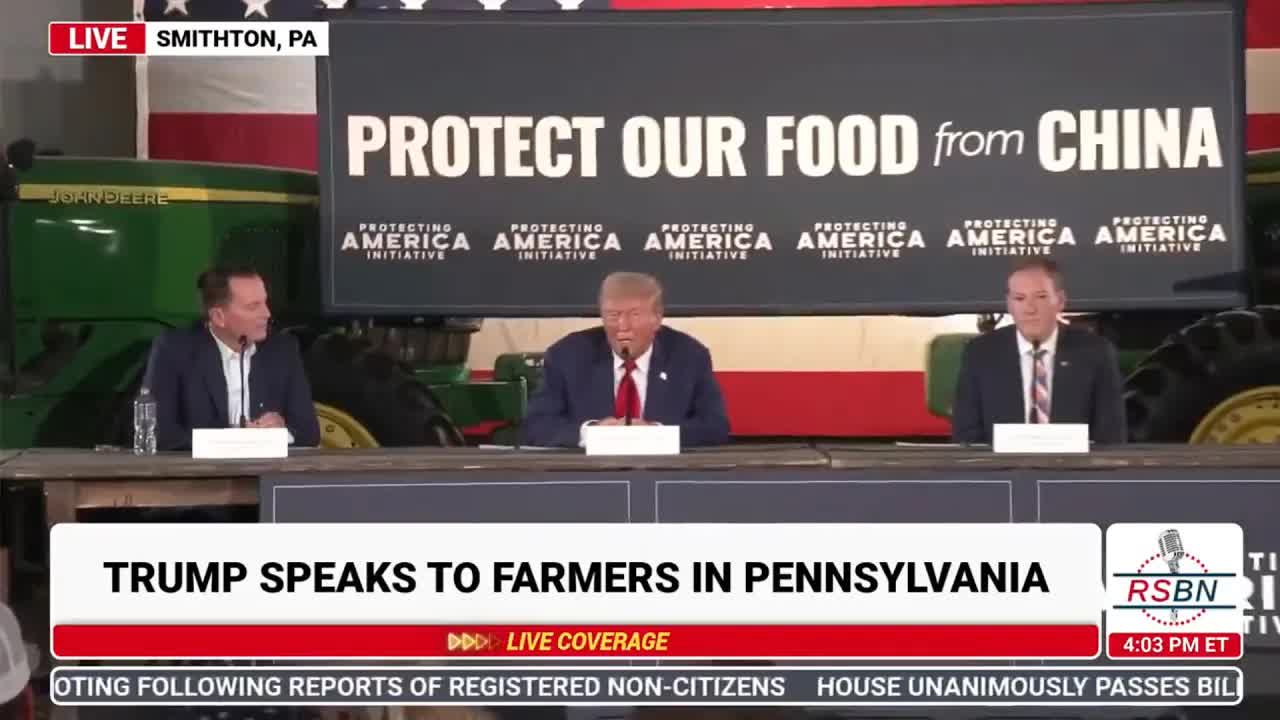
In a recent event that felt more like a cult gathering than a political rally, former President Donald Trump met with Pennsylvania farmers.
What transpired was a curious blend of fervent devotion and questionable policy discussions.
As Trump prepared for his rally in Indiana, Pennsylvania, he took a moment to engage with supporters, including a mother who shared a touching story about her daughter’s prayers for him.
The woman, visibly emotional, recounted how she had spent years praying for Trump alongside her 16-year-old daughter, Caroline.
She described how, since the age of eight, Caroline would pray each night for Trump to win the presidency.
The mother reminisced about that pivotal night in 2016 when they finally learned of Trump’s victory.
With tears streaming down her face, she recalled waking her daughter from sleep to share the joyous news, a moment that solidified their bond and unwavering support for the former president.
Yet, one can’t help but wonder: what drives such devotion?
Is it mere admiration or something deeper?
The emotional weight of the mother’s testimony seemed to overshadow any rational discourse about Trump’s policies.
It raises questions about the nature of political allegiance—could this be described as a form of cult-like loyalty?
This atmosphere was palpable at the event, where the energy surged as Trump spoke.
He addressed issues affecting farmers, such as dairy margins and rising input costs.
However, amid these serious discussions, Trump made headlines by threatening John Deere with a staggering 200 percent tariff if they proceeded with plans to shift manufacturing to Mexico.
This declaration caught many off guard, showcasing a lack of understanding of economic principles.
Trump’s approach appeared to be less about sound policy and more about punishing companies that he perceived as disloyal.
It’s perplexing to think that imposing such high tariffs on American companies could somehow benefit the very farmers he claims to support.
The logic seems flawed, especially when considering that it could lead to higher prices for consumers.
During the event, a reporter attempted to challenge Trump on the potential inflationary effects of his tariff proposals.
Instead of providing clarity, Trump launched into a ten-minute monologue filled with vague assertions and non-sequiturs.
His dismissive attitude towards the concerns raised by economists only added to the confusion surrounding his economic strategy.
In a particularly telling moment, Trump claimed he didn’t need Congress to impose tariffs, suggesting a willingness to bypass legislative processes.
This raises alarms about the implications of executive overreach in economic matters.
His comments hinted at an impulsive decision-making style that could have far-reaching consequences.
When pressed further about protecting critical infrastructure from foreign threats, Trump’s response was strikingly simplistic.
He suggested that the solution was merely to deny access to foreign entities, a plan that lacks depth and fails to address the complexities of international relations.
As the event unfolded, it became increasingly clear that what was intended as a discussion about farmers’ needs morphed into a platform for Trump to ramble about policies he seemed to grasp only superficially.
The juxtaposition of fervent supporter testimonies and the erratic policy discussions painted a troubling picture.
This gathering serves as a stark reminder of the power of emotional narratives in politics.
The mother’s heartfelt story encapsulated the profound connections some supporters feel toward Trump, despite the glaring inconsistencies in his policies.
It’s a dynamic that complicates any rational debate about his qualifications or effectiveness as a leader.
As we reflect on this event, one thing is evident: the intersection of emotion, loyalty, and politics can create a potent mix.
Whether this brand of devotion will translate into electoral success remains to be seen, but the fervor displayed by Trump’s supporters suggests a deeply entrenched belief that transcends traditional political discourse.
Read more
