



The United States Constitution stands as a beacon of democracy, but recent comments from political figures have reignited the debate over its interpretation and application.
Donald Trump has suggested that he might suspend the Constitution if he believes it serves the nation’s interests.
This alarming notion raises questions about when, if ever, it is appropriate to overlook the foundational document of American governance.
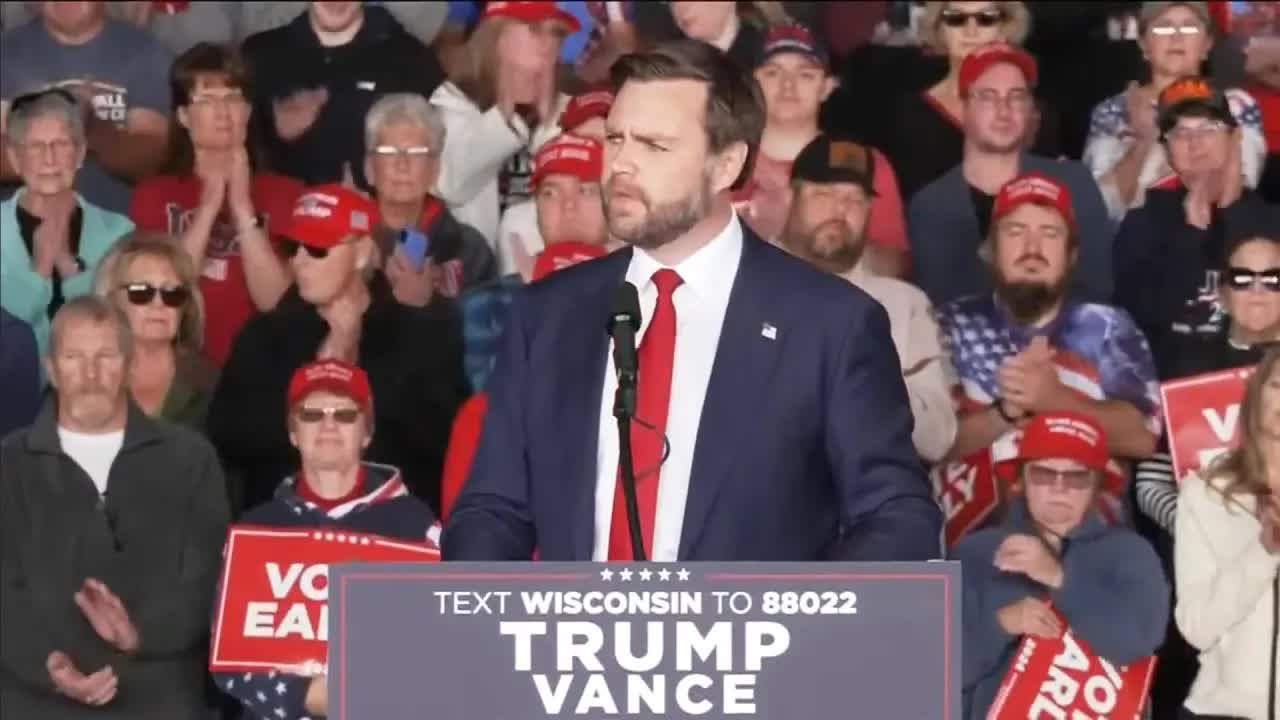
In a recent event in Wausau, Wisconsin, Senator J.D.
Vance faced a reporter’s inquiry regarding Trump’s proposal to criminalize flag burning.
Instead of firmly defending the Constitution, Vance’s response seemed more like an attempt to placate his audience than to uphold constitutional principles.
He acknowledged the importance of protecting national symbols but skirted around the implications of such a criminalization, which would directly conflict with First Amendment rights.
Vance’s comments came in the wake of Trump’s two policy proposals, one focusing on mass deportation and the other on banning flag desecration.
While the crowd cheered for these ideas, it’s crucial to remember that flag burning is protected under the First Amendment as a form of free speech.
This protection was solidified by the Supreme Court’s landmark decision in Texas v. Johnson back in 1989.
Despite the legal precedent, attempts to amend the Constitution to ban flag burning have failed repeatedly over the years.
This situation highlights a significant disconnect between personal beliefs and the law.
Many, including Vance, may find flag burning distasteful, but personal opinions should not dictate constitutional rights.
Interestingly, Vance expressed concern over censorship, claiming that the real threat lies not in flag burning but in government and tech companies suppressing free speech.
While this is a valid point, it seems to distract from the core issue at hand—the right to protest, even in ways that some may find offensive.
The crowd’s enthusiasm for criminalizing flag burning suggests a growing sentiment among certain factions that prioritizes national symbols over constitutional protections.
Yet, this raises a fundamental question: Should emotional responses to symbols override the rights guaranteed by the Constitution?
Vance’s failure to take a strong stance on this issue casts doubt on his commitment to the rule of law.
By suggesting that some symbols are worth protecting while dodging the implications of Trump’s proposals, he risks appearing as a politician who prioritizes popularity over principle.
For those who cherish the Constitution, the implications of such discussions are troubling.
It’s essential to uphold the decisions made by the Supreme Court and to recognize that the Constitution was designed to protect all forms of speech, even those that challenge societal norms.
As the political landscape continues to evolve, the need for clarity on these issues becomes increasingly urgent.
Citizens must engage in conversations about what free speech truly means and how it can coexist with the respect for national symbols.
In a related note, David Pakman, a commentator on these issues, has recently released a book titled “The Echo Machine.”
In it, he explores the fractures within American politics and offers insights into potential solutions.
Whether Trump or Kamala Harris wins the upcoming election, Pakman emphasizes the necessity for a plan to address the challenges facing the nation.
Pakman’s work aims to empower readers to understand the current political climate and consider how to navigate it effectively.
His belief in the potential of independent media to challenge corporate narratives adds another layer to the ongoing discourse about freedom of expression and the role of media in shaping public opinion.
As the debate over flag burning and constitutional rights continues, it remains vital for citizens to stay informed and engaged.
Understanding the nuances of these discussions can help foster a more informed electorate capable of defending the principles upon which the United States was founded.
Read more
