




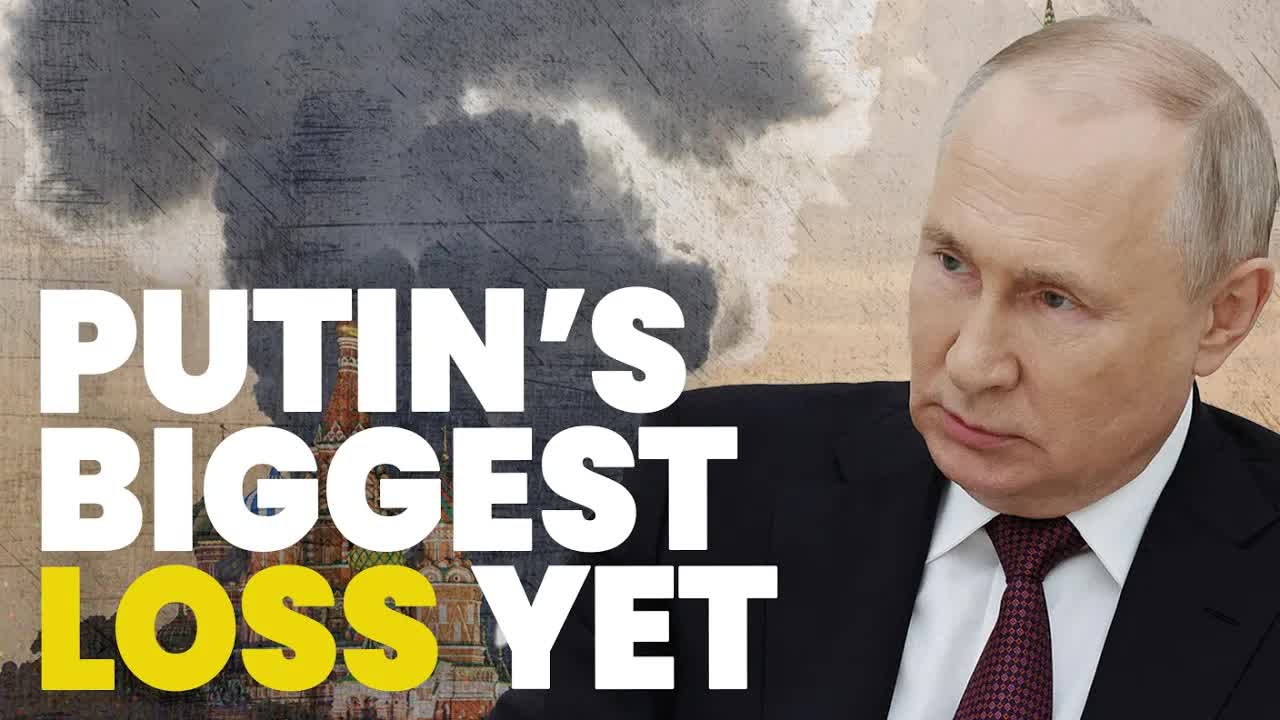
In a troubling development for Vladimir Putin, the dynamics within Chechnya are shifting in ways that could complicate his grip on power.
Ramzan Kadyrov, the current leader of Chechnya and a close ally of Putin, has emerged from a lineage that has long been entrenched in the region’s leadership.
His father, Akhmad Kadyrov, once sought independence for Chechnya, leading to a brutal conflict that Putin oversaw, characterized by mass bombings and significant civilian casualties.
This violent history has shaped the complex relationship between Chechnya and the Russian Federation.
After the war, a deal was struck, allowing the Kadyrov family to maintain control over Chechnya in exchange for loyalty to Moscow.
However, recent tensions have arisen as Kadyrov appears to be challenging other ethnic minorities within the North Caucasus, a region marked by its diverse population and distinct cultural identities.
His actions may not only ignite internal strife in Chechnya but could also galvanize other ethnic groups in the area, potentially leading to a broader uprising against Russian authority.
The North Caucasus is home to various Turkic peoples who have historically felt marginalized by the predominantly Slavic leadership in Moscow.
Many of these groups are secular Muslims and have little allegiance to the Russian state.
As sentiments of discontent grow, there are concerns that this unrest could foster an underground movement among these ethnic communities, reminiscent of the historical struggles faced by Chechnya and Ukraine.
Political analysts suggest that the Kremlin may lack the necessary resources and strategies to quell this rising dissent.
The specter of a mini civil war looms over Chechnya, raising questions about the stability of the entire Russian Federation.
The potential for fragmentation echoes the peaceful dissolution of the Soviet Union, which some believe could become a reality under Putin’s regime, given his military misadventures and economic mismanagement.
Kadyrov’s consolidation of power is not without risks.
While he seems to strengthen his position, he simultaneously alienates neighboring ethnic groups.
This could lead to a significant backlash, creating a volatile situation in a region already fraught with tension.
The North Caucasus serves as a critical juncture connecting various geopolitical interests, including ties to the Middle East and Central Asia.
Interestingly, the Ukrainian government has recognized the plight of the Chechen people, recently passing legislation advocating for their independence from Russia.
This move underscores the shared struggles faced by ethnic minorities under Russian control and highlights the growing solidarity among these groups.
Meanwhile, the ongoing conflict in Ukraine continues to stretch Russian military resources thin, raising concerns about the Kremlin’s ability to maintain order across its vast territory.
As the situation develops, it remains unclear how Putin’s inner circle, particularly the oligarchs, will respond.
Historically, these powerful figures have been more concerned with preserving their wealth than challenging the president’s authority.
Recent polls indicate a rising desire among ordinary Russians to see an end to the war in Ukraine, which could pose a significant threat to Putin’s long-term stability.
The potential for unrest is magnified by the presence of Turkic ethnic movements within Russia, which have increasingly become focal points of tension.
Incidents like the tragic attack at a shopping mall, where Russians were killed by a terrorist group linked to these movements, further exacerbate the situation.
Such events serve as stark reminders of the fragile peace within the Russian Federation.
Adding to the complexity, reports of foreign soldiers, including North Koreans, fighting alongside Russian forces in Ukraine signal a troubling escalation of the conflict.
This unprecedented involvement of North Korean troops represents a new phase in the war, with implications that extend beyond Ukraine’s borders.
The partnership between Russia and North Korea raises alarms about the potential for a wider confrontation involving NATO countries.
As the war drags on, Putin finds himself in a precarious position, balancing multiple fronts while facing increasing pressure at home and abroad.
The alignment between Chechen fighters and Ukrainian forces, albeit tenuous, illustrates the shifting allegiances that could further destabilize the region.
With mounting challenges on all sides, the question remains: how long can Putin maintain control over a fracturing empire?
In this evolving landscape, the stakes are higher than ever.
The potential for a widespread uprising among ethnic minorities could reshape the future of the Russian Federation, leading to unforeseen consequences for Putin’s ambitions.
As the situation unfolds, observers worldwide will be watching closely, aware that the balance of power may be shifting in ways that could redefine the region’s geopolitical landscape.
Read more
