








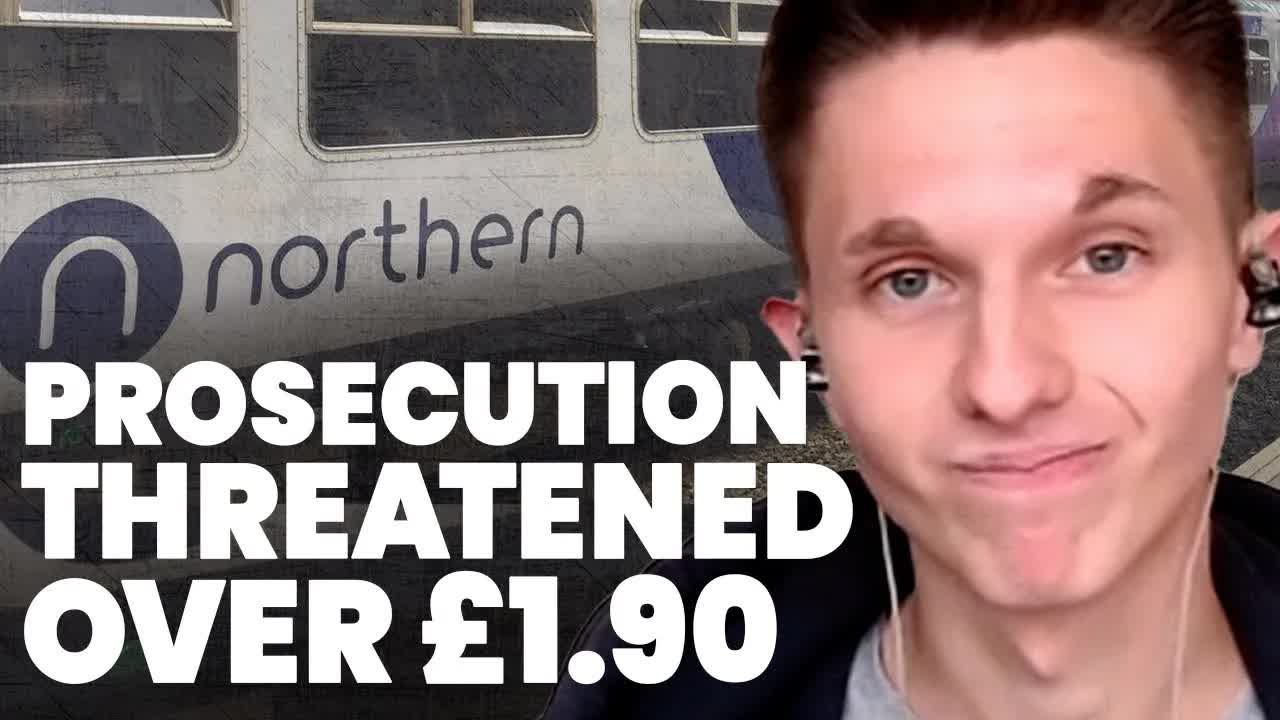
In a shocking turn of events, a train passenger now faces potential prosecution over a mere £1.90 due to a misunderstanding regarding railcard usage.
Sam Williamson’s predicament has captured public attention after he shared his experience on social media, highlighting the complexities and confusion surrounding ticketing policies.
Williamson recently returned home to discover a letter from Northern Rail threatening legal action if he did not respond.
The letter ominously stated that even if he did provide an explanation, they might still pursue prosecution.
This alarming message stemmed from a dispute over the timing of his railcard discount, leading to a situation that many would consider excessive punishment for a minor mistake.
In an interview, Williamson explained that he had purchased a ticket through the Northern app, utilizing his railcard discount, which was labeled as valid for “any time.”
However, he was unaware that this specific discount had restrictions, limiting its use to services after 10 AM.
This oversight became apparent during his journey, prompting him to apologize and request a new ticket or offer to pay the fare difference.
Unfortunately, his plea was escalated into a travel incident report, leaving him bewildered by the severity of the response.
After assuming the matter had been resolved, he was taken aback when the letter arrived, indicating that Northern intended to escalate the issue further.
Williamson expressed his disbelief at the disproportionate nature of the potential prosecution, especially considering the minimal amount involved.
He raised concerns about whether the letter he received was a standard template sent to all customers caught in similar situations, which added to his frustration.
Despite reaching out to Northern’s Debt Recovery and Prosecutions Unit to clarify his case, Williamson reported feeling left in limbo, without any follow-up communication from the company.
The lack of clarity and responsiveness from Northern only amplified his anxiety about the potential consequences of what he deemed a simple error.
The situation has sparked widespread discussion online, with many sympathizing with Williamson’s plight.
He noted that the coverage his story has received might pressure Northern Rail to reconsider their aggressive approach, not just for his case but for others who may find themselves in similar predicaments.
Williamson pointed out the convoluted nature of railcard rules, emphasizing that many passengers struggle to navigate the numerous exceptions and conditions attached to their discounts.
For instance, while some railcards may work before 10 AM during specific months, others do not, creating a confusing landscape for travelers.
He also criticized the inconsistency in ticket purchasing platforms.
Different websites can present various formats and rules, leaving consumers bewildered.
Williamson argued that clearer communication from the railway companies could prevent such misunderstandings from escalating to the level of prosecution.
When asked if the ticket inspector on board could have exercised discretion, Williamson shared anecdotes from others who had encountered similar issues.
Many ticket inspectors reportedly prefer to resolve these matters amicably, opting for a simple fare adjustment rather than pursuing heavy-handed penalties.
As of now, Williamson has not received any formal court date or fine, but he remains anxious about the possibility of Northern proceeding with legal action.
He hopes that by sharing his story, the railway company will recognize the need for clearer guidelines and a more reasonable approach to enforcement.
In a statement, a spokesperson for Northern Rail emphasized the importance of passengers purchasing valid tickets and adhering to regulations.
However, many passengers, including Williamson, feel that the current system is overly punitive and fails to account for genuine mistakes.
This incident sheds light on the broader issues surrounding the complexity of ticketing systems and the harsh penalties that can arise from minor errors.
As Williamson’s story continues to circulate, it raises important questions about fairness and transparency in the railway industry.
Read more
