
For over fifty years, the tradition of major party presidential candidates sitting down for a 60 Minutes interview in October has become a staple of American politics.
This year, Vice President Kamala Harris and former President Donald Trump were both invited to participate.
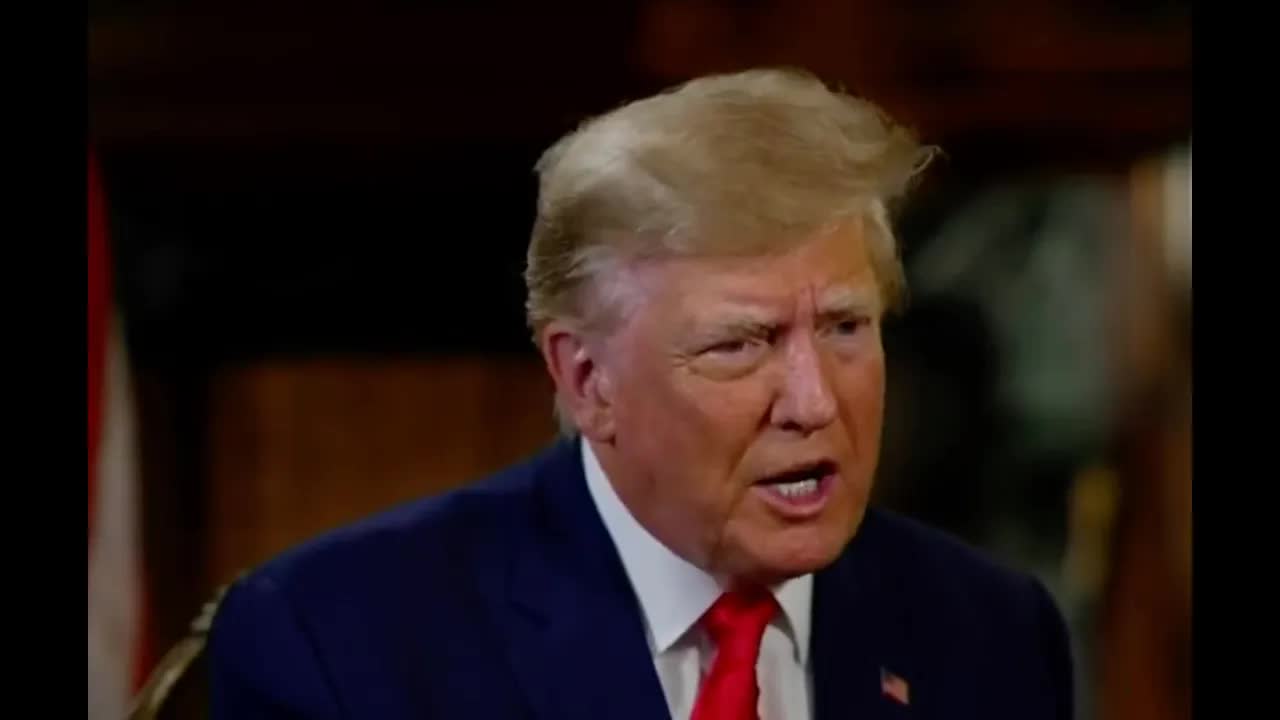
However, just last week, Trump abruptly canceled his appearance, leaving many to speculate about the reasons behind this decision.
Initially, Trump’s campaign had arranged for him to be interviewed at his Mar-a-Lago estate.
They even proposed a secondary location in Butler, Pennsylvania, where Trump had previously survived an assassination attempt.
After some back and forth, it seemed that Trump was on board with the plan.
Yet, just days before the scheduled interview, he backed out, raising eyebrows and questions about what truly transpired.
The explanations provided by Trump’s team were anything but consistent.
At first, they expressed concern about the fact-checking that would accompany the interview.
It’s worth noting that fact-checking is standard practice for any news segment.
Later, Trump claimed he wanted an apology from correspondent Leslie Stahl regarding comments made during a previous interview in 2020.
He alleged that she stated Hunter Biden’s controversial laptop was linked to Russia, a claim she never actually made.
This situation has led to a curious narrative where Trump criticizes Harris for not engaging in tough interviews, despite his own track record of avoiding them.
While he has opted out of debates and interviews with prominent figures, Harris has faced numerous challenging discussions, including her appearance on 60 Minutes and shows like Call Her Daddy and The Howard Stern Show—platforms that have historically leaned conservative.
The irony here is palpable.
Trump seems to be dodging tough questions while accusing Harris of avoiding them.
His recent interview schedule includes appearances with right-leaning hosts like Ben Shapiro and Laura Ingraham, which hardly qualifies as facing the music.
It raises the question: who is really shying away from difficult conversations?
Moreover, Trump’s insistence that he won’t participate in interviews where fact-checking is allowed is troubling.
Shouldn’t a candidate for president be prepared to defend their statements?
The notion that lying should be permissible in political discourse is alarming and reflects a broader issue within the Republican Party.
It seems that many in the GOP are unwilling to face scrutiny or accountability for their claims.
The narrative surrounding the Hunter Biden laptop story further complicates matters.
Trump’s demand for an apology from Stahl stems from a misrepresentation of what she said during their 2020 interview.
In reality, she indicated that the facts surrounding the laptop were still unclear.
Subsequent investigations, including one by the House Oversight Committee, found no wrongdoing by Joe Biden regarding his son’s business dealings in Ukraine, which undermines Trump’s argument.
As the media continues to scrutinize Harris, it’s striking how Trump’s avoidance of hard-hitting interviews often goes overlooked.
If Harris had canceled a high-profile interview, the backlash would undoubtedly be fierce.
Yet, Trump seems to escape similar criticism, despite his history of walking out on interviews, including a notable incident with 60 Minutes in 2020.
This double standard in media coverage is frustrating.
While Harris faces questions about her willingness to engage with tough topics, Trump is given a pass for bailing on interviews that could challenge him.
The reality is that the narrative surrounding these candidates often reflects more about the media’s biases than about their actual performances.
Ultimately, Trump’s excuses for avoiding the 60 Minutes interview appear increasingly flimsy.
His fear of being fact-checked and held accountable for his statements is evident.
Even Republican commentators like Frank Luntz acknowledge that it’s Trump who is ducking tough questions, while Harris is stepping up to the plate.
In a political landscape where truth is often obscured, Trump’s projection of fear onto Harris is telling.
He attempts to shift the focus, claiming she is the one avoiding difficult discussions.
However, as the evidence mounts, it becomes clear that he is the one reluctant to defend his positions in front of a critical audience.
As the election draws nearer, the implications of these choices will resonate.
The American public deserves candidates willing to engage in open dialogue, face scrutiny, and uphold the integrity of the political process.
The refusal to do so only highlights deeper issues within our current political climate.
Read more
