
In the ever-evolving landscape of American politics, the behavior of former President Donald Trump has raised eyebrows, particularly as he gears up for another presidential run at the age of 78.
Observers have noted that one potential sign of mental decline in older individuals is a diminishing of social inhibitions.
This notion seems to resonate with some of Trump’s recent antics, which have been described as increasingly bizarre.
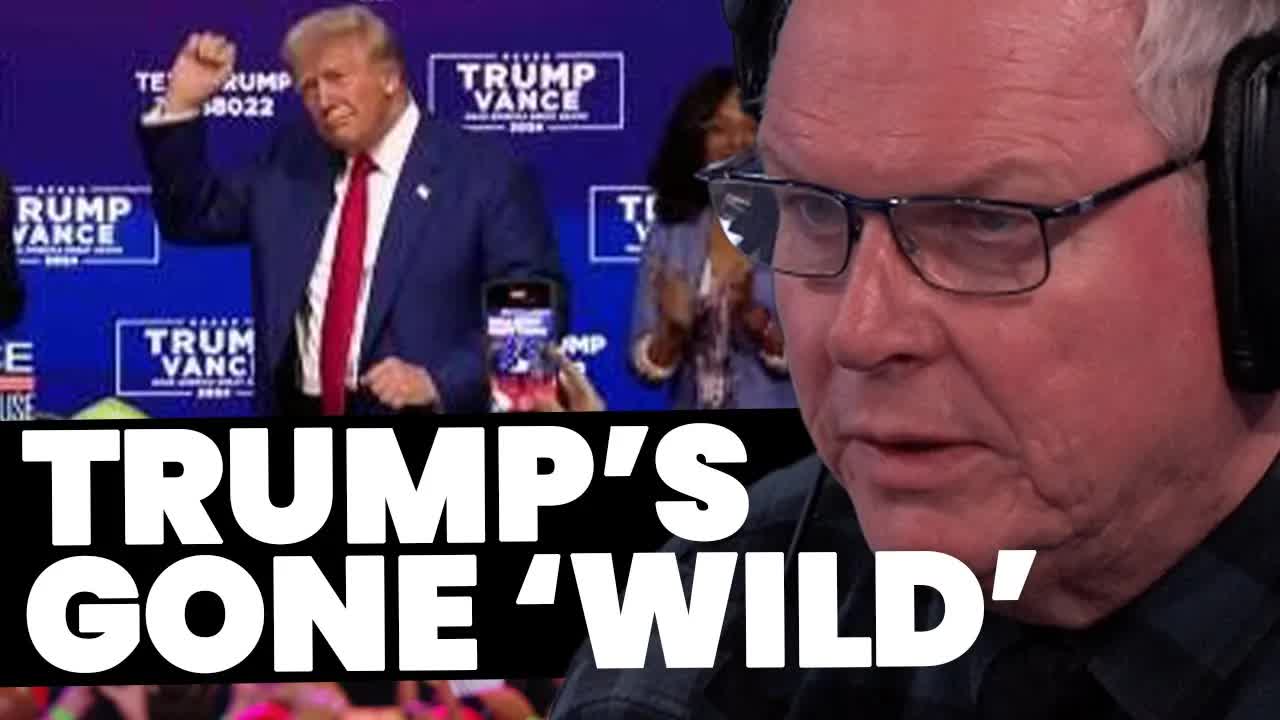
At a recent rally, Trump took an unexpected turn by halting his usual Q&A format and instead danced for an astonishing 40 minutes.
Coupled with peculiar appearances—like sitting on a towel while chatting on Fox & Friends—his actions have sparked discussions about his mental state.
Furthermore, his extreme rhetoric, including calls for military intervention against political opponents, has only added fuel to the fire.
It appears that Trump is opting for fewer formal public engagements, choosing instead to connect with supporters at rallies where he can speak freely.
But what does all this mean for the upcoming election?
Polls suggest a tight race, with recent data indicating that Vice President Kamala Harris is gaining ground.
The Washington Post’s Swing State poll shows her leading in key battleground states like Georgia, Wisconsin, Michigan, and Pennsylvania, while Trump holds a slight advantage in Arizona and North Carolina.
This narrow margin raises questions about voter sentiment and the potential for shifts in support as the campaign unfolds.
As the election approaches, it is crucial to consider how voters will ultimately make their decisions.
Many believe that Trump’s erratic behavior may alienate potential supporters, making it challenging for him to gain additional traction.
In contrast, as Harris becomes more familiar to the electorate, especially among women, she could attract more votes, potentially tipping the scales in her favor.
The narrative surrounding Trump has shifted from being entertaining to increasingly unsettling.
His supporters often find themselves in the position of having to rationalize or downplay his more outrageous statements.
It’s a familiar pattern: Trump says something controversial, and his allies scramble to clarify or justify his comments, often creating a narrative that diverges significantly from what he originally stated.
This media performance has transformed the political arena into something akin to a reality show, with Trump at the center as the unconventional character.
While many recognize this persona, it remains uncertain whether voters will engage with him on a deeper level beyond the spectacle.
The absence of coherent policy discussions this time around could hinder his appeal, as voters may seek substantive solutions rather than mere entertainment.
Despite his past ability to resonate with certain demographics through policies that addressed their concerns, Trump’s current approach seems less focused on concrete issues.
Some speculate that his team has determined that policy discussions are futile, given the polarized nature of the electorate.
However, as the race tightens, the effectiveness of this strategy may come into question.
Imagine for a moment that Trump’s unconventional tactics are part of a deliberate plan.
Could he be banking on shocking statements to distract from his lack of a solid policy platform?
If so, this raises significant implications for the election.
The focus now appears to be on mobilizing committed voters rather than swaying undecided ones.
The Democrats seem to have a clear understanding of their base and are working diligently to ensure voter turnout.
However, the Republicans face their own challenges.
While Trump has managed to attract some new supporters, particularly among minority men, his relationship with traditional conservative groups, like the Christian right, is becoming strained.
Issues like abortion and controversial remarks have created friction that could impact his overall support.
As the political landscape continues to shift, the race remains incredibly close.
Media narratives often portray Harris as struggling to catch up, yet she possesses a legitimate chance to clinch victory.
The dynamics of voter turnout and engagement will be pivotal in determining the outcome.
Moreover, Trump’s provocative statements have led to serious concerns about the implications of his potential presidency.
Critics, including some within his own party, have labeled his rhetoric as dangerously extremist, warning of a drift towards authoritarianism.
His dismissal of legal challenges and threats to dismantle institutions like the Department of Justice underscore the gravity of the situation.
In response to Trump’s inflammatory comments, Harris has taken a stand, emphasizing the importance of unity and respect for democratic principles.
Yet, the stakes are undeniably high, and the discourse surrounding the election has shifted from lighthearted banter to ominous warnings about the future of American democracy.
As we move closer to the election, it’s evident that both candidates are navigating a complex web of voter sentiment, media portrayal, and personal narratives.
Whether Trump can maintain his grip on his base while appealing to undecided voters remains to be seen, but one thing is clear: the 2024 race is shaping up to be one of the most unpredictable and consequential in recent history.
Read more
