









For over 70 years, a four-kilometer-wide demilitarized zone has stood between North and South Korea, serving as a buffer against potential conflict.
This precarious border was established with the hope of preventing warfare, but recent events have sparked concerns about its effectiveness.
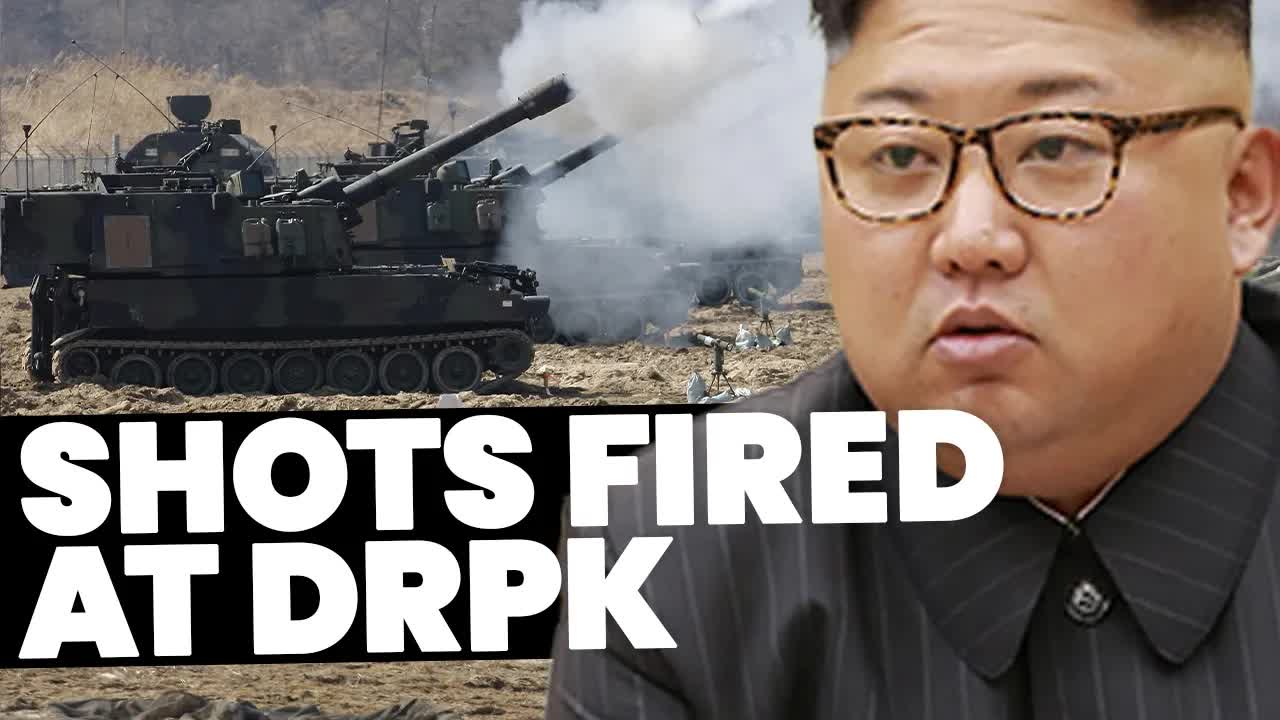
Shots were fired by South Korean forces amid rising tensions over propaganda drones, highlighting the fragile nature of peace in the region.
Richard Lloyd-Perry, Asia editor for The Times, sheds light on the current situation.
He notes that while the Korean War technically never concluded, an uneasy truce has persisted.
Just how unstable is this peace?
The rhetoric exchanged between both nations suggests a simmering tension beneath the surface.
Despite the long-standing ceasefire, the Korean Peninsula remains a hotspot of military activity, with advanced weaponry and troops concentrated in a small area, creating a potentially explosive environment.
South Korea finds itself in a precarious position.
As a developed nation with a thriving economy, it stands to lose significantly should hostilities escalate.
The capital, Seoul, lies a mere 40 miles from the North Korean border, placing it within reach of conventional artillery and other weapons.
On the flip side, North Korea, under its dictatorship, faces its own challenges.
While it may appear to have less to lose, the regime’s survival hinges on maintaining control over its populace.
The Kim dynasty, much like its predecessors, aims to preserve its rule and avoid conflict that could jeopardize its power.
China’s role in this geopolitical puzzle cannot be overlooked.
Although it would never openly admit it, China likely wishes for a resolution to the tensions on the Korean Peninsula.
The presence of North Korea acts as a buffer, preventing a strong U.S. ally from establishing a foothold right on China’s border.
However, the Chinese government also finds the unpredictable North Korean regime to be a source of frustration.
Historically, North Korea has maneuvered between the influences of China and Russia, maintaining a delicate balance.
The relationship between North Korea and Russia adds another layer of complexity.
Richard highlights that North Korea has been supplying artillery shells to Russia, particularly in the ongoing conflict in Ukraine.
Reports suggest that a significant portion of munitions used by Russian forces originates from North Korea.
This arms trade raises questions about the extent of cooperation between the two nations and whether Russia could play a role in stabilizing the Korean Peninsula.
While North Korea may not send large numbers of troops to aid Russia, its support through arms has become a critical factor in the Ukraine conflict.
Conversely, the current state of affairs in Ukraine serves as a cautionary tale for Kim Jong-un.
The challenges faced by Putin in the ongoing war highlight the risks of overextending military ambitions, a lesson that resonates deeply in North Korea as it navigates its own geopolitical landscape.
As tensions rise and the specter of war looms, the interconnectedness of global conflicts becomes evident.
The struggles in one region often reverberate throughout the world, influencing decisions and strategies in unexpected ways.
Richard’s insights remind us that the Korean Peninsula is not an isolated issue; rather, it is part of a larger narrative involving major powers and their interests.
In this intricate web of alliances and rivalries, the prospect of peace seems ever elusive.
Both North and South Korea have reasons to avoid conflict, yet the stakes remain high.
The historical context of the Korean War and the ongoing military posturing serve as constant reminders of the potential for escalation.
As the situation unfolds, the international community watches closely, hoping for a resolution that has long been deemed necessary.
The delicate balance of power in the region hangs in the balance, as leaders weigh the risks and rewards of their actions.
With so much at stake, the question remains: can the fragile peace endure, or will tensions ultimately lead to confrontation?
Read more
