

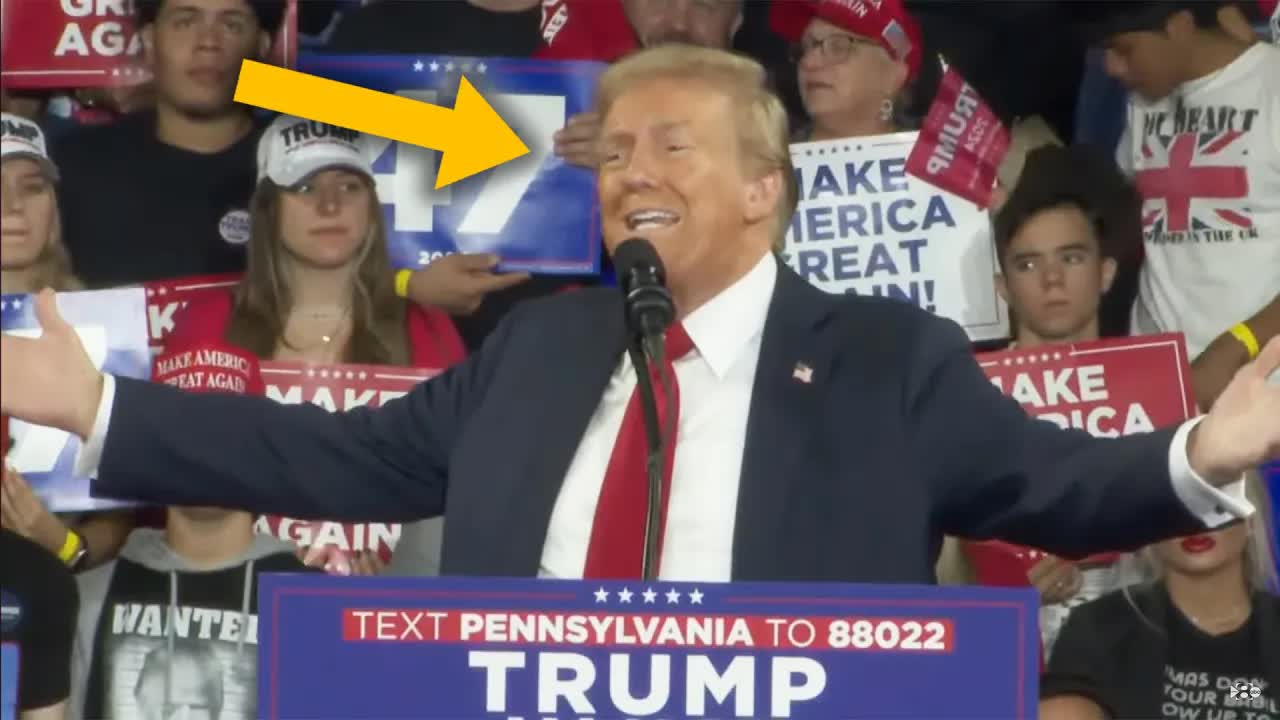
In the world of political rhetoric, few figures stand out as starkly as Barack Obama and Donald Trump.
Recently, both former presidents delivered speeches in Pennsylvania, each showcasing their unique approaches to engaging with the public.
While Obama’s rally was marked by inspiration and eloquence, Trump’s speech drew attention for its brashness and self-aggrandizement.
Obama’s address resonated with many, emphasizing unity and hope.
His ability to connect with his audience through thoughtful discourse is often lauded.
In contrast, Trump’s recent remarks were filled with controversial claims and personal jabs, particularly aimed at Vice President Kamala Harris.
He expressed a belief that women would support him, dismissing polls indicating a gender gap as mere fabrications.
Trump’s tendency to boast about his own intelligence was evident throughout his speech.
He claimed to possess a remarkable memory and the ability to juggle numerous topics simultaneously.
Yet, critics argue that this rambling style lacks coherence and often fails to deliver substantive arguments.
Instead, it appears more like a stream of consciousness than a well-structured address.
His comments about Harris were particularly striking.
Trump’s frequent insults towards her intelligence seem to stem from his own insecurities.
It raises the question: why does he feel the need to belittle others to assert his own worth?
The pattern of projection is apparent, as he labels Harris as unintelligent while he himself struggles to articulate clear thoughts.
During the rally, Trump’s interaction with fellow Republican David McCormick was another highlight.
After insulting McCormick, he invited him on stage, creating an awkward moment that felt more like a cult-like display than a genuine political endorsement.
This behavior reflects a broader trend in Trump’s rallies, where personal attacks overshadow meaningful political dialogue.
Trump’s rhetoric often devolves into childish name-calling, which many believe undermines the integrity of political discourse.
Instead of focusing on policy or pressing issues, his speeches sometimes resemble playground squabbles, leaving serious discussions in the dust.
This shift in political dialogue raises concerns about the future of political engagement in America.
His fixation on wind energy also came up during the speech, where he made a bizarre analogy involving windmills and television.
It’s moments like these that leave audiences scratching their heads, wondering if they’ve missed something crucial.
The disjointed nature of his remarks often leaves listeners confused rather than informed.
Moreover, Trump’s critiques of other public figures, including Whoopi Goldberg and Howard Stern, showcased his penchant for personal attacks over constructive criticism.
His inability to provide thoughtful commentary indicates a troubling trend where insults replace meaningful dialogue.
As he continues to lash out, one has to wonder what this means for the political landscape.
As Trump continues to campaign, his reliance on insults and self-praise raises questions about his strategy.
Is this approach effective, or does it alienate potential supporters?
The ongoing polarization in American politics suggests that while some may rally behind his style, others are turned off by the lack of substance.
The spectacle of Trump’s rallies, filled with fervent supporters, contrasts sharply with Obama’s more reserved gatherings.
While both leaders have their followers, the methods they employ to connect with the electorate could not be more different.
It’s a fascinating study in contrasts that speaks volumes about the current state of American politics.
Ultimately, as we witness these two former presidents navigate the political arena, it becomes clear that their styles reflect deeper societal divides.
Whether one prefers the inspirational or the confrontational, the impact of their words shapes the political discourse in significant ways.
As the 2024 election approaches, how these narratives evolve will be critical in determining the future direction of the nation.
Read more
