

In a recent turn of events, the New York Times has stirred the pot by raising questions about Donald Trump’s mental acuity.
Just a month before the upcoming election, the publication reported on what they termed “cognitive change” in the former president.
This assertion, while perhaps more palatable than outright calling it cognitive decline, has ignited a firestorm of discussion and criticism.
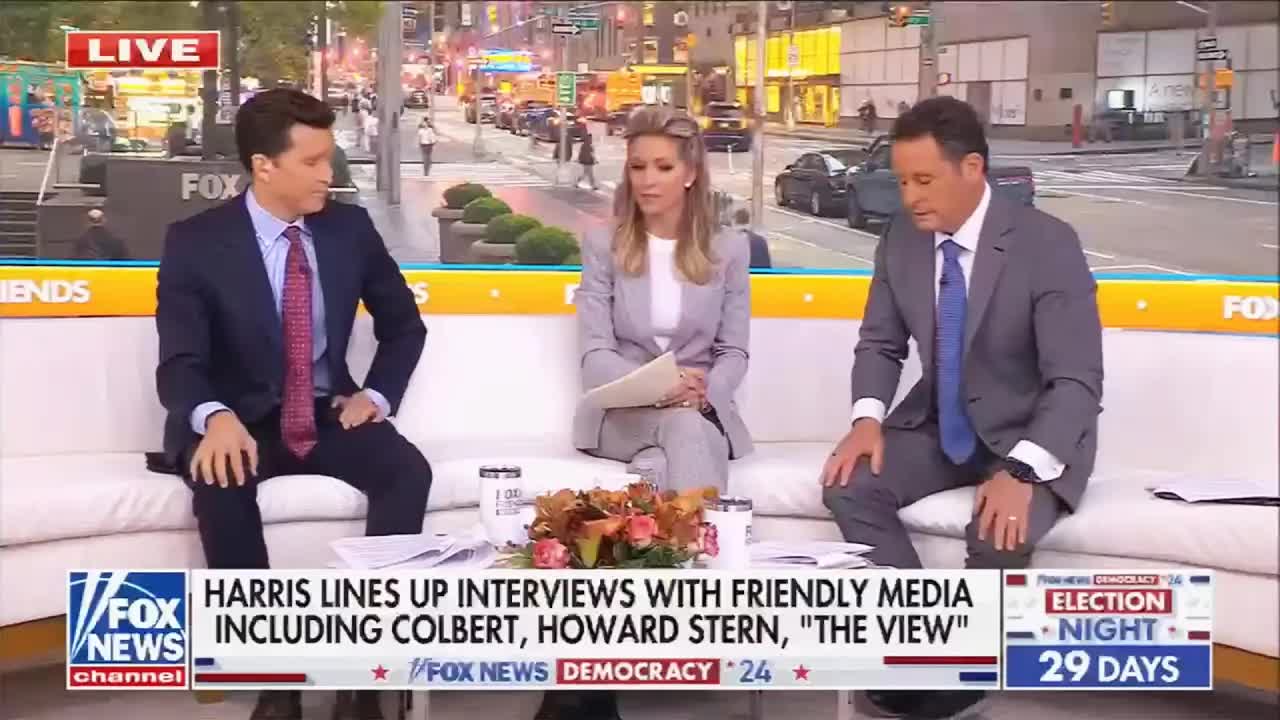
Fox News host Brian Kilmeade is not taking this revelation lightly.
He expressed his discontent over the Times’ focus on Trump, suggesting that the media should instead redirect their attention to Vice President Kamala Harris.
Kilmeade seems to believe that Harris’s upcoming appearances on platforms like The View and interviews with Howard Stern and Stephen Colbert are more deserving of coverage than Trump’s mental state.
But is that really the case?
The New York Times’ front-page inquiry into Trump’s mental health raises significant questions.
After all, the former president recently delivered an impressive hour-and-45-minute speech to a crowd that, while sizable, was likely around 25,000 rather than the inflated estimates of 60,000 to 100,000 cited by some.
This discrepancy highlights how narratives can be spun in political discourse.
Despite Kilmeade’s insistence on the rally’s magnitude, the real concern lies in the substance of Trump’s speeches.
Just because someone can speak for an extended period doesn’t necessarily mean their thoughts are coherent or cogent.
In fact, many individuals experiencing cognitive decline can maintain lengthy conversations, leaving audiences questioning the quality of their assertions.
The New York Times may have arrived late to the party regarding Trump’s mental fitness, but their investigation could have significant implications.
If voters begin to seriously consider the mental faculties of the former president, it could alter the landscape of his support.
Kilmeade and others at Fox News seem to recognize this potential shift and are clearly worried about its impact on Trump’s campaign.
On the other hand, Harris’s recent interview performances have also come under scrutiny.
During a recent conversation, she struggled to address questions about abortion, leading to speculation about her readiness for the spotlight.
Critics argue that her inability to navigate tough questions might explain why those close to her are hesitant to put her in challenging situations.
Adding to the intrigue, a forthcoming 60 Minutes interview with Trump has been announced, although it won’t air until next Sunday.
This delay raises eyebrows, especially considering the current media frenzy surrounding his mental capabilities.
What might he reveal during this highly anticipated segment?
As the political landscape continues to evolve, polls indicate a tight race.
Both candidates are gearing up for a battle, with the stakes higher than ever.
It’s a game of who can outwork the other, and right now, both sides are preparing for what could be a pivotal moment in American politics.
In Pennsylvania, despite claims of waning momentum, Trump still draws significant crowds.
However, the reality of those numbers may not reflect the narrative some wish to promote.
It’s essential to sift through the hyperbole to understand the actual dynamics at play.
As discussions about Trump’s mental fitness heat up, the implications for his campaign could be profound.
If voters begin to view him through the lens of cognitive capability, it could reshape the electoral landscape.
Meanwhile, the media continues to dissect every nuance, ensuring that no stone is left unturned.
The debate surrounding mental acuity in politics is far from settled.
With both Trump and Harris facing their own challenges, the coming weeks will be crucial.
As we watch these narratives unfold, one thing is clear: the intersection of mental fitness and political viability is a topic that will remain in the spotlight as the election approaches.
Read more
