
In a striking display of rhetoric, former President Donald Trump has once again positioned himself as a victim in the political arena.
His recent remarks surrounding an alleged assassination attempt at a golf club in Florida reflect a broader narrative that seems to underpin his campaign—grievance and victimhood.
This strategy, reminiscent of cult-like behavior, paints Trump as a target, urging his supporters to rally around him in a protective embrace.
The latest incident involves a man charged with an assassination attempt who, interestingly, was a supporter of Trump during the 2016 election.
Yet, Trump’s response appears to twist the gravity of the situation into something more self-serving.
During a speech in Walker, Michigan, he suggested that these threats stem from his tariff policies, a claim that raises eyebrows considering his apparent lack of understanding about tariffs themselves.
In his speech, Trump lamented the decline of the American car industry, asserting that it once held a dominant position, which is no longer the case.
He suggested that enemies are after him because of his policies, claiming to be the only consequential president facing such threats.
This narrative of being under siege, however, seems to divert attention from the facts surrounding the incidents themselves.
Notably, the first alleged assassination attempt occurred in Butler, Pennsylvania, involving an individual who identified as a Republican and a Trump supporter.
Trump’s insistence that these threats arise from his economic policies rather than the political climate he has fostered is perplexing.
Critics argue that his understanding of tariffs is superficial at best, often conflating them with punitive measures against foreign nations.
When faced with uncomfortable truths, such as the testimony from FBI Director Christopher Wray regarding the Butler incident, Trump resorted to social media to discredit Wray, whom he appointed himself.
This tactic of intimidation and deflection has become a hallmark of his approach when confronted with unfavorable information.
Alina Haba, one of Trump’s prominent surrogates, has echoed this theme of martyrdom, suggesting that Trump risks his life daily while playing golf.
This portrayal not only exaggerates the dangers he faces but also serves to further entrench his supporters in a mindset of loyalty and protectionism.
Meanwhile, Melania Trump has joined the fray, promoting theories of conspiracy surrounding the alleged assassination attempts.
In a recent interview, she questioned the lack of media coverage and suggested that there was something suspicious about the timing and nature of these events.
Her comments raise questions about the extent of complicity within the Trump family regarding the narratives being spun.
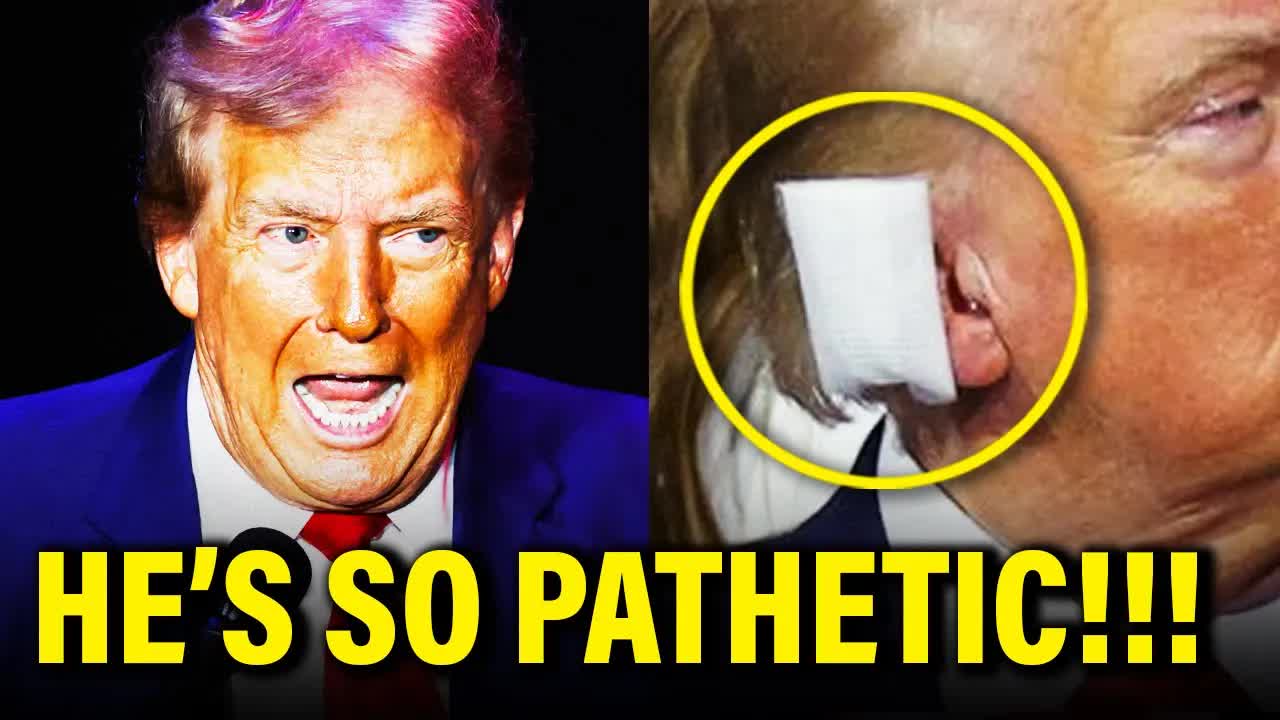
Despite the serious nature of the allegations, Trump has been reticent about sharing details of his health following these incidents.
His claims of being a “fast healer” after purportedly being shot have drawn skepticism, especially given the lack of transparency regarding his medical records.
Observers note that if he were genuinely injured, there would be visible signs, yet he downplays the severity.
In addition, Trump’s grasp of firearms and their classifications has come into question.
He mistakenly referred to an AR-15 as an “MK-47,” showcasing a troubling lack of knowledge for someone who positions himself as a staunch defender of Second Amendment rights.
This misstep further underscores his tendency to play the victim card rather than engage in substantive discussions about policy.
The ongoing narrative of victimhood has not only permeated Trump’s speeches but also his fundraising efforts.
A significant portion of his campaign communications now centers around the theme of assassination attempts, leveraging these incidents for financial gain.
This approach raises ethical questions about the exploitation of serious threats for personal profit.
Former Republican Senator Jeff Flake recently weighed in on Trump’s tactics, emphasizing the importance of upholding the rule of law.
Flake’s criticism highlights a growing concern among some conservatives regarding Trump’s actions post-election and his handling of tariffs, which diverge from traditional Republican values.
As the political landscape continues to evolve, Trump’s strategy of portraying himself as a perpetual victim may resonate with some, but it also invites scrutiny.
The implications of such a narrative extend beyond Trump himself, affecting the broader political discourse and contributing to a climate of division and distrust.
Read more
