









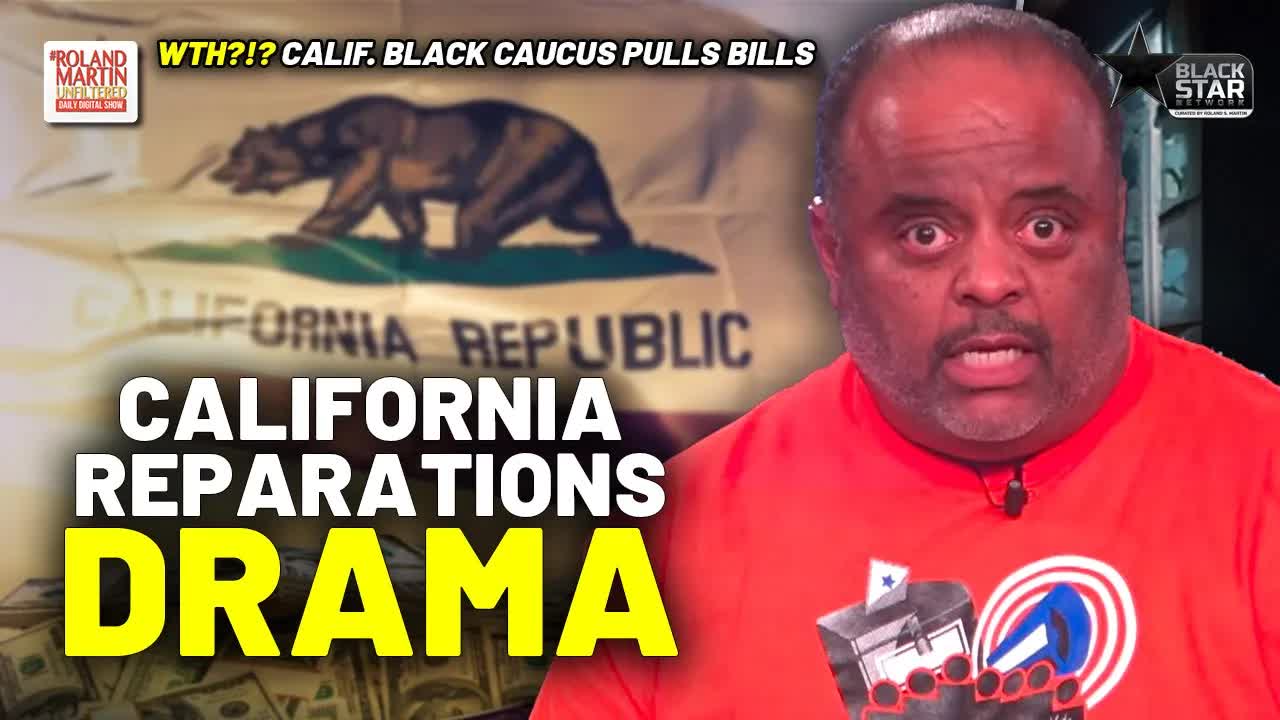
In a shocking turn of events, California’s ambitious reparations bills have come to an abrupt halt, leaving activists and supporters bewildered.
Just when it seemed like the state was on the verge of enacting some of the most progressive reparations legislation in U.S. history, the California Legislative Black Caucus announced they were pulling the bills without offering a clear explanation.
This unexpected development has raised questions about the decision-making process within the caucus and the potential influence of external pressures.
State Senator Stephen Bradford, who authored several key bills and has been a prominent advocate for reparations, joined us to shed light on the situation.
He detailed that there were initially 14 bills that the Legislative Black Caucus had prioritized, aiming to address historical injustices faced by Black Californians.
However, as the legislative session progressed, it became apparent that not all of these bills would see the light of day.
Bradford’s three main bills had made significant progress, having passed through the Senate and Assembly committees without amendments.
These included the establishment of the American Freedmen Affairs Agency, measures addressing racially motivated property seizures, and a funding mechanism to support reparations initiatives without relying solely on state funds.
Despite this momentum, a sudden shift occurred, leading to the bills being shelved.
Activists outside the Assembly expressed their frustration, accusing the Black Caucus of abandoning their own legislation out of fear of governmental backlash.
One activist passionately declared that the world is watching California, urging Governor Gavin Newsom to sign the bills into law, emphasizing the urgency of addressing injustices that have persisted for over four centuries.
The turning point seems to have originated from concerns raised by the administration regarding the viability of one of Bradford’s key bills, SB 1403.
During a conversation at the Democratic National Convention, Chair Lori Wilson of the Black Caucus informed Bradford of potential issues with the bill, although specifics were scarce.
Upon his return, Bradford sought clarification from state officials, only to hear vague concerns about budgetary constraints and the feasibility of establishing the proposed agency.
As the legislative session drew to a close, Bradford received word that amendments were being proposed to his bills, which he felt would dilute their effectiveness.
Ultimately, the Black Caucus opted to hold off on the bills, citing collective concerns and a lack of participation in the legislative process.
This decision left Bradford perplexed, as he believed they had sufficient support to move forward.
The situation raises critical questions about the role of the Black Caucus and their commitment to reparations.
Bradford pointed out that if the bills had passed and were subsequently vetoed by the governor, the responsibility would lie with him.
By pulling the bills, however, the caucus shifted the blame onto themselves, leaving many to wonder what factors contributed to their sudden retreat.
The statement released by the Black Caucus further muddied the waters, suggesting they had only recently become aware of issues with the bills.
Bradford, who had been deeply involved in the reparations task force and had introduced the legislation months prior, found this claim puzzling.
The lack of communication and collaboration among caucus members at such a critical juncture raises concerns about their collective strategy.
Many observers are left questioning the motivations behind the caucus’s decision.
Was there a genuine fear of political repercussions, particularly with the upcoming presidential race?
Or was it a miscalculation that undermined years of advocacy work?
The stakes are high, and the implications of this decision extend far beyond California, as other states look to California’s efforts as a model for their own reparations initiatives.
Bradford expressed deep disappointment at the failure to advance the legislation, noting that it represented a significant opportunity for change not just for Black Californians but for the nation as a whole.
He emphasized the importance of standing firm in the face of adversity, advocating for the necessity of pushing forward despite potential opposition.
As the dust settles, the future of reparations in California remains uncertain.
Activists and legislators alike are left grappling with the implications of this setback, hoping that the conversation surrounding reparations will continue to gain traction.
The road ahead may be challenging, but the fight for justice and recognition of historical wrongs is far from over.
Read more
