









In a world where the geopolitical landscape is ever-shifting, the ongoing conflict between Ukraine and Russia has captured global attention, raising questions about strategy and international relations.
Recently, discussions have surfaced regarding the West’s engagement with Russia during the 1990s and early 2000s, particularly in light of Vladimir Putin’s resurgence and its implications for Russian nationalism.
Some analysts argue that the West’s approach back then wasn’t fundamentally misguided, but it must tread carefully now to avoid exacerbating tensions.
The aftermath of the Soviet Union’s collapse left Russia grappling with significant internal challenges.
Observers caution that if Western nations overtly intervene in the political dynamics of post-war Russia, the backlash from the Russian populace could be severe.
The focus, they argue, should remain on supporting Ukraine militarily to reclaim territory and defeat the Russian forces before contemplating any long-term strategies concerning Russia itself.
Ukraine has demonstrated remarkable capabilities on the battlefield, particularly with its drone strikes targeting critical Russian military logistics.
Recent operations against large ammunition depots have showcased Ukraine’s ability to disrupt Russian supply lines effectively.
This raises an intriguing question: Is Ukraine on the brink of significantly hindering Russia’s war efforts by systematically attacking its logistical infrastructure?
Absolutely.
From the outset of this conflict, Ukraine has shown a knack for innovative warfare.
Their strategic strikes are reminiscent of David versus Goliath, where agility and cunning can triumph over brute strength.
By targeting Russian logistics, Ukraine not only inflicts physical damage but also undermines the morale of Russian troops, who may start doubting their support and sustainability on the front lines.
Combat power consists of three essential components: conceptual, physical, and mental.
Disrupting logistics attacks two of these pillars—physical supplies and the mental resolve of the soldiers.
As Ukrainian forces continue to hit supply chains, the Russian soldiers may find themselves questioning their ability to sustain their fight, leading to a potential collapse in morale.
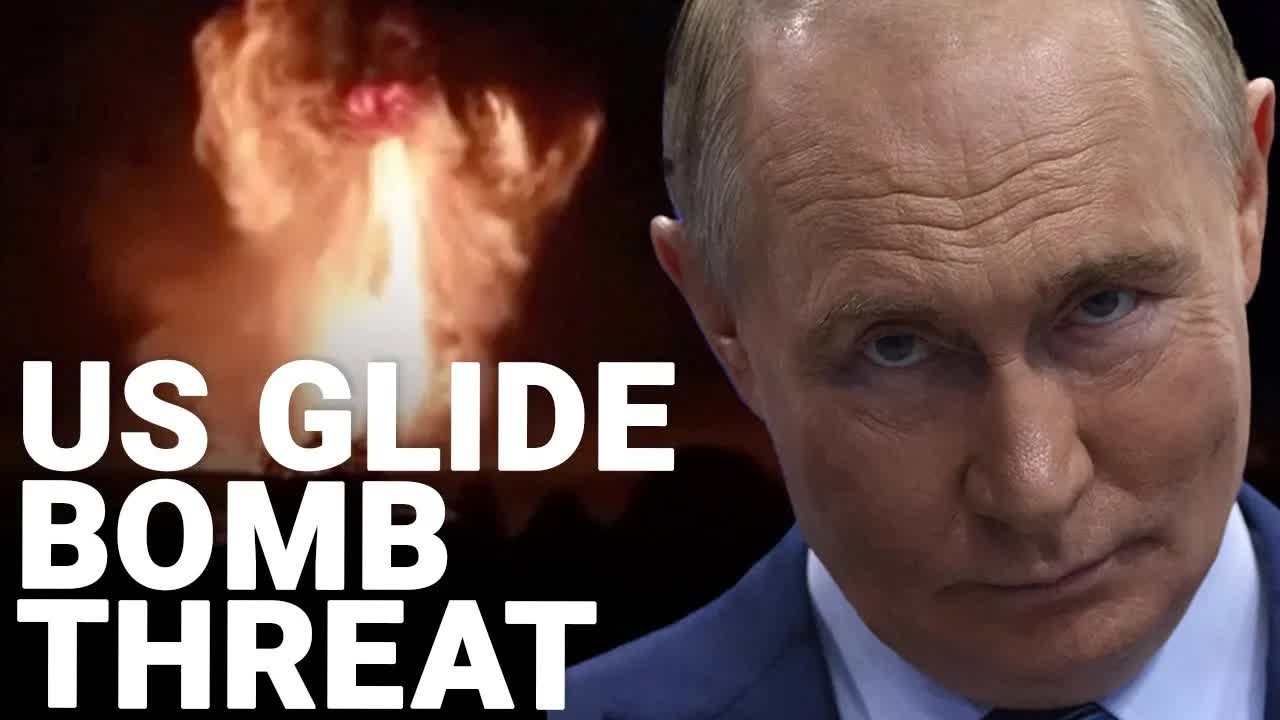
The introduction of glide bombs into Ukraine’s arsenal is a game-changer.
The U.S. decision to provide these precision munitions signals a significant shift in the conflict’s dynamics.
Russian forces have used glide bombs effectively, and now Ukraine will have access to similar capabilities.
This not only strengthens Ukraine’s offensive capabilities but also sends a strong message to Russia about the consequences of their aggression.
The psychological impact of glide bombs cannot be overstated.
When Russian soldiers are hunkered down in trenches, the fear of cluster munitions raining down on them can be paralyzing.
This could lead to a drastic shift in the battlefield’s morale, potentially breaking the will of Russian forces to continue fighting.
However, questions remain about the specifics of this new military aid.
While the announcement of glide bombs is significant, details regarding their quantity and timeline are still unclear.
The uncertainty surrounding this assistance adds an element of suspense as both sides brace for the next phase of the conflict.
In a related development, French President Emmanuel Macron recently called for a reimagining of international relations with Russia during a peace summit in Paris.
He emphasized the need for a new world order that acknowledges equal representation among European nations.
This perspective raises eyebrows; is it too soon to talk about reconciliation with Russia while the war rages on?
Macron’s comments seem to echo a diplomatic approach aimed at fostering a future relationship with Russia, even as Ukraine seeks victory.
Yet, many believe such discussions may feel premature, especially when Ukraine is actively fighting for its sovereignty and independence.
The notion of reconciling with a nation that has caused so much suffering might come off as counterproductive.
As the conflict evolves, the West faces a pivotal moment.
Supporting Ukraine militarily while contemplating future relations with Russia requires a delicate balance.
The stakes are high, and the path forward is fraught with challenges.
The world watches closely as these nations navigate the complexities of war and diplomacy, hoping for a resolution that brings lasting peace to the region.
Read more
