




In recent years, discussions surrounding censorship and free speech in academia have intensified, with many claiming that the current climate is even more oppressive than during the McCarthy era.
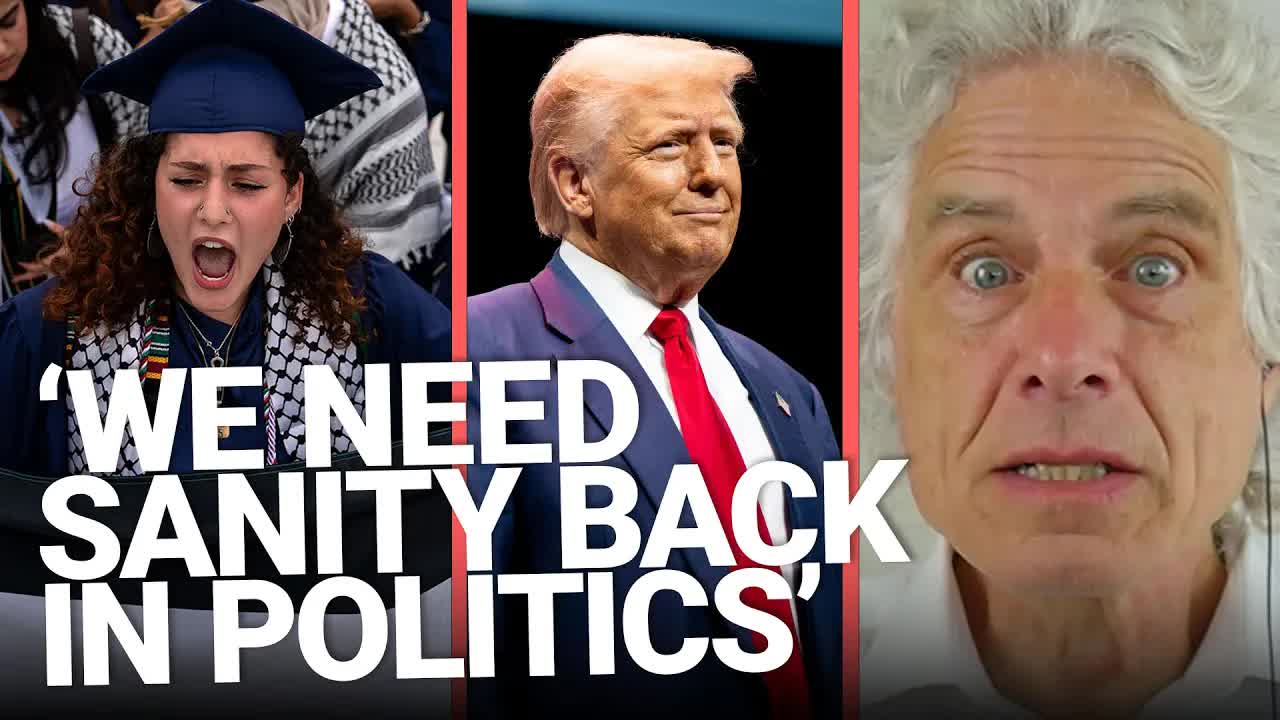
Renowned psychologist Stephen Pinker weighs in on this alarming trend, highlighting the potential threats to democratic systems in the United States.
As the political landscape continues to shift, the question remains: how resilient can these systems be in the face of such challenges?
Pinker’s insights come on the heels of a second assassination attempt on former President Donald Trump.
While some speculate that this incident might influence the upcoming election, Pinker remains skeptical.
He notes that the latest attempt lacked the dramatic flair of the previous one, which had little effect on public opinion, overshadowed instead by the intense focus on the debates surrounding key candidates.
The conversation shifts to the claims made by figures like JD Vance, who argue that the rhetoric from Democrats contributes to the violence against Trump.
Pinker counters this assertion, emphasizing that in a nation as large as the U.S., it is unreasonable to hold any political party accountable for the actions of isolated individuals.
He points out that the would-be assassin harbored long-standing grievances and delusions, independent of political discourse.
When asked about the likelihood of a second Trump presidency, Pinker refers to a prediction aggregation site, Metaculous, which currently estimates a 45% chance.
While not an insignificant figure, he cautions against viewing this scenario as an existential threat to America.
Instead, he believes it indicates potential challenges to democratic integrity, especially given the tactics employed by Trump’s allies to undermine established systems.
Pinker reflects critically on the Democratic Party’s strategies, particularly their responses to social movements and issues like police funding and immigration.
He argues that their failure to distance themselves from radical elements has weakened their position, allowing Trump and his supporters to frame themselves as the rational alternative.
This dynamic has shifted the narrative, making it difficult for Democrats to reclaim the moral high ground.
In a world increasingly influenced by conspiracy theories, Pinker explores the psychology behind why individuals gravitate toward such beliefs.
He suggests that skepticism towards established institutions fuels this phenomenon, leading people to embrace narratives that paint their side in a favorable light while demonizing the opposition.
This trend complicates the political landscape, creating a chasm between differing viewpoints and making dialogue increasingly challenging.
Interestingly, Pinker points out that while extreme behavior on either side of the political spectrum can appear advantageous, it often leads to entrenchment rather than understanding.
Historical precedents show that periods of chaos can eventually give rise to a desire for stability, yet the current environment seems resistant to this pattern, leaving many to wonder if a return to normalcy is possible.
As a staunch advocate for academic freedom, Pinker recently founded the Council on Academic Freedom at Harvard.
He believes the need for such an organization stems from increasing censorship within universities, where dissenting opinions are often silenced.
The Foundation for Individual Rights and Expression reports that recent years have seen a surge in punitive actions against those expressing unpopular views, echoing the oppressive atmosphere of the McCarthy era.
Pinker asserts that the left often poses a greater threat to free expression within academic settings, as many incidents of censorship arise from student activism and administrative compliance.
He argues that this bias creates a dangerous precedent, as the silencing of dissenting voices undermines the very purpose of academic inquiry.
Addressing the role of legislation in protecting academic freedom, Pinker acknowledges the complexities involved.
While the First Amendment offers robust protection for speech in public universities, private institutions like Harvard often adopt their own policies regarding free expression.
He advocates for a cultural shift that prioritizes open dialogue over legislative mandates, emphasizing the importance of fostering an environment where diverse opinions can coexist.
The recent decision by the UK government to scrap the Higher Education Freedom of Speech Act has raised concerns among advocates for academic freedom.
Critics argue that without such regulations, marginalized groups may face increased hostility within academic institutions.
Pinker expresses cautious support for laws that promote free speech, as they serve to uphold the fundamental principles of academic inquiry.
Reflecting on his experiences, Pinker admits to feeling a sense of disillusionment as he navigates the current climate of censorship.
Despite the progress made at Harvard, he recognizes that the fight for academic freedom is ongoing.
As he continues to champion these ideals, the question lingers: will the pursuit of truth prevail in an era marked by division and distrust?
Read more
